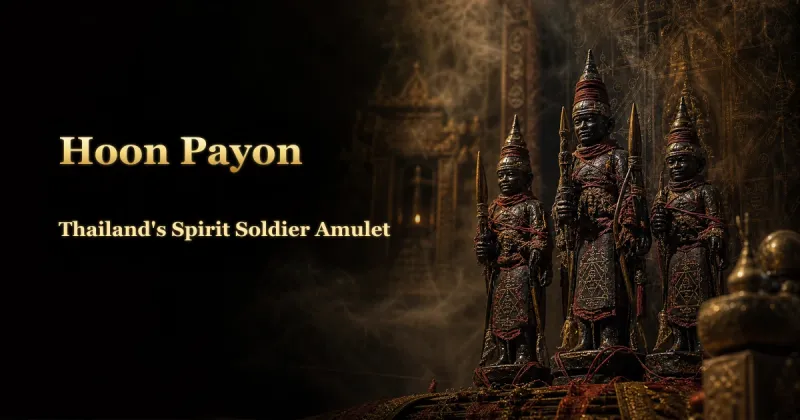
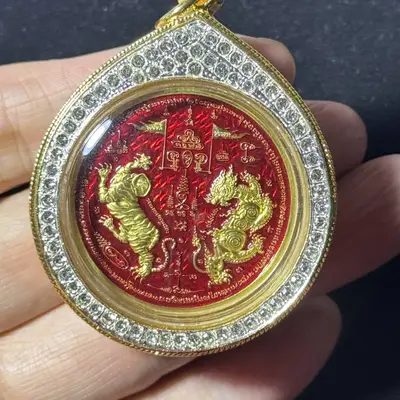
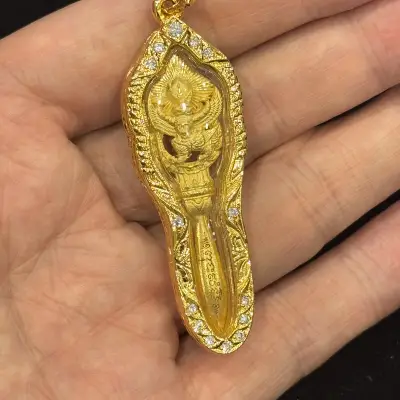
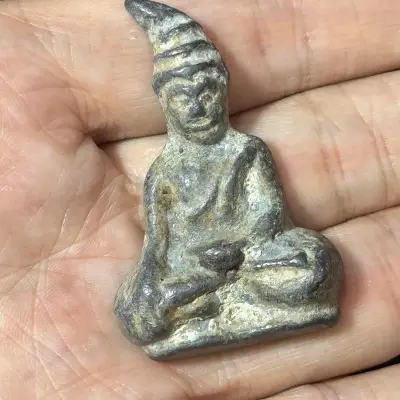
The Hoon Payon (Thai: หุ่นพยนต์, also romanized Hun Payont) is the most functional object in Thai folk magic: a small human effigy of straw, cloth, wood, clay, or metal, ritually animated to act as its owner's guard — watching the house, riding along in the car, standing sentry over a shop, and warning of danger. If the Kumanthong is a spirit child raised with affection, the Hoon Payon is a soldier given orders. This guide covers the tradition honestly: what it is, what it does, and the provenance rules that matter more here than with almost any other Thai amulet.
Origins: the warrior-magician's soldiers
Tradition traces the craft to Khun Paen, the Ayutthaya-era warrior of Thai epic famed equally for swordsmanship and sorcery. Having learned the art from his teacher Ajarn Kong, Khun Paen is said to have bound spirits into straw figures to scout, guard his camp, and confound enemies — the first spirit soldiers. (For the warrior himself, see our Khun Paen amulet guide.)
The classical animation rite is called Wicha Akarn Sam Sip Song — the invocation of the thirty-two components of a living body — symbolically granting the effigy a complete "anatomy." This ritual is what separates a Hoon Payon from a doll.
Forms and materials
- Straw effigies — the oldest form, usually for home placement.
- Cloth, wax, and clay figures — common for altar-size guardians.
- Carved wood and cast metal — today's standard, including small pendant-size soldiers worn on a chain.
- Single, paired, or squad configurations — shopkeepers guarding premises often keep several.
What the Hoon Payon is believed to do
- Guard the premises: its defining duty — deterring intruders and, in folk accounts, raising alarms or illusions when something is wrong.
- Protect the wearer: pendant forms serve as a bodyguard against accidents and hostile people.
- Give warnings: like the Kumanthong, it is said to alert its owner through dreams or sudden unease.
- Watch vehicles and stock: drivers and warehouse owners are among its most loyal users.
- Secondary charm: some lineages add popularity magic, but guarding is always the core.
Hoon Payon vs. Kumanthong
The two are often confused; the relationship is simple. The Kumanthong is a spirit child — nurtured with snacks, toys, and affection, blessing the family with fortune and warmth. The Hoon Payon is a soldier — given clear orders and minimal upkeep, guarding whatever it is told to guard. Child indoors, sentry at the gate; many Thai households keep both.
Offerings and etiquette
- Upkeep is minimal: a cup of clean water suffices; no feeding tradition as with the Kumanthong. Some lineages include a kata (chant) recited when placing it or leaving home.
- Placement: facing the entrance or near the till — a sentry post, never the bedside.
- Give instructions: Thai practice is explicit about telling the effigy its duty — what to guard and whom to protect.
- Worn pieces follow standard rules and hang below Buddha amulets (see how to wear a Thai amulet).
- Retiring one: return it to a temple; never the trash.
The provenance rule — stricter here than anywhere
Hoon Payon is an occult-adjacent category, made both by temple monks through orthodox rites and by independent ajarns using materials and methods that vary widely. Our advice mirrors what we say about all spirit-linked pieces: acquire only from documented, reputable lineages. Ask three questions before anything else — who made it, from what materials, and by what ritual. A guardian of unknown origin is precisely the thing you do not want standing watch in your home. For the broader protective landscape, see Thai protection amulets explained.
FAQ
Q: Is the Hoon Payon black magic?
A: It depends on the maker. Temple-consecrated pieces belong to the orthodox protective tradition; some independent practitioners work darker methods. Provenance answers the question — which is why you always ask.
Q: Can a Hoon Payon "act up"?
A: Folk stories abound, but tradition holds that a properly consecrated effigy simply does its job. The unsettling tales almost always involve pieces of unknown origin.
Q: Can I keep a Hoon Payon and a Kumanthong together?
A: Yes — complementary duties. Child inside, soldier at the door, each with its own simple upkeep.
Q: Can women wear one?
A: Yes. Guardianship has no gender rule; standard etiquette applies.
Last updated: July 2026 | By the Merit Messenger team, based in Bangkok
Considering a guardian piece for your home or shop? Tell us your situation and we will recommend the right type and lineage, or browse our collection.