Amulet Knowledge
Learn about Thai amulet culture, consecration rituals, and buying guides
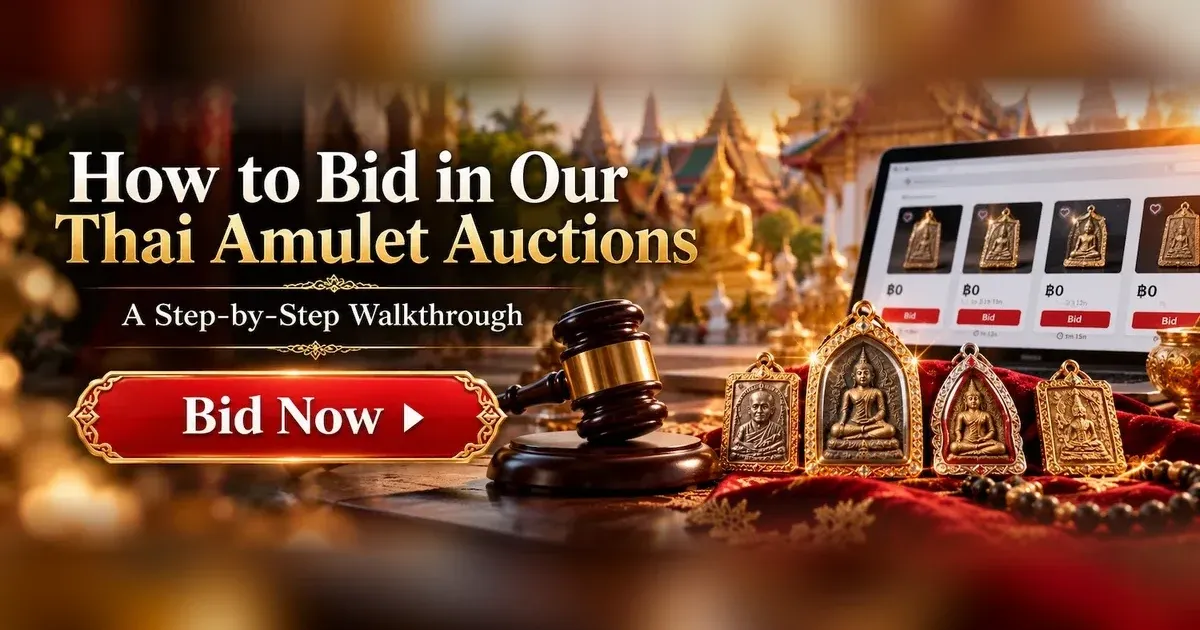
How to Bid in Our Thai Amulet Auctions: A Step-by-Step Walkthrough
A walkthrough of our Thai amulet auctions: preparing your account, reading a lot page, placing bids, the 5-minute anti-sniping extension, and paying the baht invoice after you win.
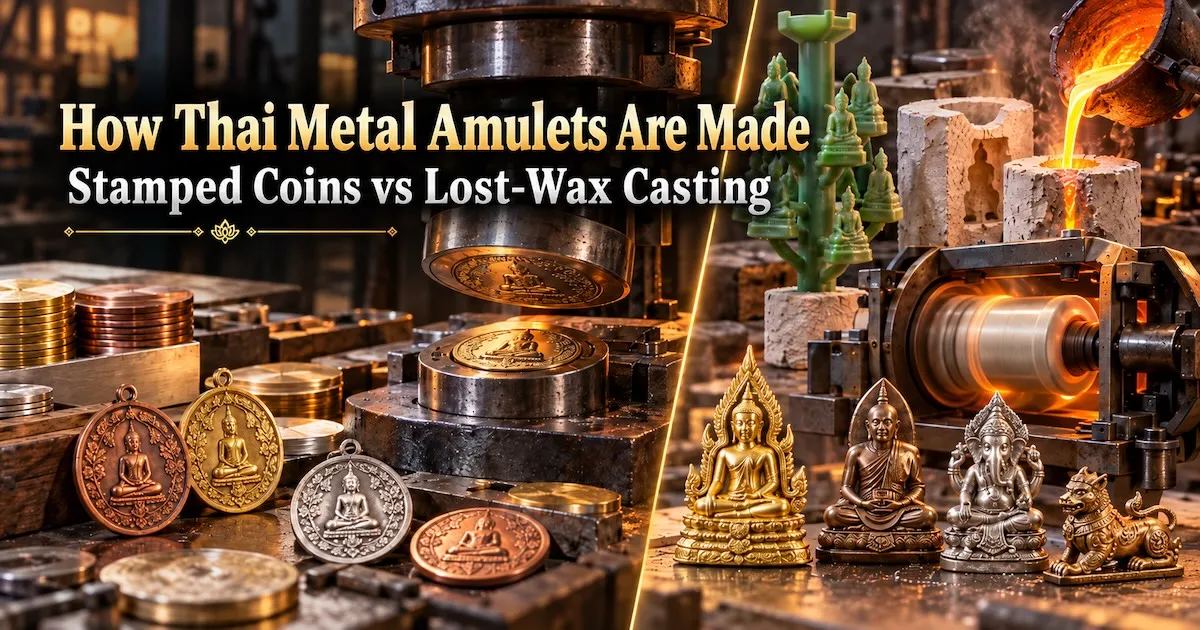
How Thai Metal Amulets Are Made: Stamped Coins vs Lost-Wax Casting
Thai metal amulets are either stamped in a steel die or cast by centrifugal lost-wax casting. A step-by-step look at both methods, the marks each one leaves, and what that means when you buy.
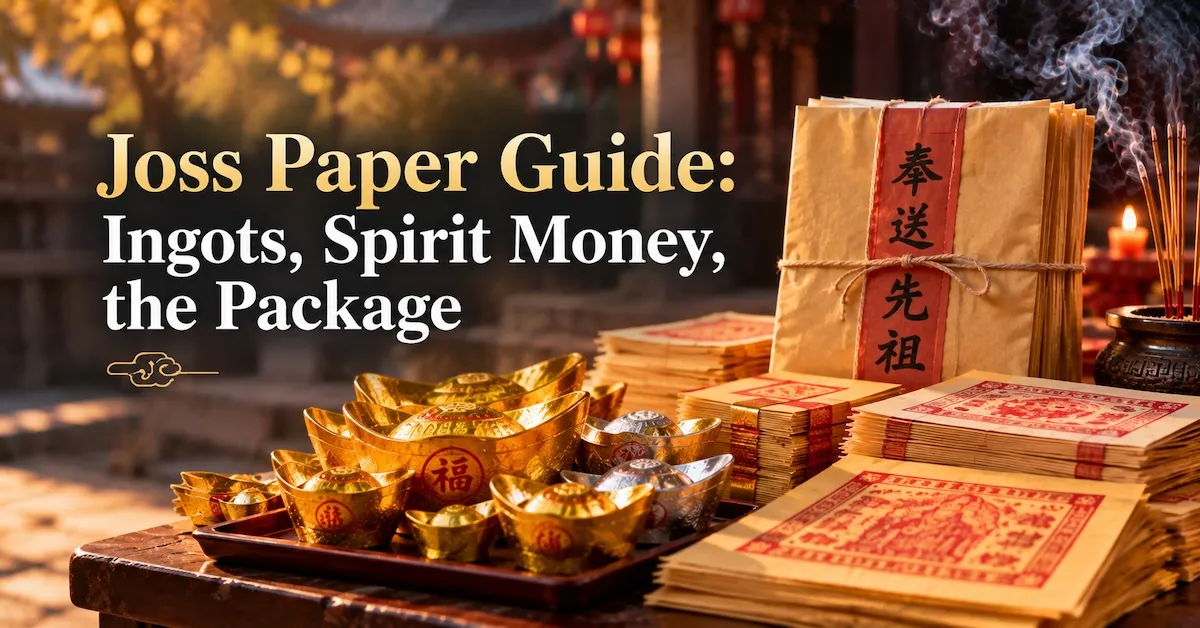
Joss Paper Guide: Ingots, Spirit Money, the Package
What gold and silver joss paper ingots mean, and how to address an offering package for an ancestor, explained field by field on a real package.

Burning Joss Paper Abroad: 3 Ways to Honor Ancestors
Living abroad and far from a family grave? Three ways to make joss paper offerings: burn them yourself, join a temple ceremony, or book an offering.

Hanyi Festival 2026: Date, Meaning and Customs
Hanyi Festival (Winter Clothes Day) falls on Monday, November 9, 2026. Its origins, customs, and how to honor your ancestors when you live abroad.
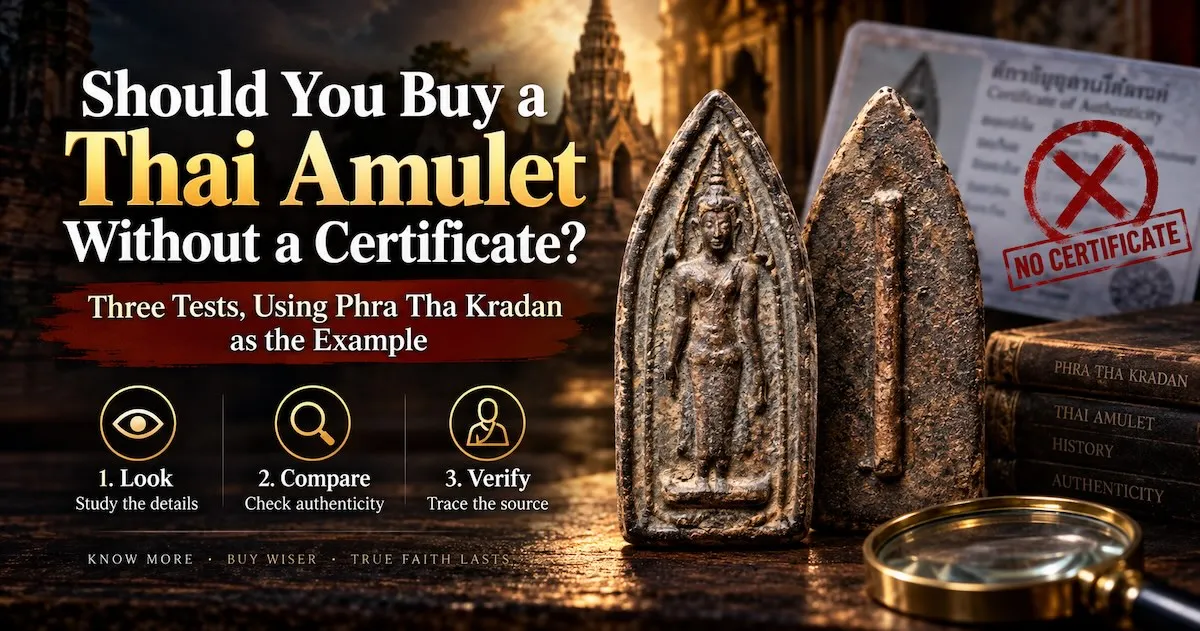
Should You Buy a Thai Amulet Without a Certificate? Three Tests, Using Phra Tha Kradan as the Example
No certificate does not mean fake, but it does mean the price must sit in the uncertified band. Using Phra Tha Kradan — one of the most over-described categories in Thailand — this guide gives three practical tests: does the seller say there is no card, do they refuse to assert an age, and does the price match the uncertainty.
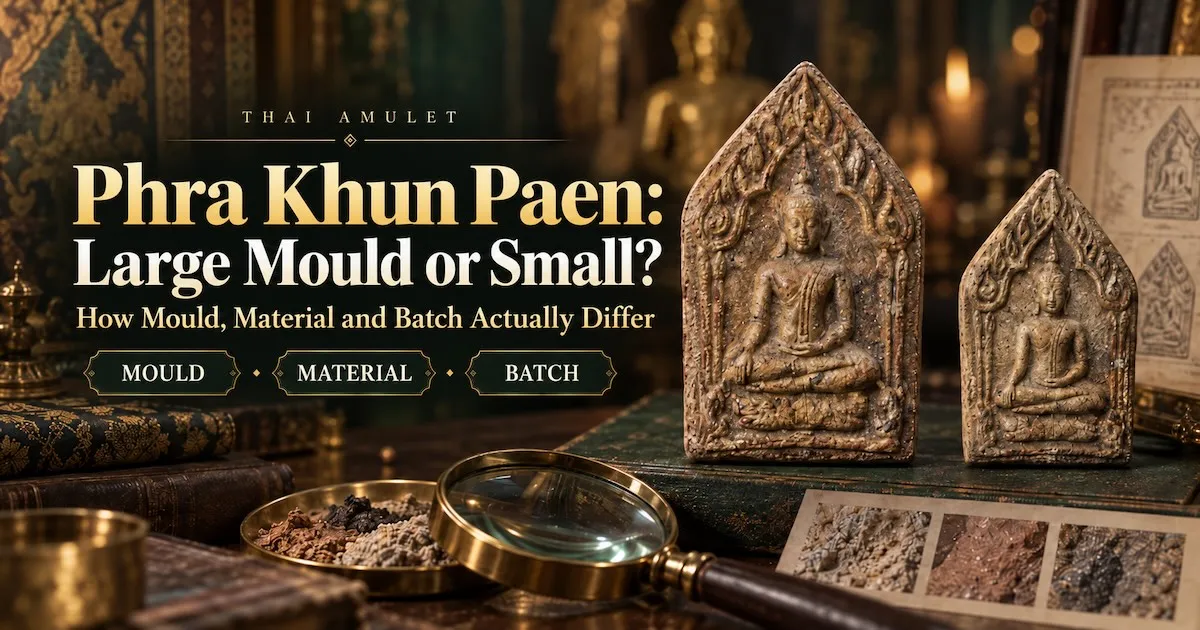
Phra Khun Paen: Large Mould or Small? How Mould, Material and Batch Actually Differ
A Phra Khun Paen is asked for charm and popularity, not wealth, and the figure on it is not Khun Paen himself. Using one batch issued in both moulds, this guide explains what really separates Phim Yai from Phim Lek, why powder amulets need a case, and how to avoid the shared-monastic-name trap.
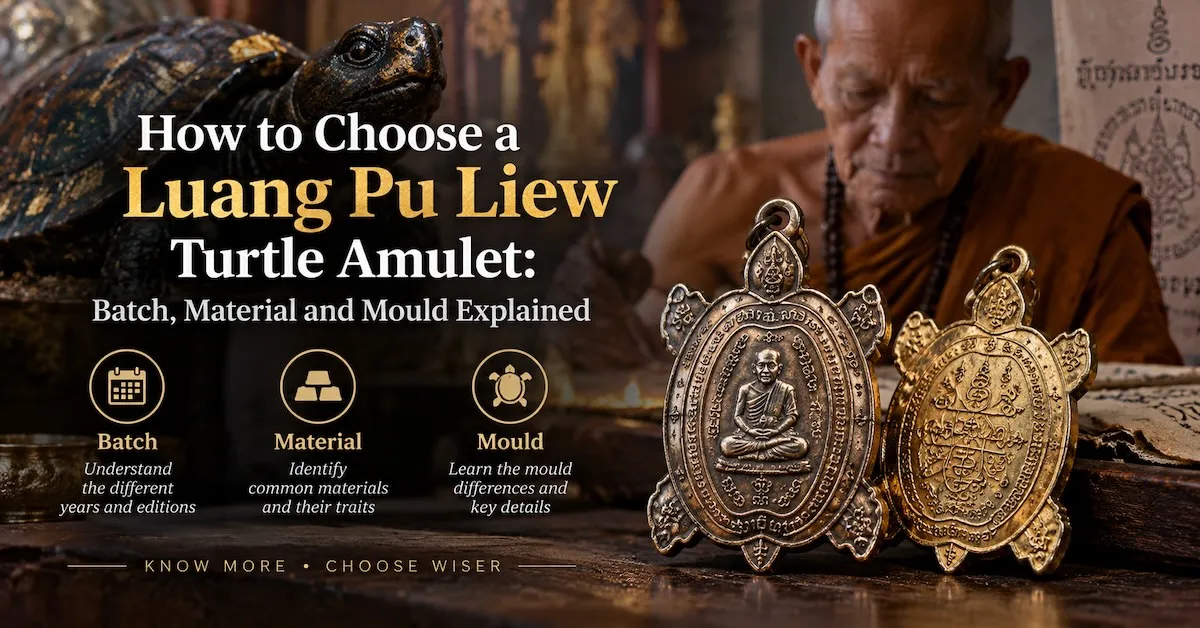
How to Choose a Luang Pu Liew Turtle Amulet: Batch, Material and Mould Explained
Luang Pu Liew created the Thai turtle-amulet tradition and issued dozens of batches, with prices differing more than tenfold. This guide unpacks the four Thai words on the certificate — batch, material, mould and year — using four real batches as worked examples.
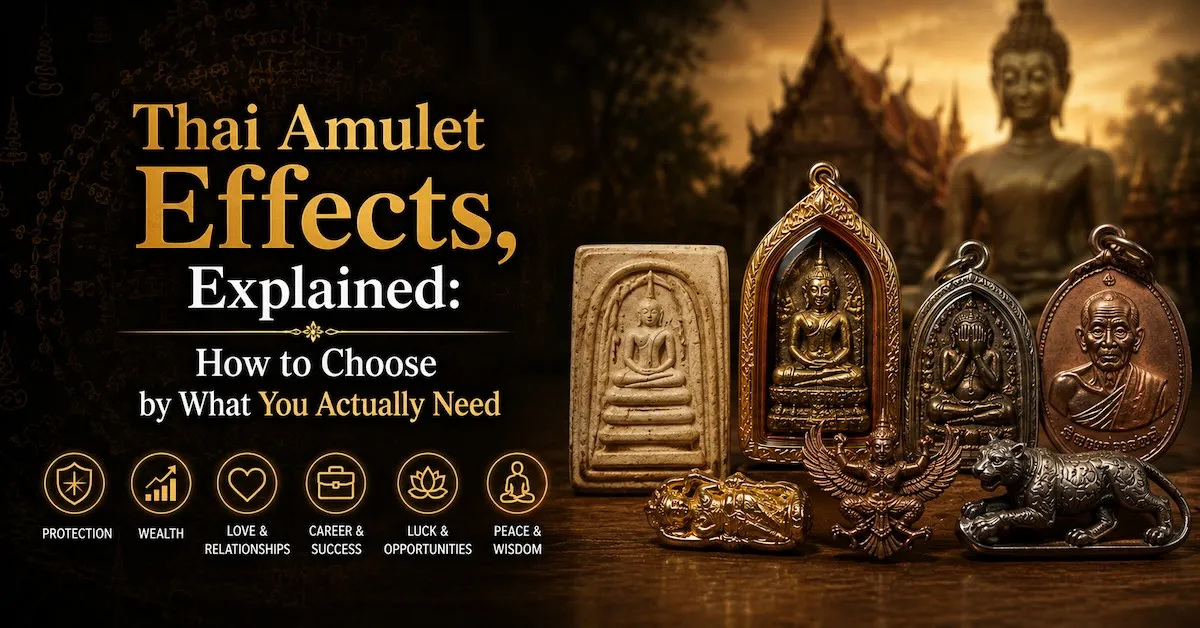
Thai Amulet Effects, Explained: How to Choose by What You Actually Need
The six effect categories of Thai amulets — wealth, protection, romance, career, health, warding off evil — what each covers, the classic forms behind it, in-stock examples, and how to combine needs correctly.
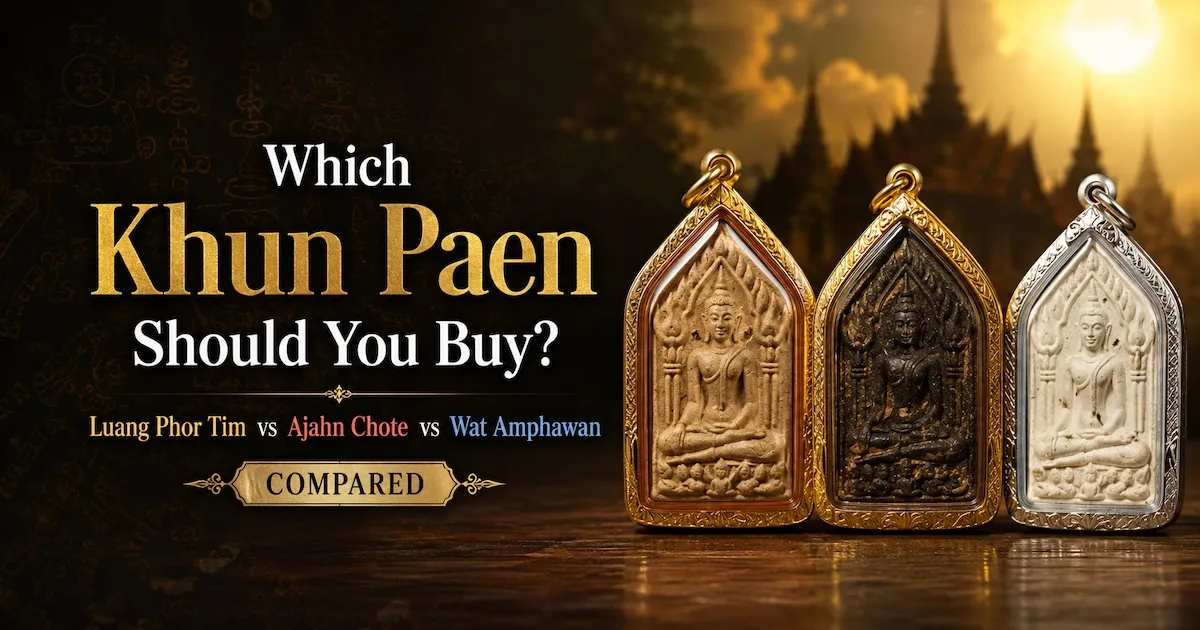
Which Khun Paen Should You Buy? Luang Phor Tim vs Ajahn Chote vs Wat Amphawan, Compared
The same Khun Paen name covers collector grails and accessible temple issues. A practical comparison of the Luang Phor Tim benchmark, the certified Ajahn Chote royal-temple entry, and the prai-free Wat Amphawan alternative.
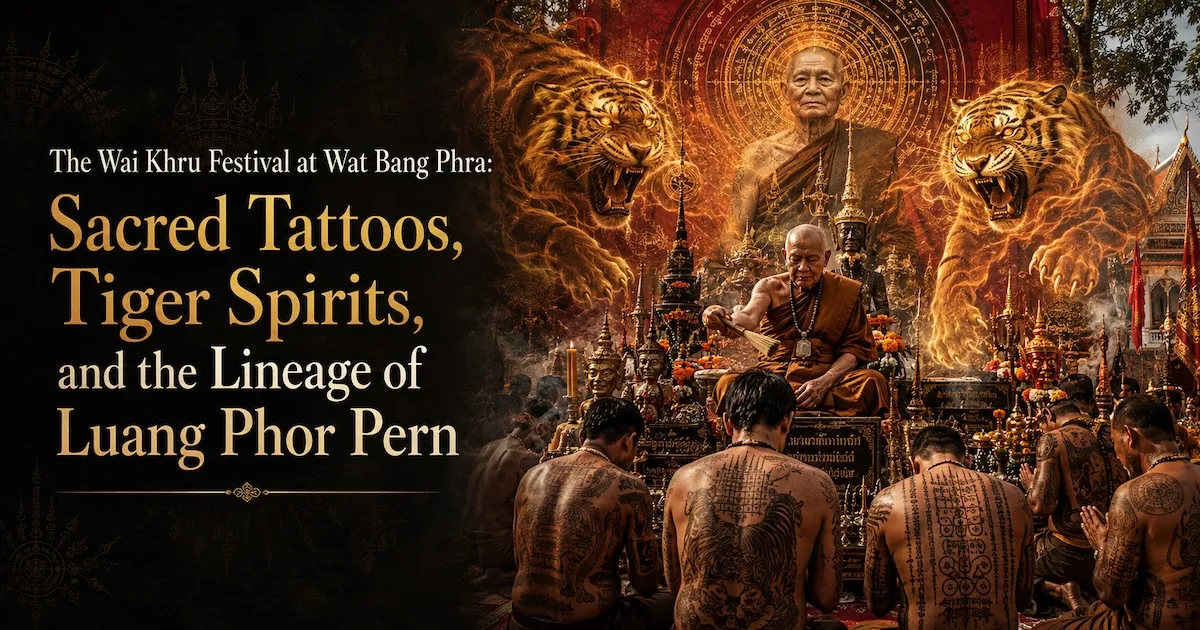
The Wai Khru Festival at Wat Bang Phra: Sacred Tattoos, Tiger Spirits, and the Lineage of Luang Phor Pern
Every March, Wat Bang Phra hosts Thailand's most dramatic religious festival — the Wai Khru master-veneration rite of the sak yant tradition. What happens there, what it means, and why it matters to owners of Luang Phor Pern amulets.
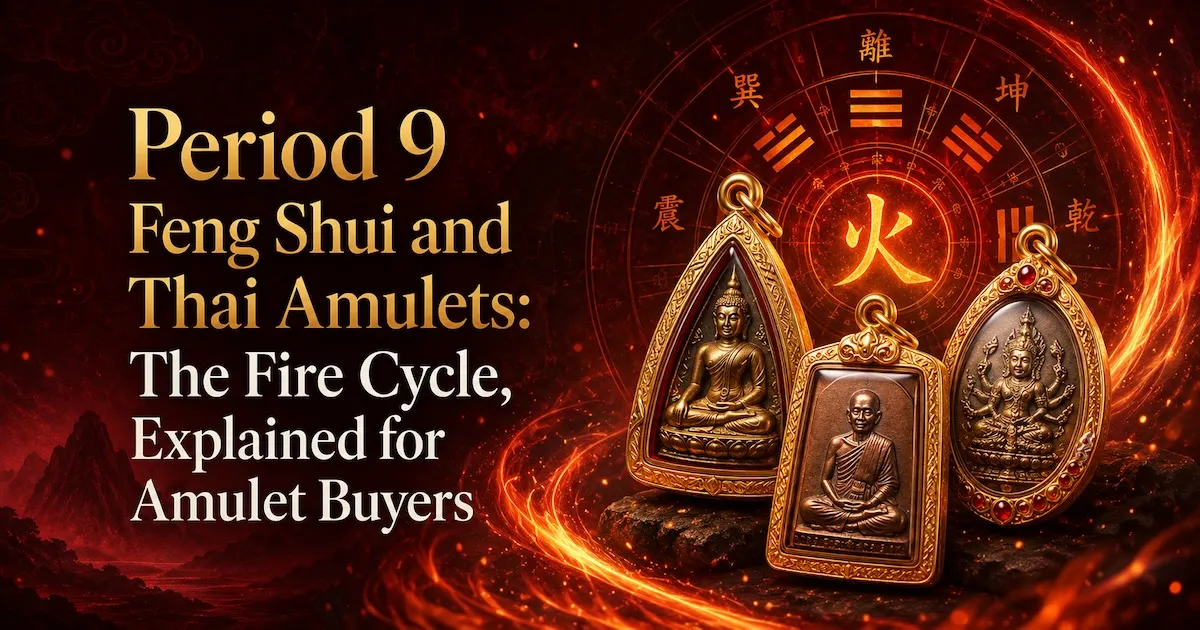
Period 9 Feng Shui and Thai Amulets: The Fire Cycle, Explained for Amulet Buyers
Period 9 (2024–2043) is the fire cycle of Chinese feng shui — and Thai temples have answered it. How the two systems combine, and a look at the lapis lazuli Period 9 cosmic coin blessed at royal temple Wat Phai Lom.
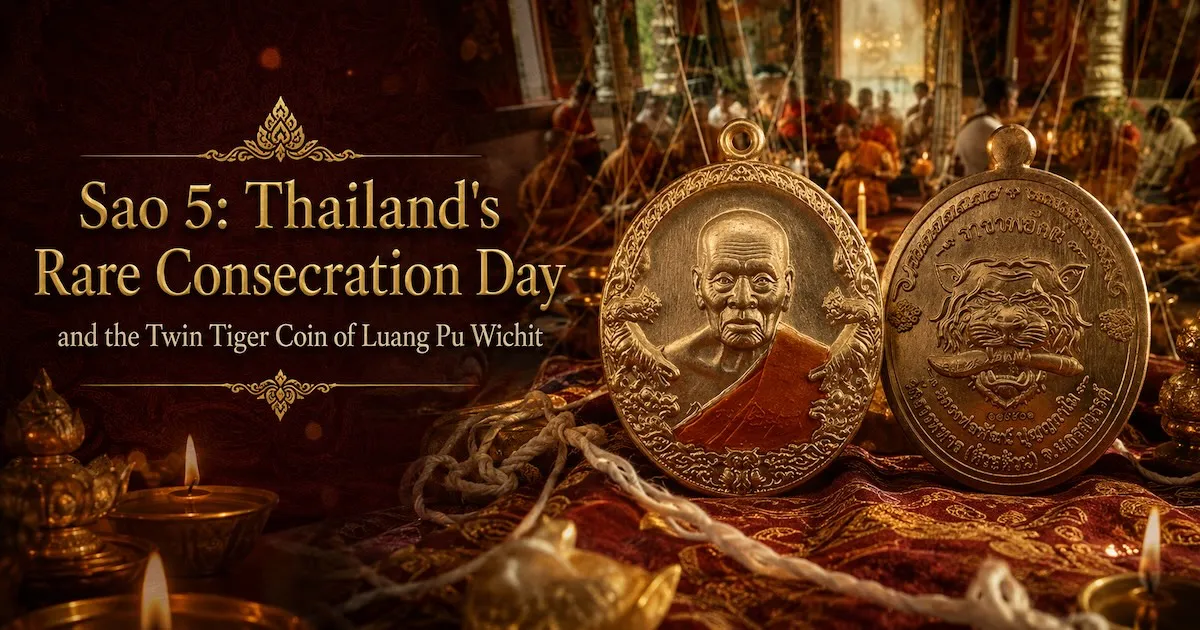
Sao 5: Thailand's Rare Consecration Day and the Twin Tiger Coin of Luang Pu Wichit
What the rare Sao Ha (Saturday the Fifth) consecration day means in Thai tradition, why tiger amulets dominate it, and a close look at the B.E. 2567 twin tiger coin of Luang Pu Wichit.
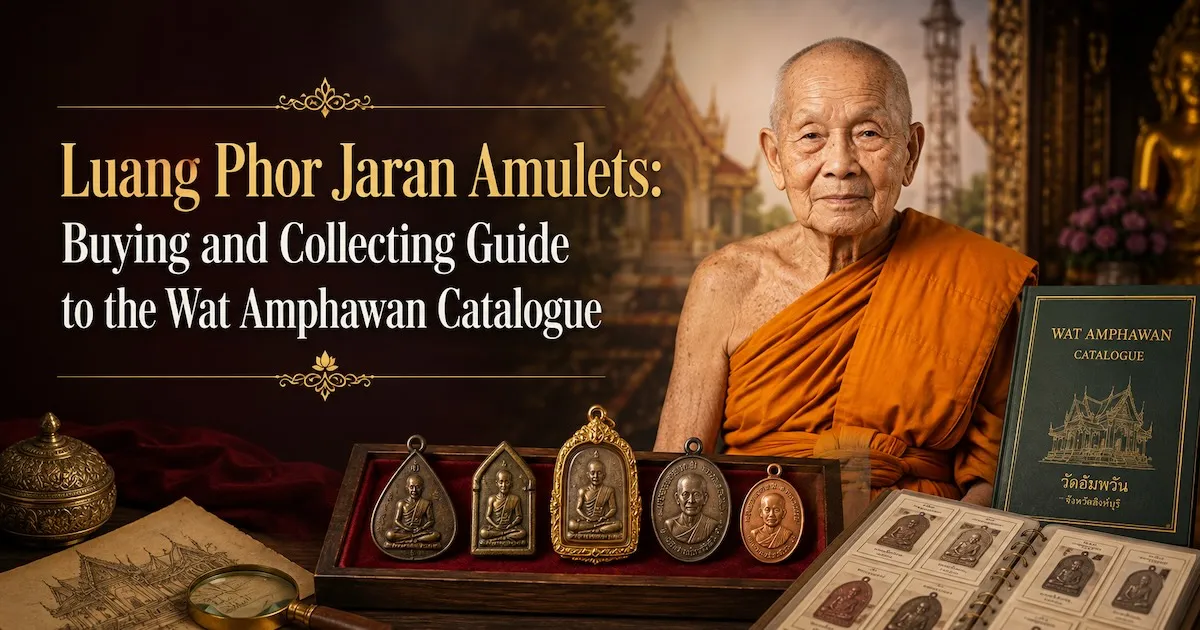
Luang Phor Jaran Amulets: Buying and Collecting Guide to the Wat Amphawan Catalogue
Every major Luang Phor Jaran amulet form ranked — Phra Kring in powder, copper, nawa loha and solid gold, self-image coins with robe inserts, early-era pieces — with buyer profiles and authentication advice.
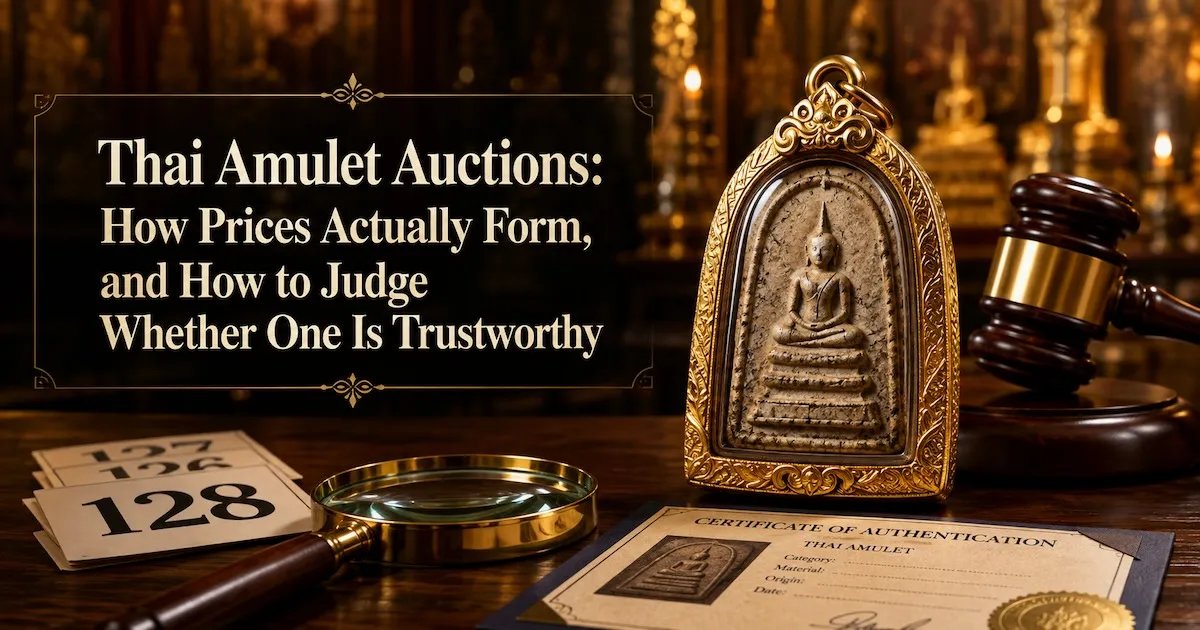
Thai Amulet Auctions: How Prices Actually Form, and How to Judge Whether One Is Trustworthy
Rare Thai amulets have always been priced by bidding rather than by sticker price, because a one-of-a-kind piece has no market rate until someone names one. This guide explains what actually drives a hammer price, why a zero-baht opening bid is a mechanism rather than a gimmick, and gives four verifiable tests you can apply to any online amulet auction before you bid. No specific lots discussed.
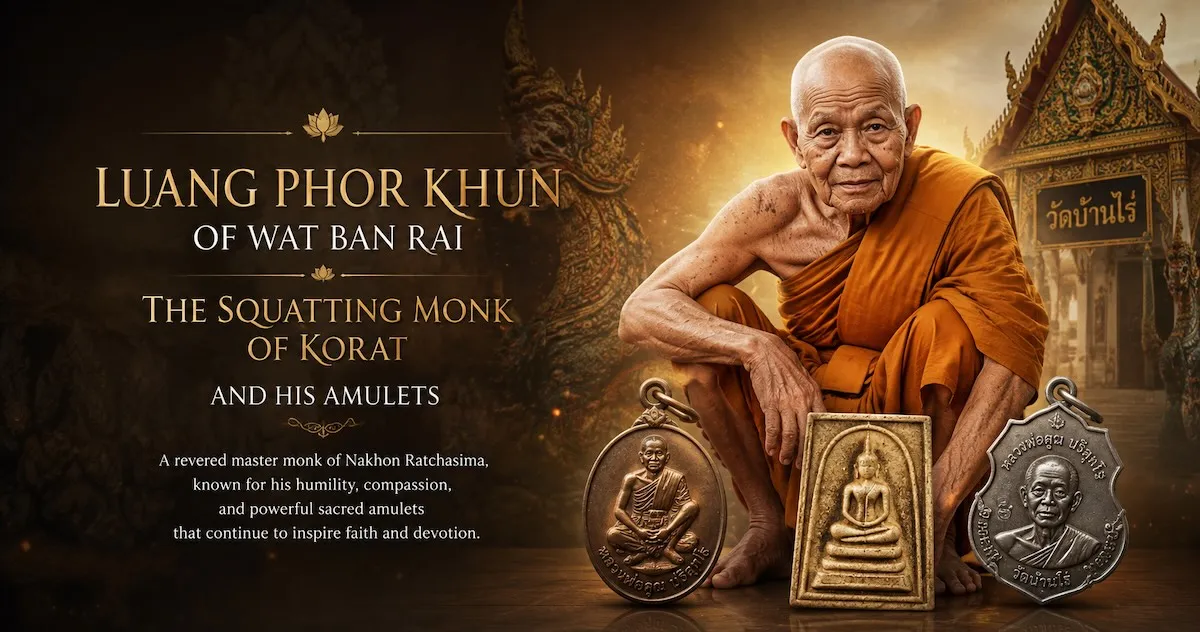
Luang Phor Khun of Wat Ban Rai: The Squatting Monk of Korat and His Amulets
Luang Phor Khun Parisuttho (1923-2015), abbot of Wat Ban Rai in Nakhon Ratchasima, is one of the most widely revered monks in modern Thai Buddhism. Known for blessing devotees while squatting, for addressing everyone in the same blunt Isan dialect, and for giving away almost everything he raised, he became the master most associated with prosperity amulets. This guide covers his life, his teaching, why his amulets are collected, and how to approach them sensibly.
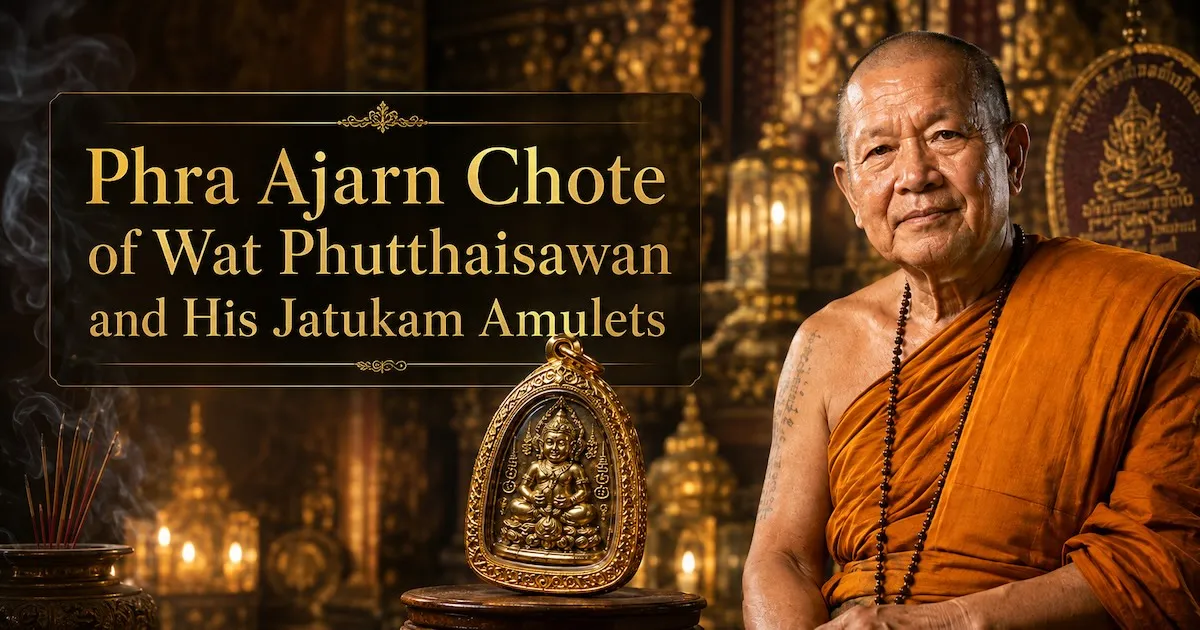
Phra Ajarn Chote of Wat Phutthaisawan and His Jatukam Amulets
Phra Ajarn Chote (Atichote Thammawaro), former abbot of Wat Phutthaisawan in Ayutthaya, brought Jatukam Ramathep north from Nakhon Si Thammarat; he was arrested and disrobed in September 2026. His timeline, three teaching lineages, the Nuea Duang and B.E. 2550 editions, authentication checks and a visitor guide.
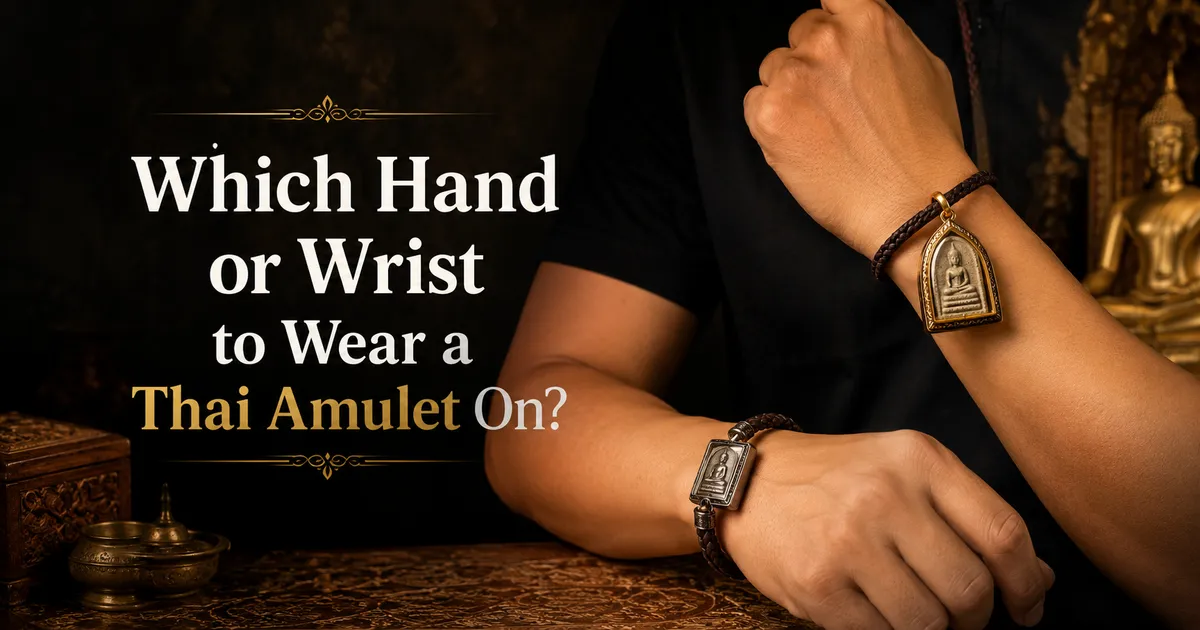
Which Hand or Wrist to Wear a Thai Amulet On?
Thai amulets are traditionally worn around the neck, above the waist — so there is no left-or-right rule. If set into a bracelet, the left hand is the common preference. This guide clears up neck wear, bracelet wear, and against-the-body wearing.
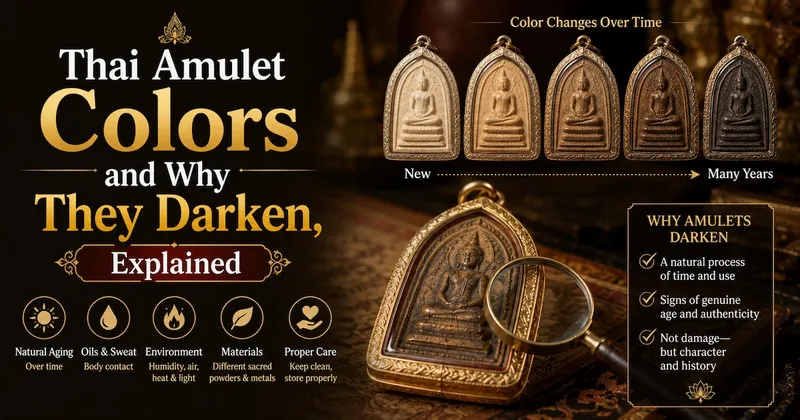
Thai Amulet Colors and Why They Darken, Explained
A Thai amulet's color comes from its material, not its power: black is iron, gold-copper is nawaloha, white is sacred powder. Darkening and patina are normal oxidation — on old amulets, a sign of age and value. Learn the colors, materials, and how to care for them.
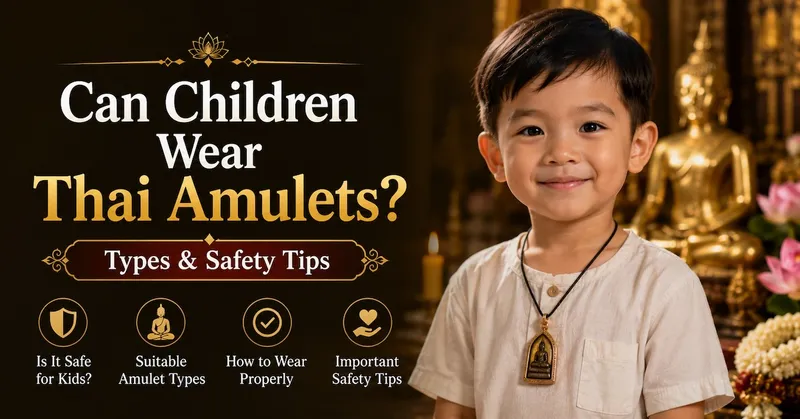
Can Children Wear Thai Amulets? Types & Safety Tips
Children can wear Thai amulets if you choose protection and health pieces, avoid love, wealth-spirit and yin amulets, and mind the cord, size and weight. This guide covers which amulets suit children, wearing safety, and when to wait for infants.
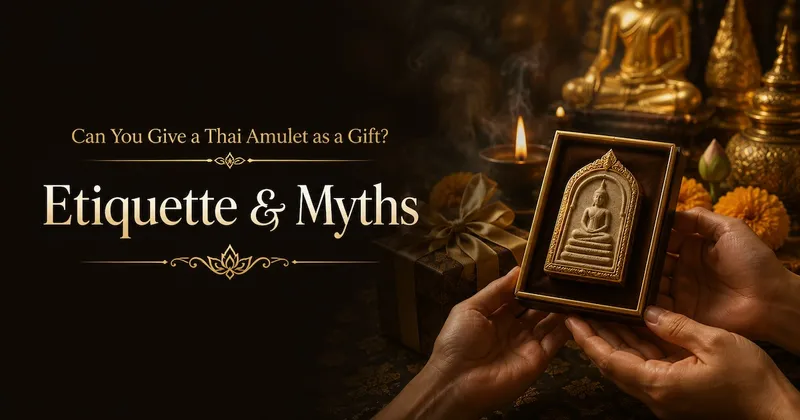
Can You Give a Thai Amulet as a Gift? Etiquette & Myths
You can give a Thai amulet as a gift — it is a merit-making act, not a way to give your luck away. This guide covers the right etiquette for gifting, which of the online gifting taboos are real versus myth, and whether you can ask a gifted amulet back.
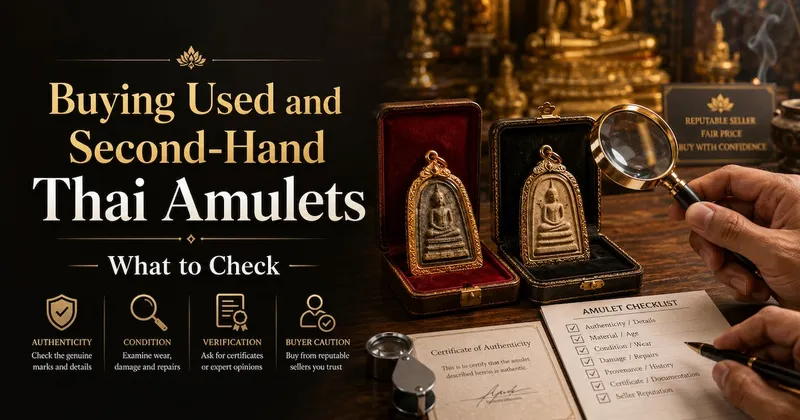
Buying Used and Second-Hand Thai Amulets: What to Check
There is no rule against wearing a used Thai amulet — renting and transferring amulets is a mature Thai tradition, and many classic pieces exist only second-hand. Learn the value and risks, what to check before buying, and how to respectfully pass on your own amulet.
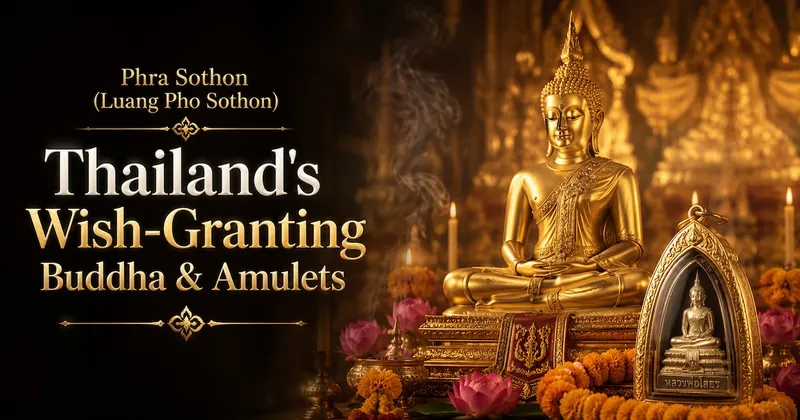
Phra Sothon (Luang Pho Sothon): Thailand's Wish-Granting Buddha & Amulets
Phra Sothon of Wat Sothon in Chachoengsao is one of Thailand's most revered wish-granting Buddha images. This guide covers its legend and standing, the amulet's wish, wealth and protection blessings, who it suits, and two authentic Phra Sothon pieces.
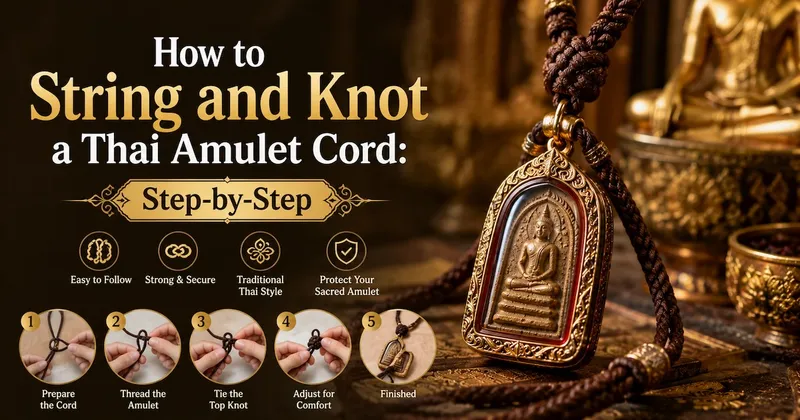
How to String and Knot a Thai Amulet Cord: Step-by-Step
The most practical way to string a Thai amulet is a doubled cord with an adjustable sliding knot. This guide covers three common knots, the right cord length and material, correct orientation, and how to string multiple amulets by hierarchy.