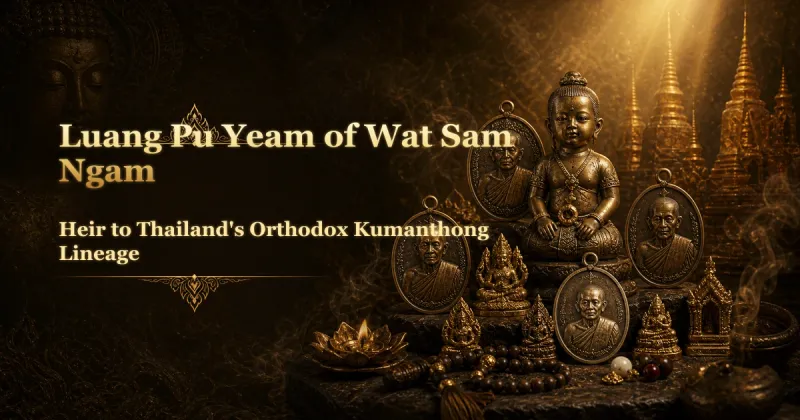
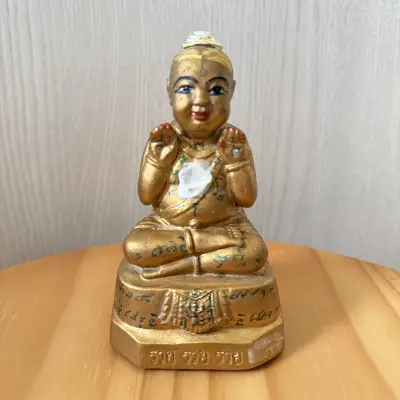
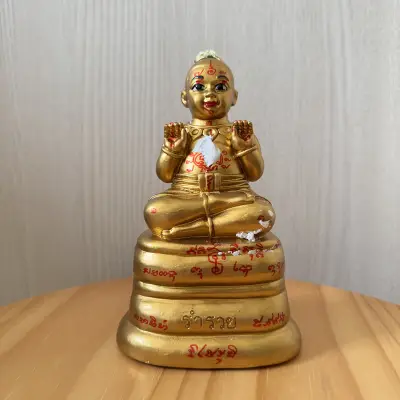
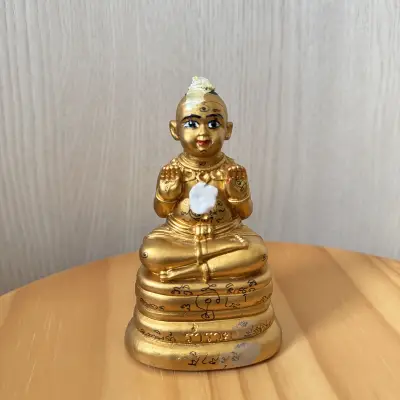
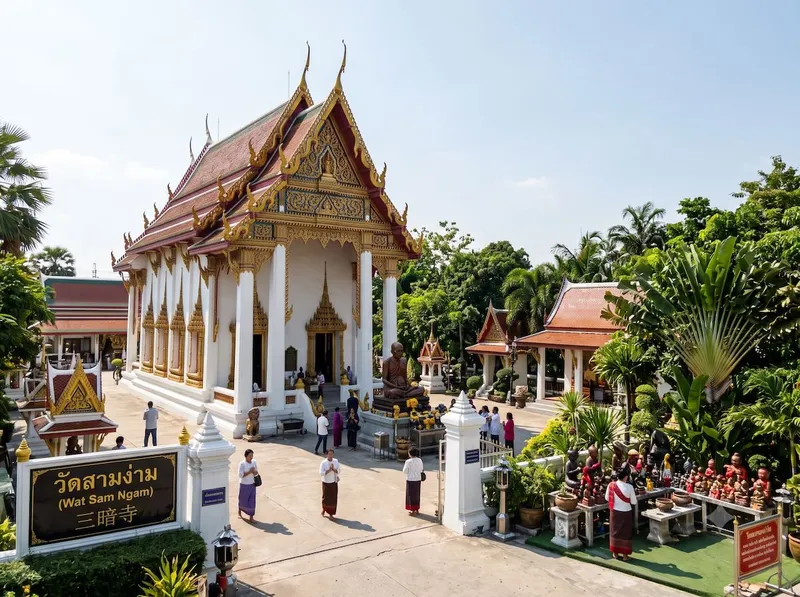
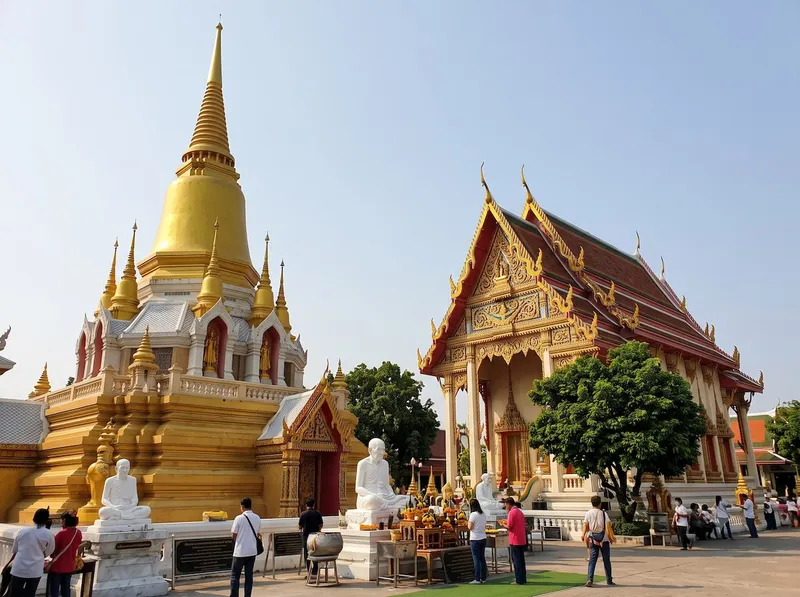
Luang Pu Yeam Thanayooto (Thai: หลวงปู่แย้ม ฐานยุตโต) is a monk of Wat Sam Ngam in Nakhon Pathom, recognized as a direct disciple of Luang Phor Tae Kongthong — the "King of Kumanthong" — and a key inheritor of the temple's White-Magic Kumanthong lineage. To understand his standing, you first need to understand Wat Sam Ngam's place in the Kumanthong tradition.
Wat Sam Ngam: the orthodox source of Kumanthong
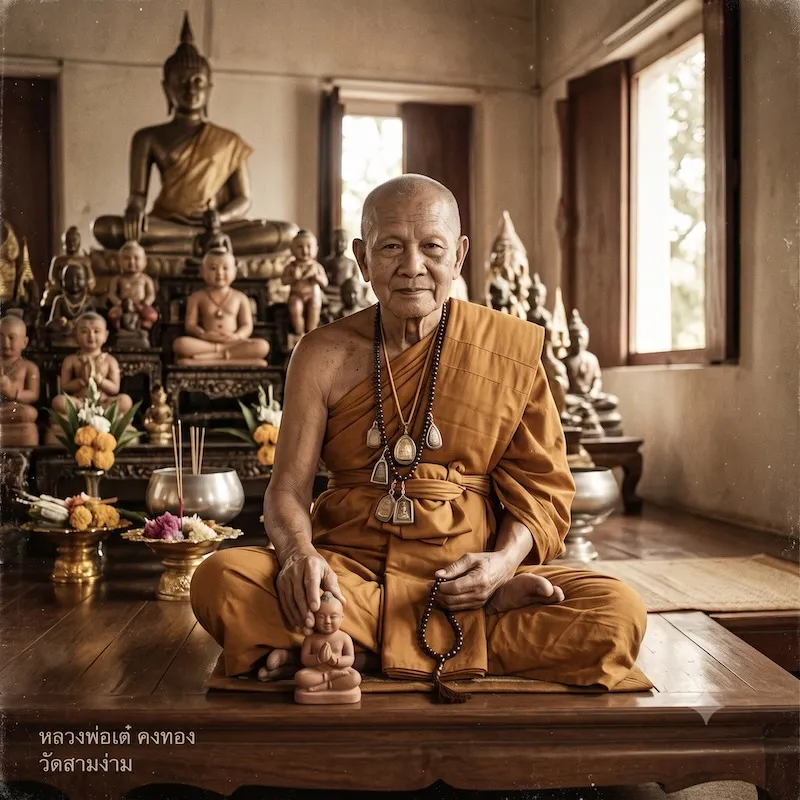
The earliest temples in Thailand to make Kumanthong through orthodox rites were Wat Sam Ngam and Wat Takong, both in Nakhon Pathom. What put Wat Sam Ngam on the map was Luang Phor Tae Kongthong (B.E. 2434–2524, i.e. 1891–1981, who passed at the age of 90). Revered as the King of Kumanthong across all of Thailand, he was famous specifically for White Magic: it was believed he could perceive the wandering souls of departed children and, out of compassion, guide them into a child-form statue — giving those spirits a chance to be cared for, earn merit, and eventually be reborn, while protecting their keeper. This is the fundamental line between an orthodox Kumanthong and a "black magic" piece.
Luang Pu Yeam: the direct disciple who carried the torch
Luang Pu Yeam entered the monkhood at the principal hall of Wat Sam Ngam in B.E. 2481 (1938), ordained by Luang Phor Tae Kongthong himself, and went on to study meditation, incantation, and sacred script directly under his master. After Luang Phor Tae passed in 1981, the temple's Kumanthong tradition was carried on by his disciples, with Luang Pu Yeam among the key figures continuing the orthodox White-Magic making and consecration. The Kumanthong he commissioned and blessed descend directly from Luang Phor Tae's line, with clear provenance and orthodox lineage — which is exactly why they are held in such regard by collectors and devotees.
Why the Wat Sam Ngam line is worth keeping
- Orthodox lineage: a direct continuation of the White-Magic system of Luang Phor Tae, the King of Kumanthong, with documented rites and consecration — not an anonymous piece of unknown origin.
- Rooted in White Magic: built on merit-transfer and compassionate care, inviting a protective, household-blessing spirit rather than anything harmful.
- Verifiable provenance: temple, year (batch), and consecrating master are all clear — meeting the standard that a legitimate sacred object must be traceable.
The Wat Sam Ngam Kumanthong we offer come from this lineage — for example the Luang Pu Yeam Kumanthong bucha (B.E. 2553) and the Wat Sam Ngam Kumanthong bucha (B.E. 2567) continued by the temple's present abbot — each listed with its temple origin and consecration details.
Keeping a Wat Sam Ngam Kumanthong
- Care for it like family: regular offerings of water, sweets, and red drinks, with toys and treats on holidays — treat it as a child of the household.
- Hold compassion and respect: offer with kindness, good deeds, and merit dedication — the true path of the White-Magic Kumanthong tradition.
- Understand before you keep one: Kumanthong is a yin (spirit) amulet, with heavier care and taboos than a Buddhist amulet. If you cannot commit to long-term offerings, it is better not to take one on.
FAQ
How is Luang Pu Yeam related to Luang Phor Tae?
Luang Phor Tae Kongthong was the "King of Kumanthong"; Luang Pu Yeam is his direct disciple at Wat Sam Ngam, ordained under him in 1938 and trained in his arts, continuing the temple's orthodox White-Magic Kumanthong lineage.
Is a Wat Sam Ngam Kumanthong a yin amulet? Is the care burdensome?
Yes, it is a yin amulet, but from an orthodox White-Magic line. The core of caring for it is regular offerings of water and food and a respectful heart — as a routine it is not hard; the challenge is keeping it up long-term. See the full Kumanthong guide.
Is a Wat Sam Ngam Kumanthong suitable for a beginner?
If you respect the tradition, will commit to long-term offerings, and hold a sound mindset, an orthodox White-Magic line is a relatively safe choice. If you are only curious or cannot keep a routine, start with a Buddhist (yang) amulet first.
How do I confirm a genuine Wat Sam Ngam piece?
Check three things: it comes from Wat Sam Ngam, it has a clear batch year, and the consecration lineage is clear (Luang Phor Tae — Luang Pu Yeam — present abbot). Only use trusted channels that state the temple origin and consecration record, and avoid cheap, undocumented "heirloom Kumanthong."
Last updated: July 2026 | Author: The Merit Messenger Team (based in Bangkok)
Looking for a genuine Wat Sam Ngam Kumanthong? Browse our pieces or contact us — each lists its temple origin and consecration details. For terminology, see the Thai amulet glossary.