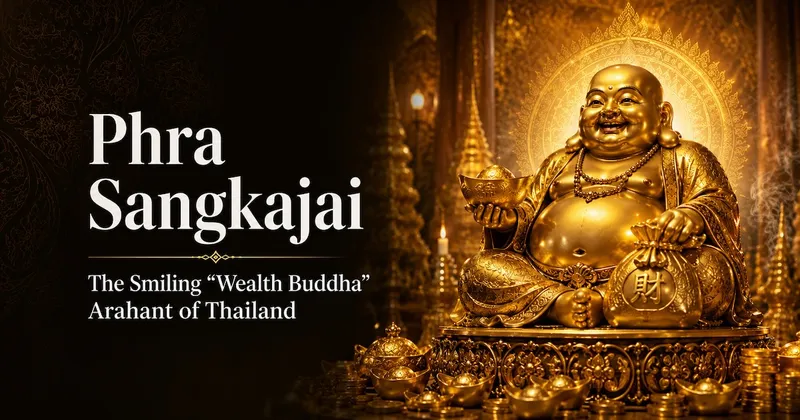
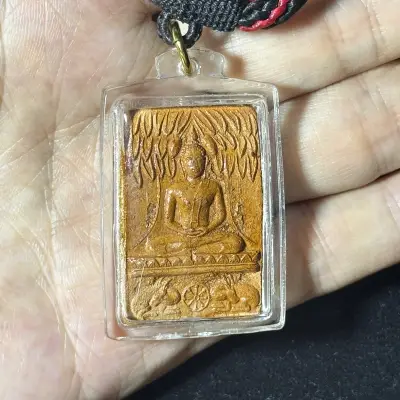
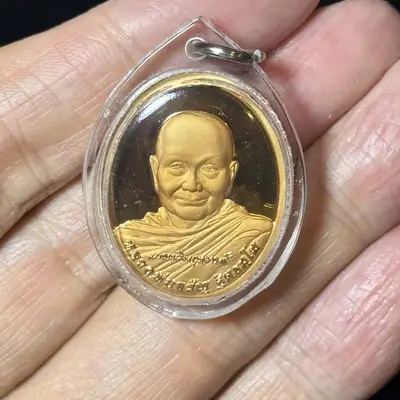
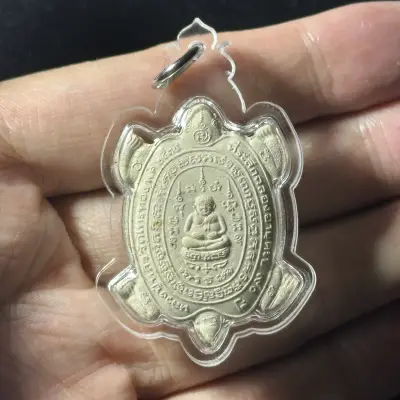
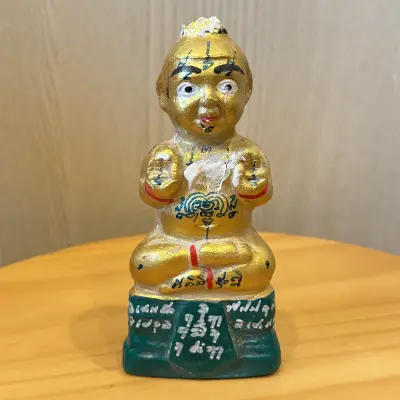
Phra Sangkajai (Thai: พระสังกัจจายน์) is the plump, smiling form of Maha Kaccayana, one of the Buddha's great disciples, revered across Thailand as the "Wealth Buddha" for prosperity, contentment, and wisdom in speech. He is a Buddhist (yang) amulet, empowered by the Dhamma and a saint's merit. Note that he is often confused with the Chinese Laughing Buddha (Budai) — but the two come from different traditions.
Who is Phra Sangkajai?
Phra Sangkajai corresponds to Maha Kaccayana, praised by the Buddha as foremost in explaining in detail what the Buddha taught in brief — a master of exposition and eloquence. Tradition holds that he was so strikingly handsome that, to avoid trouble and to keep people from fixating on appearances, he used his powers to take on a rounded, big-bellied form. That "big-bellied smiling" image has endured as a symbol of contentment, abundance, and fortune.
Phra Sangkajai vs the Chinese Budai: don't mix them up
Both are round, cheerful figures and easily confused, but their lineage and meaning differ:
- Phra Sangkajai (Thai): the Theravada arahant Maha Kaccayana, with a Buddha-like top-knot of hair and robes draped over one shoulder in Theravada fashion — meaning wisdom, eloquence, contentment, and fortune.
- Budai (Chinese): derived from the Chinese Chan/Zen monk Budai, regarded as a manifestation of Maitreya in the East Asian Mahayana tradition, wearing Chinese-style robes with the front of the upper body often bare — meaning good fortune, generosity, and carefree joy.
Powers: fortune, contentment, and wisdom
- Wealth and business: Phra Sangkajai is one of Thailand's most popular "wealth Buddhas," kept by shopkeepers and business owners for flowing income.
- Contentment and sufficiency: his "wealth" leans toward "enough of everything, complete and abundant" rather than endless craving.
- Wisdom and eloquence: as the master of exposition, he is also honored by students, speakers, negotiators, and teachers.
Who should wear Phra Sangkajai?
Anyone seeking business fortune and contented abundance, and anyone who needs eloquence and persuasive speech. Within the "arahant of wealth" theme, he is often paired with Phra Sivali: one for "contentment and complete abundance," the other for "provided-for travel and fortune." For more Thai wealth pieces, see the deity amulets guide.
FAQ
Is Phra Sangkajai the same as the Chinese Maitreya?
No. Phra Sangkajai is the Theravada arahant Maha Kaccayana; the Chinese big-bellied Maitreya (Budai) derives from the Chan monk Budai in the Mahayana tradition. They look alike but differ in lineage and meaning.
Is Phra Sangkajai a yin or yang amulet?
Yang. He is a Buddhist saint's amulet empowered by the Dhamma, asking only for incense and precepts, with none of the heavy taboos of spirit amulets — well suited to beginners seeking fortune.
Is Phra Sangkajai mainly for wealth?
Yes — he is a famous Thai "wealth Buddha" for business fortune, though his meaning leans toward contentment and complete abundance, and he also grants wisdom and eloquence, apt for merchants and speakers.
Phra Sangkajai or Phra Sivali — which to choose?
Both are arahants of wealth. Sangkajai leans toward "contentment and abundance," Sivali toward "fortune and safe travel." Choose Sivali for constant travel, Sangkajai for a settled business — or keep both.
Last updated: July 2026 | Author: The Merit Messenger Team (based in Bangkok)
Looking for a Phra Sangkajai with clear provenance? Browse our pieces or contact us. For terminology, see the Thai amulet glossary.