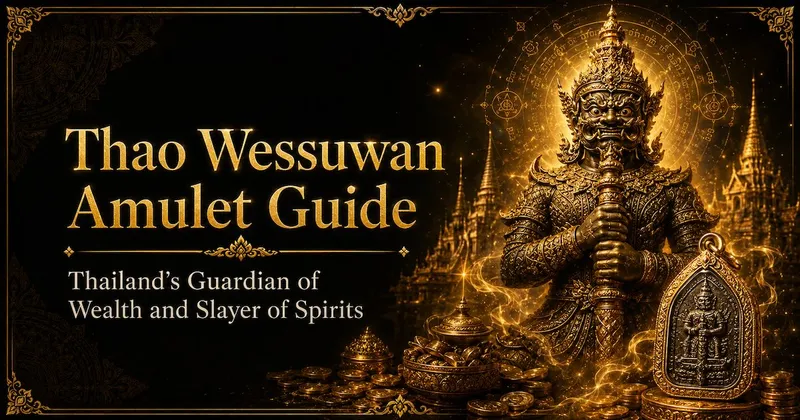
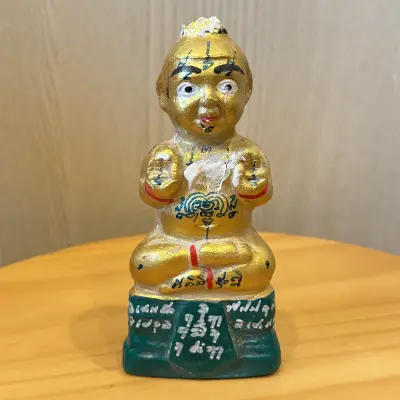
Thao Wessuwan (Vessavana, the Great Heavenly King of the North) is Thailand’s most formidable guardian deity — lord of the yaksha spirits and keeper of celestial treasure. His amulets protect against black magic and bad spirits while guarding wealth. This guide covers his origins, powers, who should wear him, worship practice, and taboos.
Thao Wessuwan (Thai: ท้าวเวสสุวรรณ, also spelled Tao Wessuwan; Sanskrit: Vaisravana or Kubera) is the Great Heavenly King of the North in Buddhist cosmology — lord of the yaksha spirits and guardian of celestial treasure. In Thailand he is the heavyweight among protective deities: spirits and black magic are believed to retreat before his image, while wealth stays safely guarded behind it. In recent years his amulets have become one of Thailand’s hottest devotional trends, with temple editions selling out within days.
Who is Thao Wessuwan?
Buddhist cosmology places four Heavenly Kings as guardians of the cardinal directions, with Wessuwan — chief among them — ruling the north. His double role defines his amulets: as king of the yakshas he commands the very spirits people fear, and as treasurer of the heavens he guards wealth against loss. The towering giant statues holding a war club (krabong) at Thai temple gates are Wessuwan, stationed there so that nothing malevolent may enter.
The modern craze traces to Wat Chulamanee in Amphawa, Samut Songkhram province, whose Wessuwan editions from the early 2020s drew nationwide queues and inspired temples across Thailand to follow.
Core powers of the Wessuwan amulet
- Protection from spirits and black magic: his signature power — considered the strongest anti-occult protection in the Thai devotional world.
- Guarding the home: a Wessuwan image facing the entrance is believed to keep the whole household safe; popular with families troubled by nightmares or unease.
- Protecting wealth: as celestial treasurer he guards what you already have — against fraud, betrayal, and unexplained losses — while supporting honest income.
- Deterring hostile people: his authority is believed to blunt schemes, office politics, and legal harassment.
Who should wear one?
- Night-shift workers and people in hospitals, funeral services, hotels, and other spiritually heavy environments
- Anyone feeling persistently suppressed luck, recurring nightmares, or unrest at home
- Business owners protecting cash flow against fraud and bad partners
- Travelers and expats living far from home support networks — see also our guide to amulets for travelers
For the wider pantheon context — Phra Phrom, Ganesha, Nang Kwak — see Thai deity amulets explained.
Worship and wearing practice
Worn as an amulet, Wessuwan needs no special ritual — normal respectful wear is enough (see how to wear a Thai amulet). For home worship, Thai tradition places his image in the living room or facing the front door, offered clean water, flowers, and fruit. Saturday is his traditional day of veneration, though consistency matters more than the calendar. Make specific vows and repay them with merit-making when fulfilled.
Taboos
- He is a guardian deity, not a Buddha image: when worn with Buddha amulets, the Buddha hangs higher.
- Never petition him to harm others — he suppresses evil; he does not deliver it.
- Standard amulet etiquette applies: keep above the waist, remove in unclean places and during intimacy.
- His protection is said to favor those who act uprightly; the amulet is not a license for bad conduct.
Buying a genuine piece
Popularity breeds fakes. Verify the temple and edition year (Wat Chulamanee editions are well documented), ask for authentication cards where available, and buy from sellers who disclose the full provenance chain. Unbranded lookalikes of famous editions should be treated as decorative items, not consecrated ones. Our protection amulet guide covers how Wessuwan compares with other protective traditions.
FAQ
Q: Is Thao Wessuwan a Buddha?
A: No — he is a guardian deity (deva) of Buddhist cosmology. His amulets are worn below Buddha amulets and worshipped at a slightly lower position at home altars.
Q: Can non-Buddhists or women wear Wessuwan?
A: Yes. His protection is considered universal, with the same etiquette as any Thai amulet.
Q: Wessuwan or Phra Phrom (Four-Faced Brahma)?
A: Phra Phrom grants — career, love, fortune, health. Wessuwan guards — against spirits, loss, and hostile people. Many devotees keep both.
Last updated: July 2026 | By the Merit Messenger team, based in Bangkok
Looking for a Wessuwan piece with documented temple provenance? Browse our collection or contact us.