The Short Answer
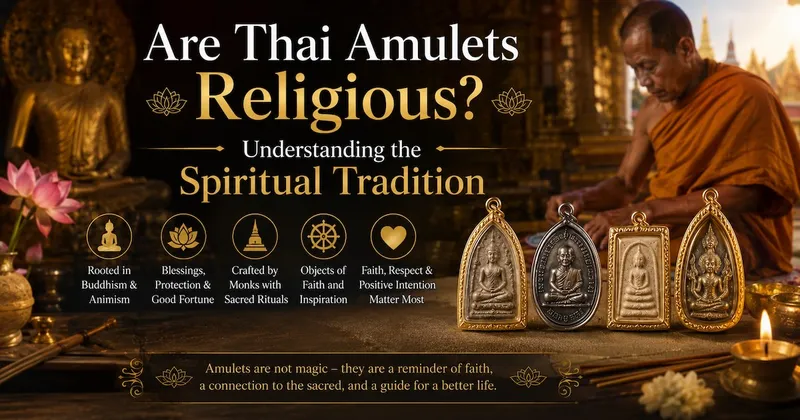
Thai amulets are rooted in Theravada Buddhism but are not strictly religious in the way that a crucifix or prayer beads are. They occupy a unique space between formal Buddhist practice, Hindu-Brahmanical tradition, folk spirituality, and cultural identity. Millions of Thai people wear amulets without considering themselves particularly religious — for them, amulets are part of Thai culture rather than a theological statement.
Understanding this nuance matters because it shapes whether you, as someone from any background, can comfortably wear a Thai amulet without feeling you are adopting or betraying a religion.
The Buddhist Foundation
Thai amulets are created by Buddhist monks, consecrated through Buddhist ceremonies, and depict Buddhist figures. The spiritual framework is unambiguously Buddhist:
- The consecration ceremony (Puttapisek) involves chanting Buddhist scripture and meditation
- The merit system that underlies amulet practice — good actions create positive spiritual energy — is a core Buddhist concept
- The monks who create amulets are ordained members of the Buddhist Sangha, following Buddhist monastic rules
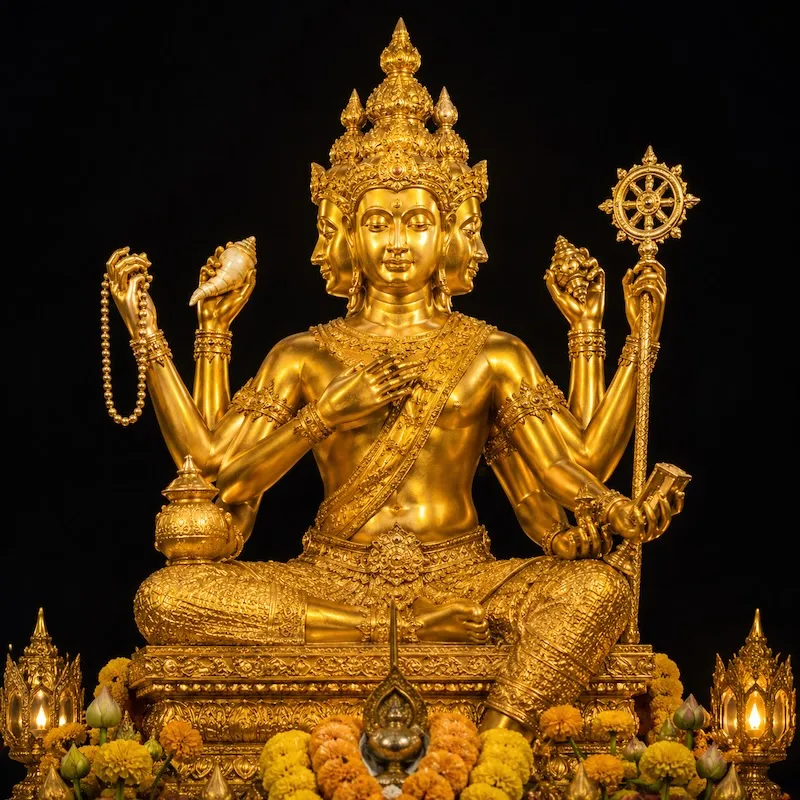
However, Thai Buddhism itself is a blend. Over centuries, it absorbed Hindu deities (like Phra Phrom and Ganesha), Brahmanical ritual practices, and local animist beliefs. The result is a spiritual landscape far more eclectic than the pure Theravada doctrine taught in monasteries. Thai amulets reflect this real-world Buddhism — messy, syncretic, and practical — rather than textbook theology.
Is Wearing an Amulet a Religious Act?
That depends on the wearer's intention. Thai amulet practice exists on a spectrum:
- Devout Buddhist practice — Some wearers treat their amulet as a meditation aid, a reminder of Buddhist teachings, and a tangible connection to their monk and temple. For these people, wearing an amulet is genuinely religious.
- Spiritual but not religious — Many wearers believe in the protective and beneficial energies of their amulet without framing it in specifically Buddhist terms. They see it as spiritual support — a positive force in their life — without dogmatic commitment.
- Cultural practice — Some Thai people wear amulets simply because it is what Thai people do. Like wearing a lucky charm or a family heirloom, the practice is cultural rather than theological.
- Collector and aesthetic interest — Some people collect amulets for their historical, artistic, or cultural value without any spiritual practice at all.
All of these approaches are considered valid within Thai culture. There is no gatekeeper requiring a specific level of belief before you can wear an amulet.
What Do Thai Monks Say?
Most Thai monks take an inclusive, practical view. They create amulets to help people — any people — and do not impose religious prerequisites on wearers. The typical monk's guidance is simple: treat the amulet with respect, carry positive intentions, and live ethically. They do not ask about your religion, denomination, or level of belief.
Some more conservative monks within the Thai Buddhist establishment view amulet culture critically, arguing that it distracts from "real" Buddhism (meditation, scripture study, ethical conduct). This is an ongoing internal debate within Thai Buddhism, not a settled position.
Can People of Other Faiths Wear Thai Amulets?
This is a personal decision, and perspectives vary:
- Christians — Some Christians wear Thai amulets alongside their cross or saint medals without conflict, viewing the amulet as a form of spiritual protection that complements their faith. Others prefer to keep their spiritual practice exclusively Christian. There is no universal ruling from any major Christian denomination specifically addressing Thai amulets.
- Muslims — Islam generally has stricter prohibitions on objects from other spiritual traditions. However, in southern Thailand and Malaysia, where Islam and Thai Buddhism coexist, some Muslim individuals do wear amulets discreetly. This is a personal choice that may conflict with orthodox Islamic teaching.
- Hindus — Given the strong Hindu elements in Thai amulet tradition (Ganesha, Brahma, Narayana), Hindu practitioners often feel comfortable with Thai amulets as expressions of a shared spiritual heritage.
- No religion / spiritual but not religious — Thai amulets are particularly accessible for people who want spiritual support without subscribing to an organized religion. The tradition's flexibility accommodates this approach naturally.
Religion vs Superstition
Western observers sometimes dismiss Thai amulets as "superstition" — a word that carries implicit judgment. But the distinction between religion and superstition is largely a matter of perspective and cultural position. From within the tradition, amulet practice is a legitimate expression of Buddhist faith, rooted in centuries of monastic scholarship, meditation practice, and community devotion. Dismissing it as superstition reveals more about the observer's assumptions than about the tradition itself.
What can be said objectively: Thai amulet practice is a living spiritual tradition with deep roots, institutional support (from the Buddhist monastic order), millions of practitioners, and a coherent internal logic. Whether you call it religion, spirituality, or cultural practice is less important than whether it brings genuine value to the practitioner's life.
The Practical Takeaway
If you are drawn to Thai amulets, you do not need to become Buddhist or adopt any specific religious identity. What matters is respect — for the tradition, for the objects, and for the monks who create them. Treat the amulet as sacred, carry positive intentions, and let the spiritual dimension unfold naturally through your own experience.
Start exploring with our beginner's guide to Thai amulets, or browse our collection to find a piece that speaks to you.