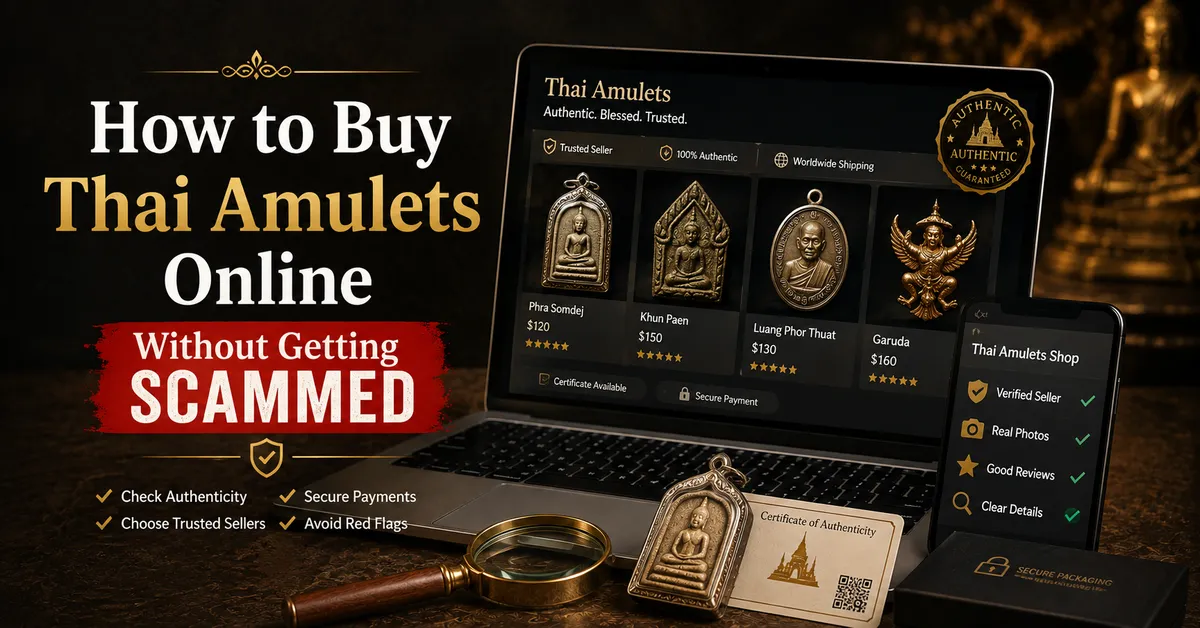
Buy from specialist amulet dealers (not general marketplaces), look for money-back guarantees, verify the seller knows the monk and temple behind each piece, use PayPal or credit cards for buyer protection, and never trust "too good to be true" prices. Temples are the safest source, but reputable online dealers with transparent practices are a close second.
The online amulet market: opportunity and risk
Buying Thai amulets online gives you access to pieces from across Thailand that you would never find walking through a single market. But it also removes your ability to hold, weigh, smell, and closely inspect an amulet before purchasing — the very tests that reveal fakes. This makes choosing the right seller more important than choosing the right amulet.
5 signs of a trustworthy online seller
1. Deep knowledge, not just inventory
A genuine amulet dealer can tell you the specific monk who consecrated each piece, the temple where the ceremony took place, the year it was made, and the materials used. They should be able to discuss the monk's lineage and reputation. If a seller's product descriptions are generic ("very powerful," "ancient," "bring good luck") without specifics, that is a warning sign.
2. Clear return and refund policy
Trustworthy dealers offer a money-back guarantee on authenticity — typically 7 to 30 days. They are confident enough in their sourcing to take on that risk. Sellers who say "all sales final" or "no returns on spiritual items" are hiding behind excuses.
3. Original photography
Legitimate sellers photograph each individual amulet from multiple angles — front, back, sides, and close-ups of details. Be suspicious of listings that use the same studio photo for multiple items, stock images, or photos clearly taken from other websites (look for watermarks or inconsistent backgrounds).
4. Physical presence and history
The best online sellers also have a physical shop, attend amulet fairs, or have a documented history in the community. Look for an "About" page with real names, locations, and backstory. Anonymous sellers with no traceable identity are high risk.
5. Community reputation
Check for reviews on independent platforms (not just testimonials on their own website). Look for mentions in amulet collector forums, Facebook groups, or YouTube channels. A seller with years of positive community feedback is far safer than one with a slick website but no external footprint.
Red flags that scream "scam"
- Prices far below market: A "genuine Somdej Wat Rakang" for ฿1,000 is impossible — real ones start in the thousands. Scammers use famous names at bargain prices to lure buyers.
- Urgency tactics: "Only 1 left!" "Price increases tomorrow!" "Someone else is looking at this!" — classic pressure manipulation.
- No specific provenance: If the listing cannot name the monk, temple, and approximate date, the seller likely does not know (or care) whether the amulet is authentic.
- Cryptocurrency-only payment: Legitimate dealers accept PayPal, credit cards, or bank transfers — methods that offer buyer protection. Crypto-only means no recourse if scammed.
- Mass-produced appearance: If every amulet in the shop looks identical and perfect, they are factory reproductions.
Safe payment methods (ranked)
- PayPal (best): Offers buyer protection up to 180 days. You can dispute and get a refund if the item is not as described.
- Credit card (great): Most credit card companies allow chargebacks for fraudulent or misrepresented purchases.
- Bank transfer (moderate): Less protection, but still traceable. Acceptable for established dealers you already trust.
- Western Union / crypto (avoid): No buyer protection. Once sent, the money is gone. Only scammers insist on these methods.
Where to shop online
Best options
- Specialist amulet websites: Dedicated Thai amulet dealers with deep catalogs, educational content, and established reputations
- Temple websites: Some temples now sell amulets through their official websites — the most trustworthy source possible
- Amulet collector communities: Facebook groups and forums where experienced collectors sell to each other with peer accountability
Use with caution
- Etsy: Mixed quality. Some legitimate small dealers operate here, but also many reproductions sold as "authentic." Check seller reviews carefully.
- eBay: Similar to Etsy — pockets of legitimacy in a sea of mass-produced items. Only buy from sellers with extensive positive feedback specifically for amulets.
Generally avoid
- Amazon: Almost entirely mass-produced decorative items, not consecrated amulets
- AliExpress / Wish / Temu: Factory reproductions with no spiritual value
- Random Instagram/TikTok sellers: No accountability, no returns, often using stolen photos
What to do after buying
- Inspect immediately: When the amulet arrives, compare it against the listing photos. Check weight, detail quality, and aging patterns. See our authentication guide for the 7-point checklist.
- Contact the seller with questions: A legitimate dealer will welcome your questions and provide additional information about the piece.
- Request a return if something is off: Do not hesitate to use the return policy. A dealer who gets defensive about returns is a dealer you should not trust again.
FAQ
Q: Is it safe to buy Thai amulets from overseas?
A: Yes, as long as you choose the right seller. Many reputable Thai dealers ship worldwide with tracking and insurance. The distance actually matters less than the dealer's reputation and return policy.
Q: How much should I expect to pay for a genuine amulet?
A: Modern amulets from respected monks: ฿400-100. Mid-range collectible pieces: ฿3,300-1,000. Rare antique amulets from famous masters: ฿33,000-100,000+. If a price seems impossibly low for what is being offered, it almost certainly is.
Q: Can I buy directly from Thai temples online?
A: Some temples have official websites or Facebook pages where they sell amulets from recent ceremonies. This is the safest method, though selection is limited to what that temple has produced recently.
Q: What if I receive a fake?
A: If you paid via PayPal or credit card, file a dispute immediately. Document the amulet with photos and explain why you believe it is not as described. If the seller has a return policy, use it. For future purchases, stick to sellers who have already proven trustworthy.
Last updated: June 2026 | By the Merit Messenger team, based in Bangkok
At Merit Messenger, every amulet comes with full provenance documentation and a satisfaction guarantee. Browse our collection or contact us with questions before you buy.