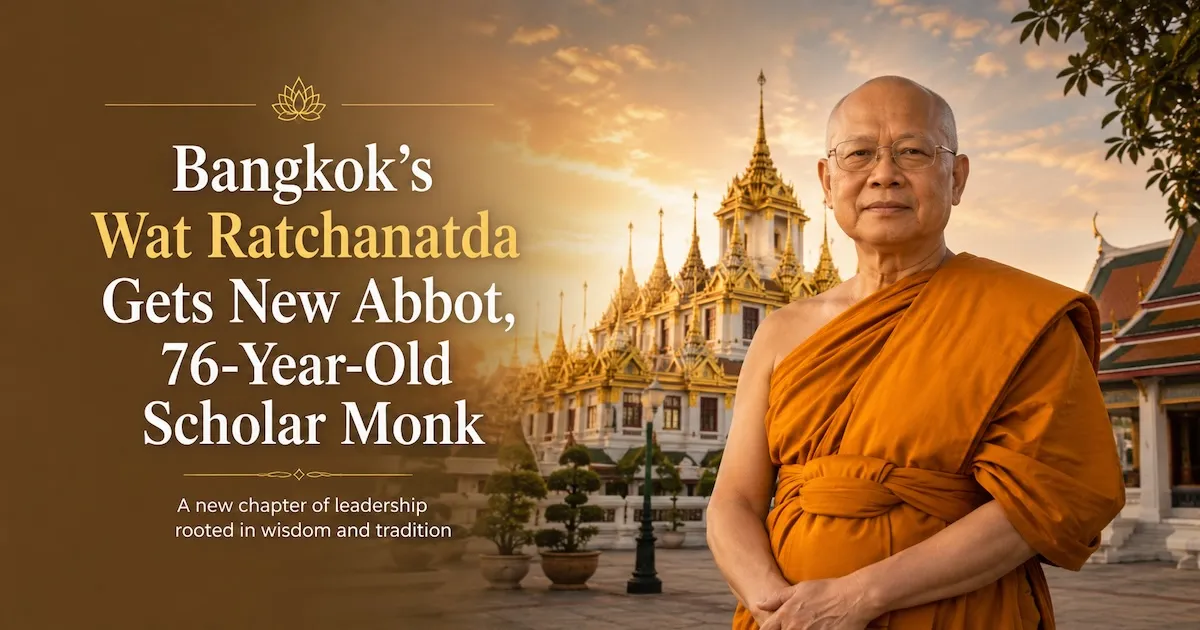
On August 15, 2026, the Sangha of Bangkok, under the presidency of Somdet Phra Maharatchamangalamuni, formally appointed 76-year-old Phra Thammawachirapatiphan (พระธรรมวชิรปฏิภาณ, birth name Boonma Akhompunyo, known to devotees as "Chao Khun Boonma") as acting abbot of Wat Ratchanatdaram (วัดราชนัดดาราม) in Bangkok's old town. He had previously served as deputy abbot of Wat Prayurawongsawas and as head of the Phasi Charoen district sangha, and has 56 years as an ordained monk. The appointment follows the death of the temple's previous abbot, Phra Thep Visutthivethi (birth name Watana Khemiko), who passed away at 5:09 a.m. on August 9 at the Hospital for Monks in Bangkok, at age 90 after 71 years in robes.
Home to the World's Last Surviving "Metal Castle"
Wat Ratchanatdaram was built in 1846 (Buddhist Era 2389) by royal decree of King Rama III, in honor of his granddaughter, Princess Somanass Wattanavadi. Its centerpiece is the Loha Prasat (โลหะปราสาท), literally "Metal Castle," a multi-tiered spired structure whose layout was planned by Chao Phraya Yommaraj and whose construction was overseen by Chao Phraya Sripiphat. According to Buddhist historical records, only three metal castles have ever been built in history: one in ancient India, one in Sri Lanka, and this one in Thailand. Today, Wat Ratchanatdaram's is the only one still standing intact anywhere in the world. The temple sits at the intersection of Ratchadamnoen Klang and Mahachai roads in Bangkok's old city, near the Golden Mount temple, Wat Saket, and the historic amulet trading district, making it a frequent stop for both religious visitors and amulet enthusiasts touring old Bangkok.
Who Is the New Acting Abbot
Phra Thammawachirapatiphan is a respected scholar-monk who holds Pali Level 8, one of the highest grades in Thailand's monastic Pali examination system, and built his reputation at Wat Prayurawongsawas as a preacher and teacher of monks and novices. His appointment as "acting abbot" means he now oversees the temple's daily affairs, ceremonies, and visitor programs, though under Thai sangha custom, formal confirmation as full abbot typically follows a further period and depends on his standing within the monastic hierarchy.
What This Means for Collectors and Visitors
In Thai Buddhist tradition, a change of abbot often precedes a new round of temple ceremonies and consecrations, with many temples marking a new abbot's tenure by issuing commemorative amulets to thank supporters. Wat Ratchanatdaram is not primarily known as an amulet-producing temple, but its location in Bangkok's old town places it squarely within the routes collectors already walk. If you're planning a visit, our guide to Bangkok's amulet markets covers the surrounding district. This kind of abbotship transition follows a familiar pattern we've covered before, including the elevation of Wat Suthat's deputy abbot to a vacant royal title, both reflecting how Thailand's sangha hierarchy promotes based on seniority, scholarship, and years in robes. For overseas collectors, tracking these leadership changes can offer an early signal of upcoming commemorative consecrations worth watching.
Source: Dailynews