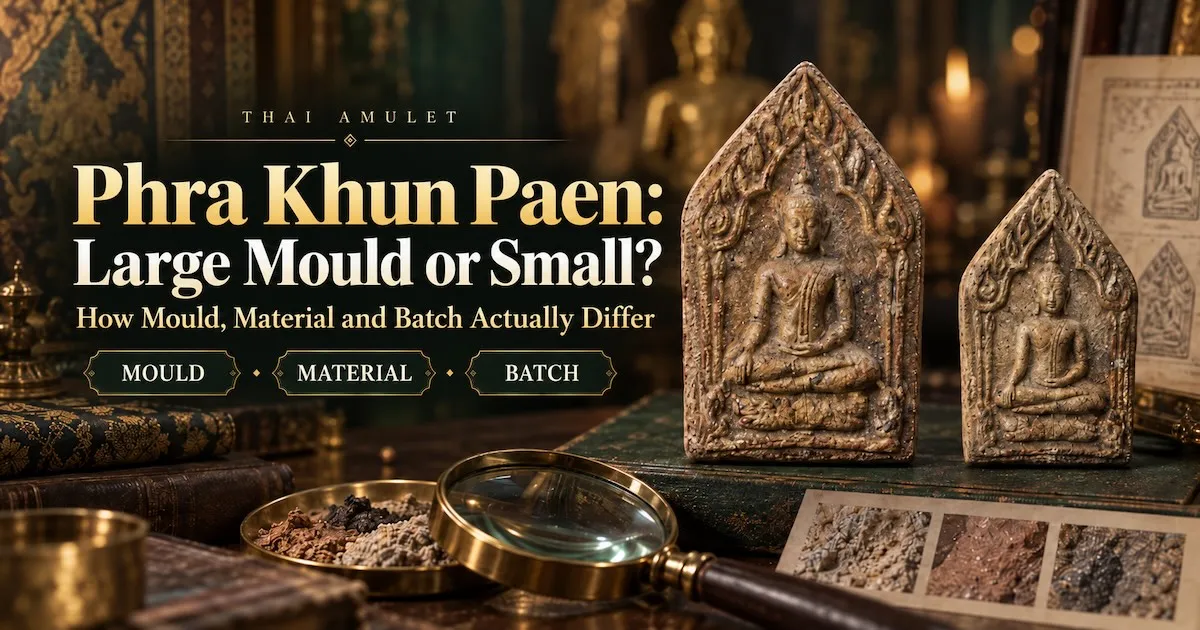
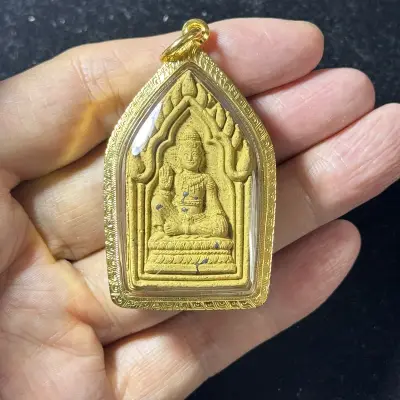
A Phra Khun Paen is asked for charm and popularity, not wealth, and the figure on it is not Khun Paen himself. Using one batch issued in both moulds, this guide explains what really separates Phim Yai from Phim Lek, why powder amulets need a case, and how to avoid the shared-monastic-name trap.
TL;DR: A Phra Khun Paen is asked for Metta Maha Niyom — charm, attraction, mentor and customer favour — not for windfalls. A single batch is usually issued in several moulds: Phim Yai, the large mould, is bigger and more deeply struck and often carries a hand-inscribed yantra on the back, which collectors prefer; Phim Lek, the small mould, is light and discreet for daily wear. Same batch, same materials, same ceremony — the difference is craft specification and how you intend to wear it.
1. The figure on a Khun Paen is not Khun Paen
The name comes from the hero of the Thai classic Khun Chang Khun Phaen, a man remembered as learned, brave and impossible not to like — the figure Thais reach for when they talk about personal charm.
But the amulet does not depict him. It shows the Buddha seated in meditation on a lotus base beneath an ornamental arch, in the five-sided house-shaped mould. The charm being invoked is carried by the Dhamma. This is often misunderstood, and understanding it keeps you from shopping in the wrong direction.
What Thai wearers actually ask of a Khun Paen is this: that people listen when you speak, that a counterpart extends a little more trust in a negotiation, that you are not always the one who gets overlooked. It smooths relationships. It is not a wealth charm.
2. Large versus small mould: more than size
A batch usually comes in several moulds. Taking the B.E. 2554 ordination-hall batch by Luang Pho Sakorn, which we currently carry in both, the differences are concrete:
- Phim Yai (large) — bigger and more deeply struck, so the face and robe lines read clearly, with a bodhi arch on two columns. The back is covered in dense hand-inscribed yantra with a square gold takrut set into the centre. It wears with presence and is generally more sought after. See the large mould
- Phim Lek (small) — a flame-and-scrollwork arch and finer lines; the back carries a mould-pressed yantra with the same gold takrut at the centre. Light, invisible under a shirt, and comfortable for smaller frames. See the small mould
The key point: hand-inscribed versus mould-pressed yantra is a difference in labour, not in efficacy. Pieces from the same batch, the same sacred materials and the same ceremony are equivalent as sacred objects. Buy the large mould for presence or for collecting; buy the small mould if you want to wear it every day without it showing.
3. Material: why powder dominates
Khun Paen amulets are traditionally pressed from sacred powder (Nuea Phong), often including scripture powder, flower powder and temple relics. Powder is closest to the traditional feel but brings two practical problems:
- It dislikes damp and sweat — prolonged contact damages the body, so a case is required
- It is brittle — corners chip on impact, so bare wear is unwise
When buying a powder Khun Paen, check whether a waterproof case is already fitted. A piece that arrives cased is ready to wear and saves you the cost and wait of having one fitted. Clay and glazed versions exist too, with the same requirement.
4. Reading the batch: the ordination-hall example
Thai temples often name a batch after what the funds will build. Run Sang Ubosot — the build-the-ordination-hall batch — is typical. The ubosot is where ordinations and formal monastic acts take place, the heart of a Thai temple and by far its most expensive building. A batch issued to fund one is a merit-raising release: taking the amulet is itself a contribution to the construction.
Collectors value these for two reasons: the purpose and year are documented rather than vague, and because the project is the temple's public face, the best available materials and the most formal ceremony are usually committed to it.
5. Shared monastic names: an easy trap
Monks in Thailand very often share a name. Take Luang Pho Sakorn: the best known is the master of Wat Nong Krub in Rayong, but other provinces have masters of the same name. The certificates on the two pieces we carry name Wat Thep Nimit in Uthai Thani — not the Rayong master.
How to protect yourself: read the temple and province lines on the certificate, not just the monk's name. A seller who credits a piece with the record of a similarly named master at another temple is misleading you, whether or not they intend to.
FAQ
Q: Who should wear a Khun Paen?
A: Anyone whose work depends on people — sales, business, hospitality, freelancing — and those seeking a partner. By Thai custom it is not recommended for pregnant women or children under 16.
Q: Is the large mould more powerful?
A: No. Same batch, same materials, same ceremony. The large mould costs more for its size, depth of relief and hand-inscribed back — craft and collectability, not efficacy.
Q: Can a powder amulet be worn daily?
A: Yes, in a waterproof case, avoiding direct sweat contact and knocks. Pieces sold already cased are ready to wear.
Q: How do I verify authenticity?
A: Look for a Thai authentication card with a number, the amulet name, temple, province, issue date, two signatures and a scannable QR code, and check that the card matches the item.
Q: How is it worn?
A: Usually alone on the chest. Keep the five precepts, give, and speak kindly — with charm amulets in particular, Thai tradition holds that the wearer's own conduct is what the blessing works through.
Note: Thai amulets are objects of faith and cultural collection. Their purpose is to remind the wearer to keep precepts and act well. The blessings described here reflect Thai devotional tradition and are not a guarantee of any outcome.
Last updated: September 2026 | Merit Messenger team, based in Bangkok
Our Khun Paen amulets come with Thai certificates, are photographed as received and carry our ten-times refund guarantee. To compare the two moulds in detail, browse the shop or contact us. The linked pieces are one of a kind; their pages remain online after they sell as references for the same batch.