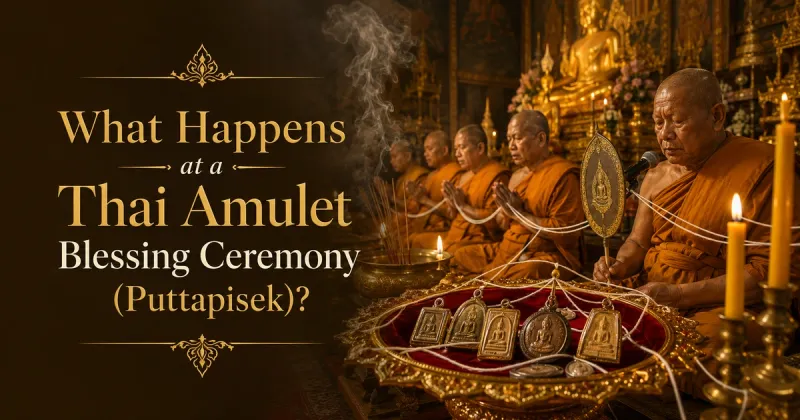
A Puttapisek is the consecration ceremony that transforms a physical object into a sacred amulet. Senior monks chant Pali scriptures for hours or days, channeling spiritual energy into the amulets through meditation and prayer. The quality of the ceremony — the monks' seniority, the duration, and the spiritual intensity — determines an amulet's power.
Why the ceremony matters more than the object
A Thai amulet before consecration is simply a piece of metal, clay, or powder shaped into a religious form. It becomes sacred only through the Puttapisek. This is why two identical-looking amulets can have vastly different spiritual value — the difference lies in who blessed them and how.
Before the ceremony: preparation
Creating the amulets
Weeks or months before, the amulets are physically created. For powder amulets, sacred materials are gathered — temple lime, crushed fragments of older amulets, consecrated herbs, flower petals from sacred trees, and sometimes sand from holy sites. Metal amulets are cast from donated metals, often including old temple bells or sacred bronze. Monks chant over the raw materials before they are formed.
Selecting the date
The ceremony date follows the Thai astrological calendar. Auspicious dates — coinciding with Buddhist holidays, full moons, or significant planetary alignments — are preferred. Some ceremonies honor the anniversary of a famous monk.
Inviting the monks
The presiding temple invites senior monks from other temples. Major Puttapisek ceremonies may feature 9, 27, or even 108 monks. Multiple masters channeling energy simultaneously multiplies the spiritual potency.
During the ceremony
Setting the sacred space
Sacred thread (sai sin) connects the Buddha images, the monks, and the amulets in an unbroken circuit — a conduit for spiritual energy. Candles, incense, and offerings are arranged. The amulets sit on a consecrated platform surrounded by the thread.
The chanting
The core of the Puttapisek is extended chanting of Pali scriptures. Monks recite protective suttas while maintaining deep meditative concentration (jhana), directing spiritual energy toward the amulets. Key texts include:
- Maha Mongkol Sutta: The Discourse on Great Blessings
- Ratana Sutta: The Discourse on Precious Jewels (protection)
- Metta Sutta: The Discourse on Loving-Kindness
- Specific kata: Sacred formulas unique to each monk's lineage
Duration
A standard Puttapisek lasts several hours. Major ceremonies can extend over multiple days with monks rotating in shifts. The most prestigious ceremonies in Thai history lasted a full week.
The climactic moment
Many ceremonies include a dramatic peak: lights are extinguished, leaving only candlelight. The senior-most monk enters deep meditation and the monks intensify their chanting. This is when spiritual energy reaches its highest concentration. Some monks light a special candle or pour sacred water over the amulets to seal the blessing.
After: distribution
- Free distribution: Some temples give amulets freely to attendees
- Suggested donation: The most common — devotees contribute to the temple and receive an amulet
- Reserved editions: Special amulets (gold, silver, limited runs) for major donors
Funds raised support the temple's operations, building projects, and community programs.
What makes a ceremony more powerful?
- The presiding monk's reputation: Decades of meditation practice and proven lineage
- Number of participating monks: More monks = more concentrated energy
- Duration of chanting: Longer ceremonies accumulate more energy
- Sacred materials: Fragments of older sacred objects or temple relics
- Auspicious timing: Significant Buddhist dates are more potent
Can you attend a Puttapisek?
Yes — most ceremonies are open to the public, including foreigners. Dress modestly, sit quietly, show respect. You do not need to be Buddhist. Many temples welcome foreign visitors. Check Thai amulet forums for upcoming ceremonies if visiting Thailand.
FAQ
Q: Can an amulet be re-blessed?
A: Yes. Bring your amulet to a temple and ask a monk to bless it again. Many Thais do this on important Buddhist holidays.
Q: Are online-purchased amulets really consecrated?
A: If from a reputable dealer who verifies the ceremony, yes. Consecration does not expire because the amulet was sold online. The key is provenance. See our safe buying guide.
Q: What is the difference between a Puttapisek and a regular blessing?
A: A Puttapisek is a formal, multi-monk ceremony specifically for consecrating amulets. A regular blessing (prayer or holy water) is simpler and shorter. Both are valid, but Puttapisek is considered more powerful.
Last updated: June 2026 | By the Merit Messenger team, based in Bangkok
Every amulet in our collection includes ceremony documentation. Browse our collection or contact us about specific pieces.