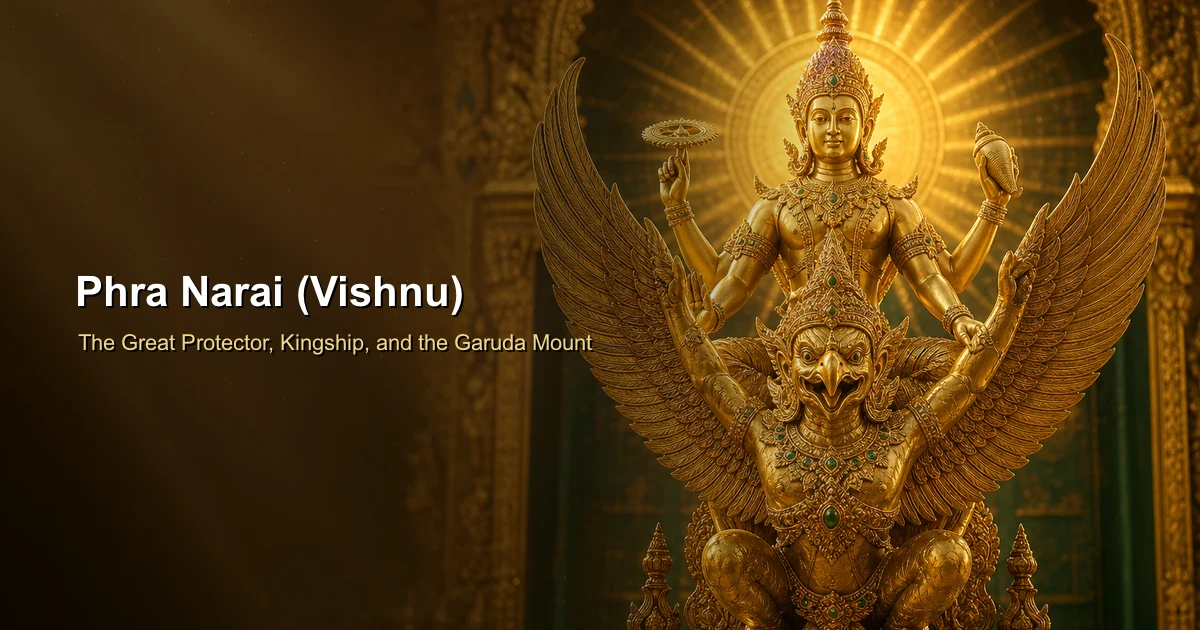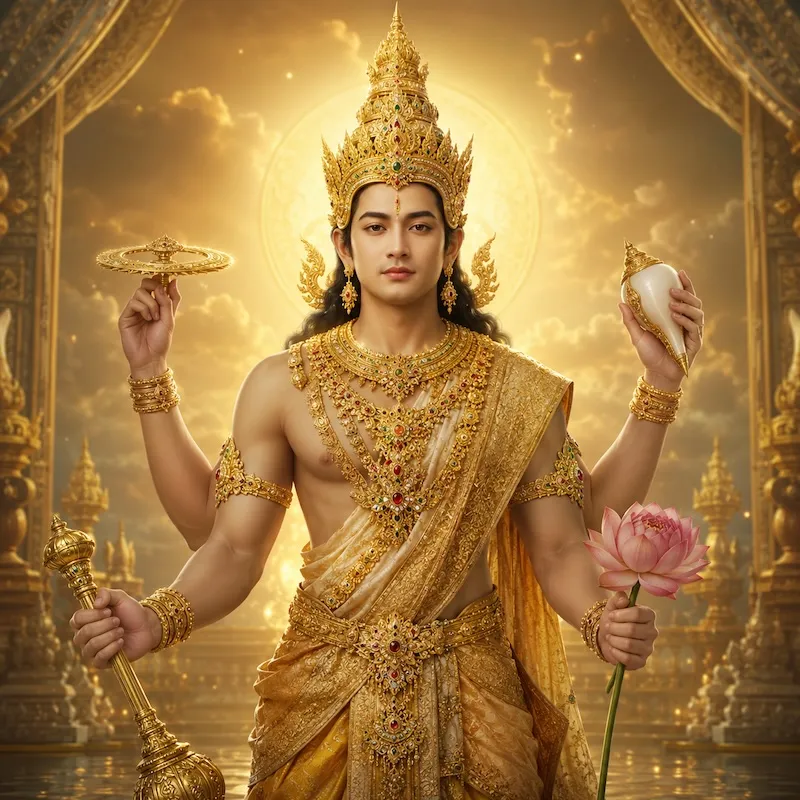
Phra Narai (Thai: พระนารายณ์) is Vishnu, the preserver among the three supreme deities of Hinduism. As the guardian who maintains the order of the cosmos, Vishnu descends to earth again and again to subdue evil and uphold righteousness; one of his ten avatars is Prince Rama of the epic Ramayana, giving Narai worship in Thailand a profound royal and national significance.
Symbol of Sovereignty and Nation
Thailand has long been founded on the idea of the king as an incarnation of the divine, its monarchs regarded as reincarnations of Rama, the avatar of Narai (Vishnu) — the very name of the "Rama" dynasty derives from this. Narai's mount, the Garuda, is designated as the national emblem and royal insignia of Thailand, seen on government offices and banknotes alike, attesting to its exalted place in Thai belief and political culture.
Divinity and Domain
Phra Narai governs protection, majesty and order, able to keep devotees secure in their standing, smooth in their careers and shielded from evil. Those praying for authority and prestige, advancement at work, and peace for family and nation often venerate him, and his protective power is regarded as solemn and profound.
Iconography
Phra Narai is usually depicted with blue skin and four arms holding a conch, a discus (Chakra), a mace and a lotus, symbolising his power to command, protect and create; he is often shown riding the Garuda or reclining upon the thousand-headed serpent. Common offerings include flowers and fruit.
Wearing and Collecting
Phra Narai amulets and images are a solemn and noble category of Thai sacred objects, signifying protection against evil, prestige and a secure career, and suit those who seek dignity, authority and safe protection, worn on the person and honoured with a righteous heart and proper devotion.