Phra Rahu (Thai: พระราหู) originates as the asura of Hindu myth who swallows the sun and moon to cause eclipses, and is one of the nine celestial deities (Navagraha). Legend tells that when the gods churned the ocean of milk for the nectar of immortality, Rahu slipped in among them to drink it; exposed by the sun and moon, he was beheaded by Vishnu, yet his deathless head, bearing a grudge, pursues and swallows the sun and moon, causing eclipses. In Thai belief Rahu is an important deity governing the reversal of misfortune.
Deity of Fortune Reversal
When a person meets an unlucky year, offends the year star or falls into a low ebb of fortune, devotees venerate Phra Rahu to turn danger into safety and misfortune into blessing. His power is regarded as fierce and direct, making him especially suited to worship when fortune is dark and a turnaround is urgently needed, to dissolve calamity and reverse decline.
The Rahu Temple and Its Rites
Thailand's most famous Rahu site is Wat Sisa Thong (the Rahu Temple) in Nakhon Pathom, which holds grand Rahu ceremonies on Wednesday nights that draw crowds of devotees. Worship follows the principle of "black offerings for the dark deity": traditionally eight black items are presented — black chicken, black coffee, black sticky rice, black grass jelly, black eggs and black beans among them — and the rites are usually performed after nightfall on Wednesdays, symbolising a turn of fortune at the darkest hour.
Iconography
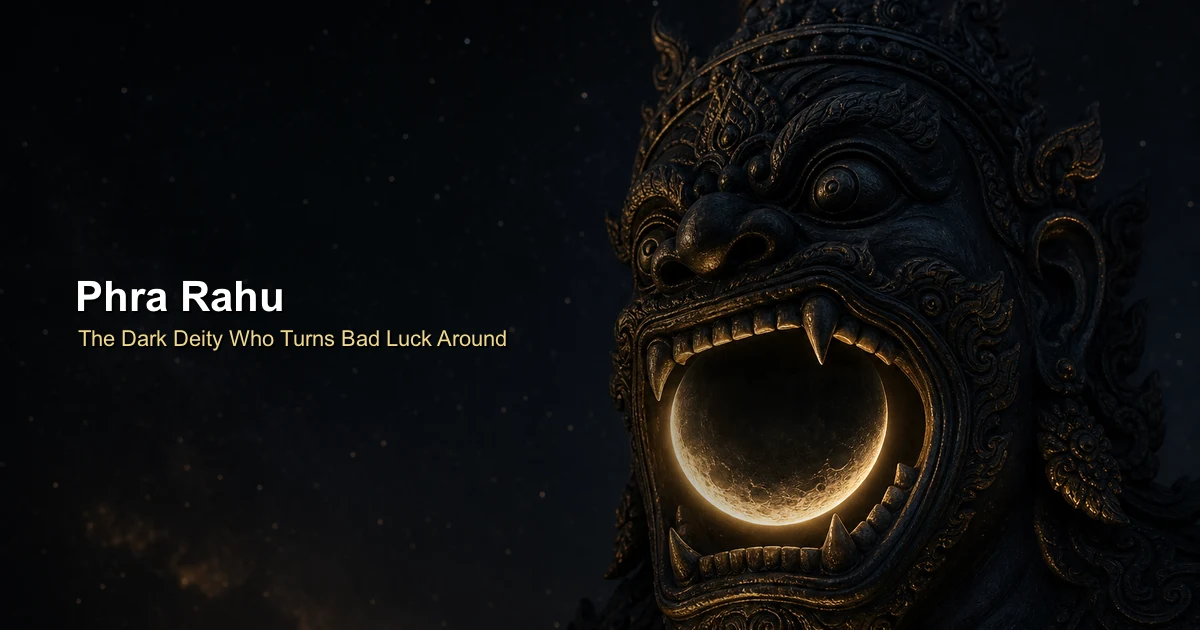
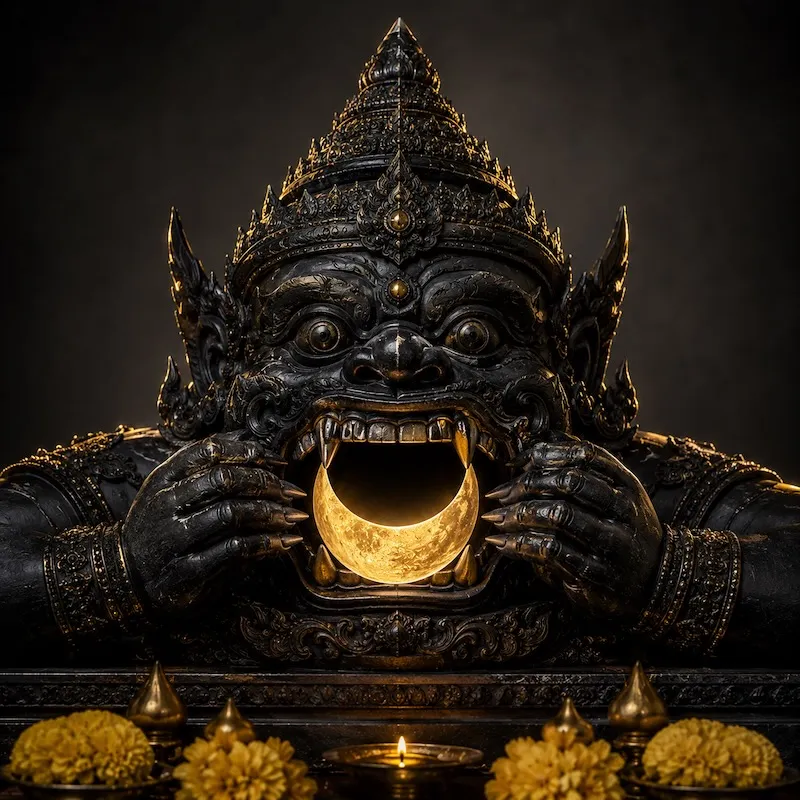
Phra Rahu is usually depicted as an imposing dark giant with mouth open, swallowing the sun or moon, fierce and awe-inspiring. His black regalia symbolises the devouring of misfortune and the guarding of one's turn of fortune, making him one of the most recognisable subjects among Thai fortune-reversing sacred objects.
Wearing and Collecting
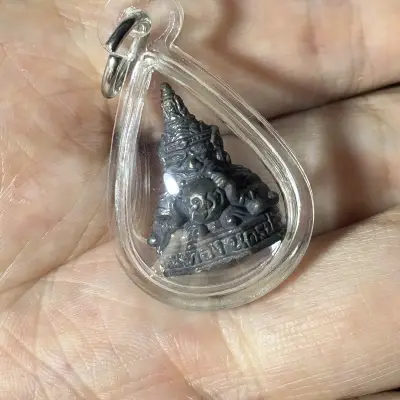
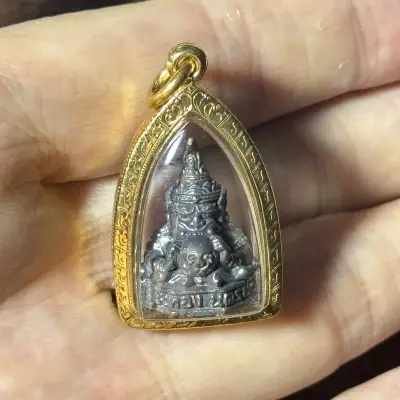
Phra Rahu amulets are a classic category among Thai fortune-reversing sacred objects, signifying protection against the ill-luck year, the dissolving of misfortune and the turning of danger into safety, and are cherished by those in a low run of luck or seeking a breakthrough. They are best received and honoured with reverence and proper offerings, to accord with the majesty of Rahu.