Life of Luang Pu Moon
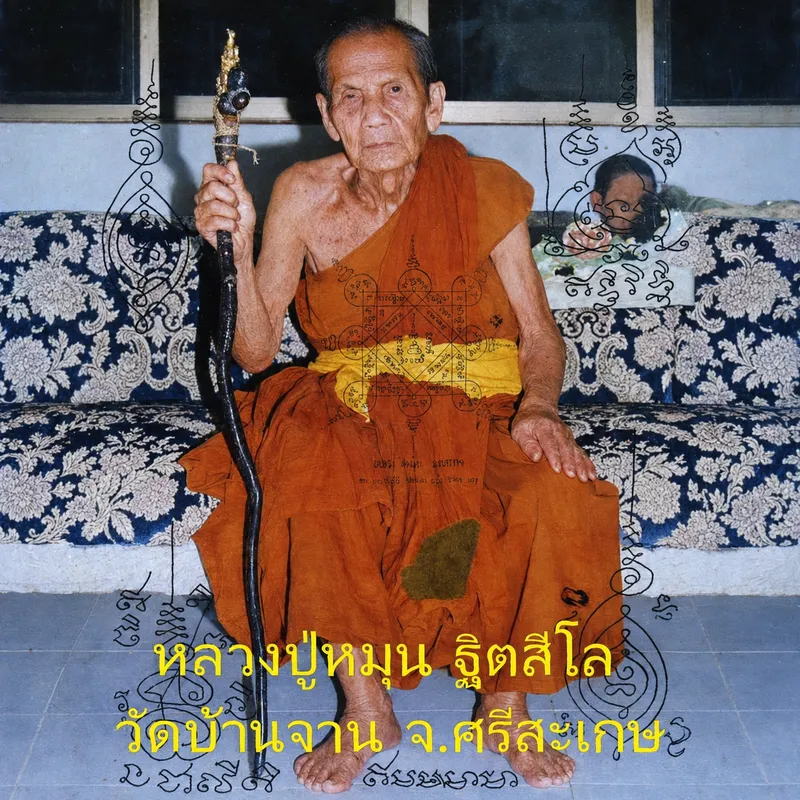
Luang Pu Moon Thitasilo (Thai: หลวงปู่หมุน ฐิตสีโล, also romanised Mun or Hmun) was a senior monk of Wat Ban Jan (วัดบ้านจาน) in Kanthararom district, Sisaket province. He was born Mun Sisongkhram in Ban Jan village in BE 2437 (1894). The Thai press calls him the "great elder of five reigns" (พระมหาเถระ 5 แผ่นดิน), because his life spanned the reigns of five kings.
According to Naewna and Khaosod he became a novice at 14 and was placed with Phra Ajahn Sida, the abbot of Wat Ban Jan and a skilled meditation teacher. He was ordained as a monk in BE 2460 (1917) and given the name Thitasilo, "one whose virtue is firm". He practised both calm and insight meditation and spent many years wandering, studying with senior monks in Thailand and neighbouring countries.
He was already over a hundred when he became widely known. In BE 2541 (1998) he spent his first rains retreat at Wat Pa Nong Lom (วัดป่าหนองหล่ม) in Watthana Nakhon district, Sa Kaeo, and from then on helped that small meditation centre raise funds for its buildings. He died peacefully in his quarters on the morning of 11 March BE 2546 (2003), aged 109 after 86 rains retreats. His body is kept at Wat Ban Jan, where large numbers of devotees still come to pay respects at New Year.
Practice and lineage
His grounding was in meditation: his first teacher was known for kammatthana practice, and he himself combined calm and insight. Thai reports say he learned ritual knowledge from several well-known monks while wandering but give no list, so none are named here.
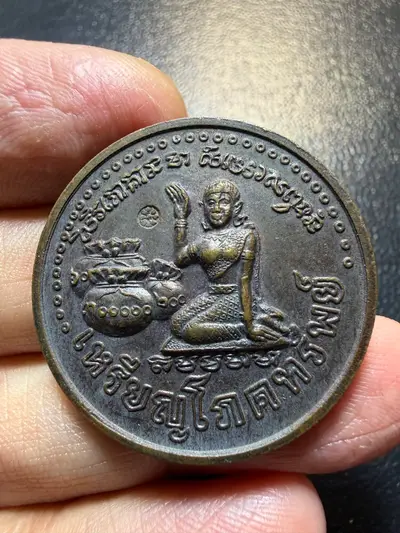
He became widely known mainly in the last years of his life. Between BE 2542 and 2546, portrait coins, small cast images and powder amulets made in his name appeared in quick succession, mostly on themes of prosperity. Thai devotees traditionally associate his amulets with good fortune in money matters; that is folk belief, not a promised result.
Notable batches
Years and issuing temples below rest mainly on Thai amulet-market references and association authentication records; press coverage of individual batches is thin, so production numbers are omitted.
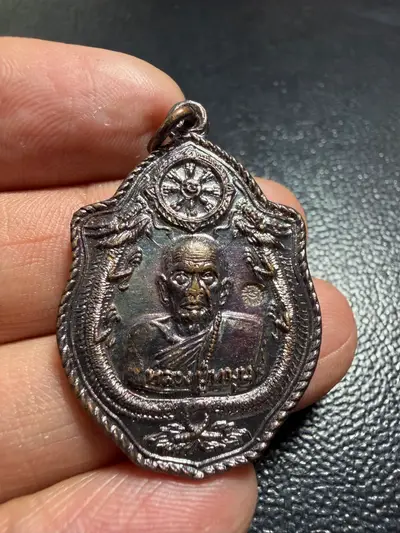
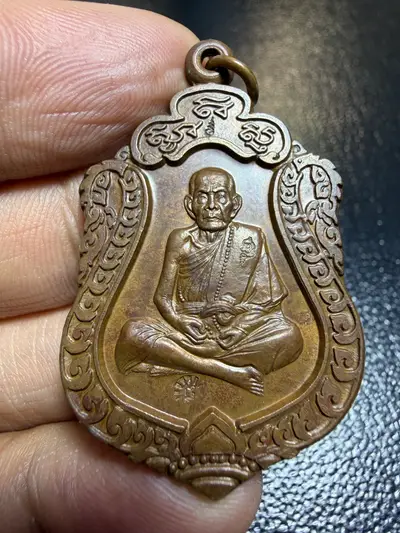
- BE 2542 (1999) Narai on Garuda portrait medal: issued by Wat Ban Jan, shield-shaped, in copper and other metals; one of the earlier batches under his own temple.
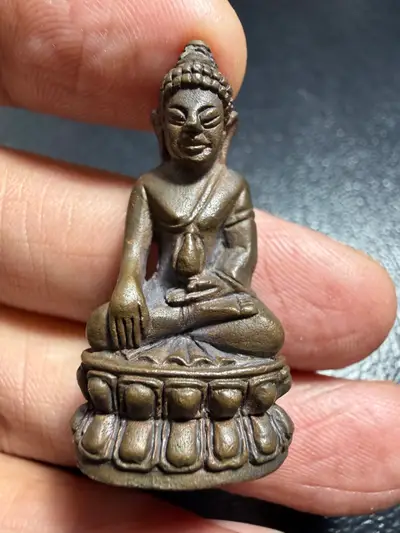
- BE 2542 first-batch cast portrait figure: a small metal image from Wat Ban Jan, ranked by the Thai market among his most sought-after pieces.
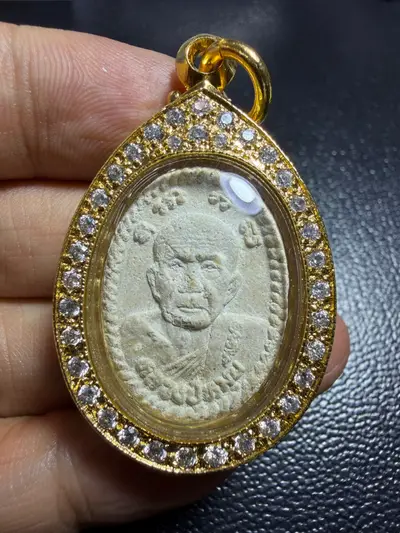
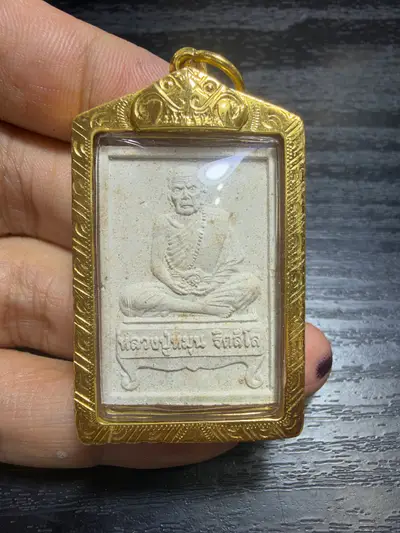
- BE 2543 (2000) "Sao Ha Maha Setthi" batch: issued by Wat Pa Nong Lom. Its Duang Setthi powder amulet is the best known; Naewna notes that this year's Duang Setthi is the origin of the later batches that reuse the name.
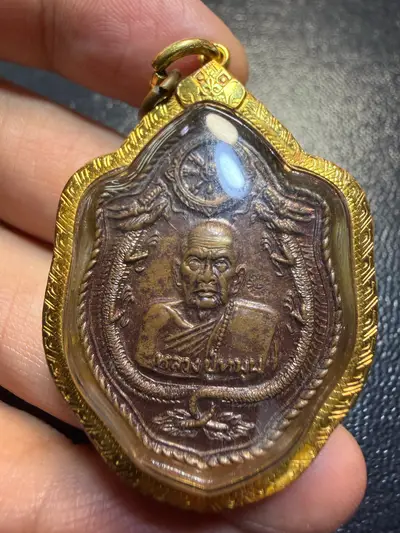
- BE 2543 twin-dragon portrait coin: issued by Wat Pa Nong Lom, mainly in copper.
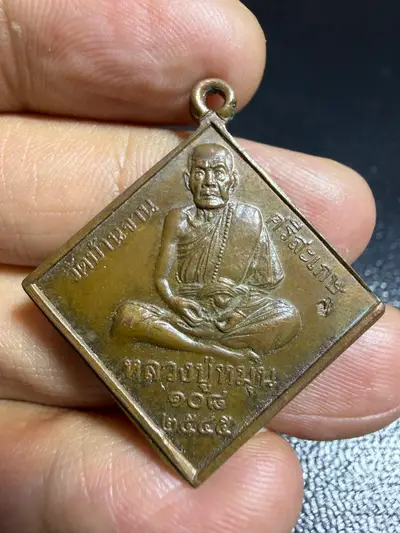
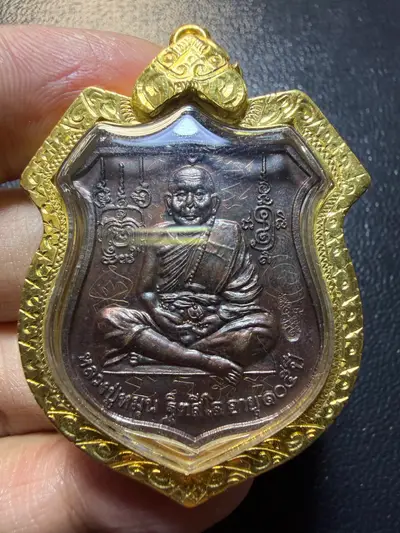
- BE 2543 "Maha Som Pratthana" shield-shaped coin: marked with his age of 106 and issued through Wat Sap Lamyai in Lopburi, although the reverse carries the name of Wat Ban Jan.
- BE 2545 (2002) "Chakkratrathirat" Brahma portrait medal: registered by the association under Wat Suthat in Bangkok, a batch from the year before his death.
Collecting notes
The issuing temple is often not Wat Ban Jan. This is the point most often misread. He was past a hundred when he became famous, and many batches were issued by temples he supported or was invited to consecrate for, such as Wat Pa Nong Lom in Sa Kaeo, Wat Sap Lamyai in Lopburi and Wat Suthat in Bangkok. The temple field on an authentication card names the issuing temple, so his cards may say Sisaket, Sa Kaeo, Lopburi or Bangkok, and the temple name struck on a coin does not always match the issuer. Check the monk's name หลวงปู่หมุน with the batch name and year, and do not reject a piece because the temple is not Wat Ban Jan.
Lifetime versus later issues: he died on 11 March BE 2546, so only batches from BE 2542 to early 2546 can have been consecrated by him. Temples have kept issuing pieces with his portrait since. Wat Pa Nong Lom released the "Pidta Phom Muai Ruai Dang Chai" in BE 2561, about eleven thousand pieces according to Naewna, using old powder he had consecrated; Wat Ban Jan held a ceremony for the "Banlang Setthi Nun Duang" batch in BE 2564; and Wat Weluwan in Sisaket has issued a re-strike of the twin-dragon coin. These were consecrated by later monks and are commemoratives.
Reused names and a similar name: names such as Duang Setthi and Mangkon Khu have been reused repeatedly, so check the year. The spelling "Mun" is also easily confused with Ajahn Mun Bhuridatta (หลวงปู่มั่น ภูริทัตโต), the forest-tradition master; the Thai names differ (หมุน and มั่น) and the two are unrelated.
Reading the card: it should show "หลวงปู่หมุน" or "หลวงปู่หมุน ฐิตสีโล" with the batch name, year and issuing temple. Global buyers should first confirm the year is before BE 2546, then check that batch and temple match one of the pairings above.