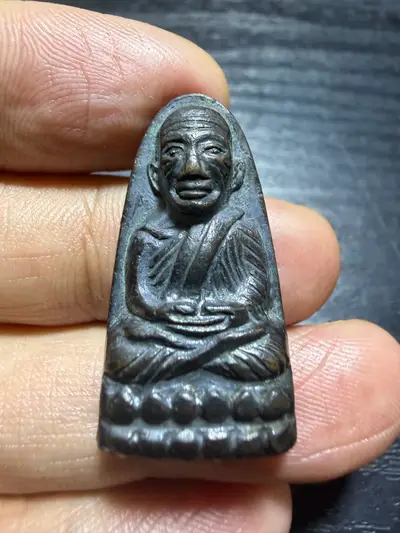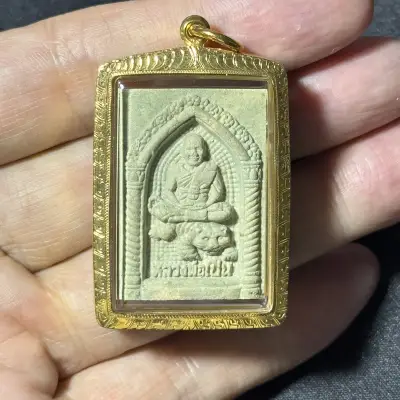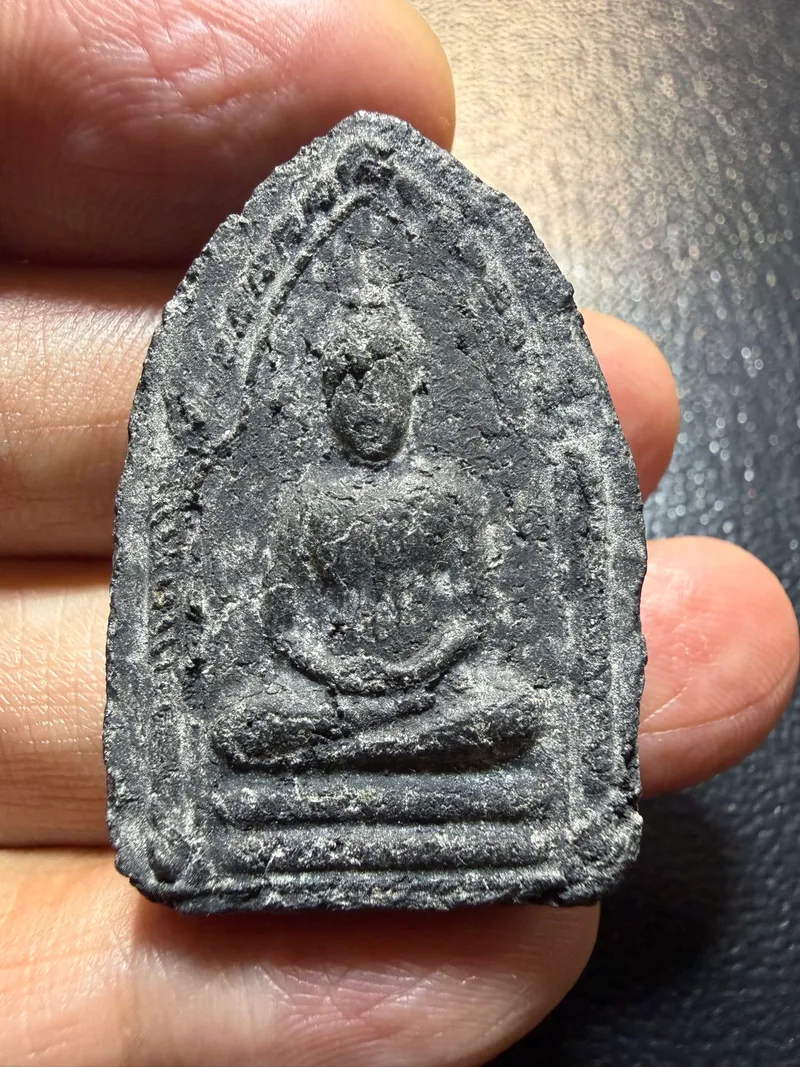
A Phra Khun Paen Ruean Kaeo (ขุนแผนเรือนแก้ว, "crystal shrine" mold) judged genuine by the Thai Buddha Image Admiration Association: an old Khun Paen with a white crust over a black body, the Buddha seated within a pointed-arch shrine and a plain back with natural signs of age. Per the supplier, it is Ajarn Chum's B.E. 2506 (1963) "Si Ni Kap" Khun Paen; the association receipt records the amulet name "ขุนแผน เรือนแก้ว" (Khun Paen, crystal shrine mold). Judged genuine by the association, No. 04629, barcode GJ09-B6B89; the formal certificate is included. One piece only; it is held by a partner supplier, so please submit a request and we confirm availability by email within 24 hours.
What is a Phra Khun Paen Ruean Kaeo (พระขุนแผนเรือนแก้ว)?
Phra Khun Paen (พระขุนแผน) is named after Khun Paen, the handsome, brave and much-loved general of Thai folk legend, which is why Khun Paen amulets are worn for charm, popularity and safety. "เรือนแก้ว" (Ruean Kaeo) literally means "crystal hall" and refers to the pointed-arch shrine frame around the Buddha, one of the classic Khun Paen molds.
Per the supplier, this piece is a B.E. 2506 (1963) "Si Ni Kap" Khun Paen (Phra Khun Paen Si Ni Kap) made by Ajarn Chum. "Si Ni Kap" means "the king returns to the palace", that is, "coming home safely", and the supplier ranks the batch among Thailand's ten great Khun Paen (supplier's claim). The association receipt records the amulet name "ขุนแผน เรือนแก้ว", the crystal shrine mold used for this batch; the master, batch name and year follow the supplier.
Key facts
- Type: Phra Khun Paen (พระขุนแผน)
- Mold: Ruean Kaeo (เรือนแก้ว, crystal shrine), as written on the association receipt
- Batch: Si Ni Kap ("the king returns to the palace", "coming home safely"), per the supplier
- Material: black body with an old white crust (the supplier calls it "white rim, black body"); per the supplier, made from Wan Si Ni Kap, 108 kinds of pollen and herbs, water from nine rivers and earth from holy sites
- Temple: not stated by the supplier
- Master: Ajarn Chum, per the supplier
- Year: B.E. 2506 (1963), per the supplier
- Certification: judged genuine (แท้) by the Thai Buddha Image Admiration Association, No. 04629, barcode GJ09-B6B89, dated 15 September B.E. 2569 (2026); formal certificate included
- Case: none
- Stock: one piece only, held by a partner supplier
Who made this piece?
Per the supplier, this piece was made by Ajarn Chum in B.E. 2506 (1963) as part of the "Si Ni Kap" batch. The supplier says that during the consecration 108 pieces were thrown into a river as a test and floated back upstream to the ceremony tent, which is why the batch is also called "the amulet that swims". This is passed on as the supplier's account.
Blessings
- Charm and popularity: the hallmark of Khun Paen amulets, for relationships and attraction
- Helpful people and career: support from benefactors and in advancement
- Safety: the supplier says the batch stands for "coming home safely", for travel and time away from home
Note: an amulet supports practice and intention; it does not guarantee any outcome. Keeping the Five Precepts is traditionally recommended.
Craftsmanship
Pointed at the top and square at the base. The Buddha sits in meditation on a multi-tier base, framed by a pointed-arch shrine with fine decoration on its inner edge. The body is black with a mottled white crust that is thickest in the recesses. The back is plain and uninscribed, with a granular texture and a faint yellow-brown patch in the middle. According to the supplier, the batch was made from a rare mountain plant called Wan Si Ni Kap, 108 kinds of pollen and herbs, water from nine rivers and earth from Buddhist holy sites, with 84,000 pieces made in total (supplier's figures). Supplied without a case.
FAQ
Q: What does the association certificate say?
A: The association receipt names the piece "ขุนแผน เรือนแก้ว", a Khun Paen in the crystal shrine mold, with "แท้" (genuine) ticked and "มีซ่อม" (repaired) not ticked, No. 04629, dated 15 September B.E. 2569 (2026). It does not name the master, temple or year.
Q: What does "Si Ni Kap" mean?
A: Per the supplier, "Si Ni Kap" means "the king returns to the palace", that is, "coming home safely": whatever danger or setback the wearer meets away from home, they return safely. This piece belongs to Ajarn Chum's B.E. 2506 batch, and the association receipt records its mold as the crystal shrine (ขุนแผน เรือนแก้ว).
Q: What is the yellow card in the photos, and which card do I receive?
A: The yellow card is the association's authentication receipt, issued on the spot when a piece is judged genuine; the formal certificate is collected the Thursday of the following week. You receive the association's formal certificate with the amulet.
Q: Who is it suited to?
A: Anyone who wants goodwill and helpful contacts, people often on the road who want to come home safely, and collectors of old Khun Paen amulets.
Q: Why do I request first and pay later?
A: This piece is held by a partner supplier rather than in our Bangkok stock. So that nobody pays for a piece that has already gone, we confirm with the supplier first and reply by email within 24 hours. If it is available, the email includes a payment link valid for 24 hours. Submitting a request costs nothing.
About this piece
- Includes: the Khun Paen amulet (no case) and the Thai Buddha Image Admiration Association formal certificate (No. 04629)
- Price: ฿10,000
- Stock: one piece only
- How to buy: submit a request on this page; pay through the emailed link once availability is confirmed
Last updated: 2026-10-29 | Merit Messenger team (Bangkok-based)