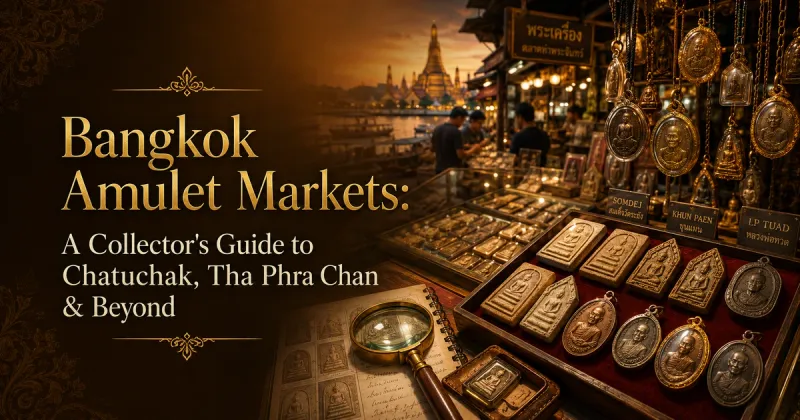
Bangkok is the world capital of Thai amulet trading. The three must-visit spots are Tha Phra Chan (serious collectors), Chatuchak Weekend Market Section 1 (casual browsing), and the Wat Rakhang riverside area (historic pieces). Go early, bring cash, and never rush a purchase.
Why Bangkok is the amulet capital
Thailand has amulet markets in every province, but Bangkok concentrates the country's most important trading floors in a few square kilometers along the Chao Phraya River. Dealers from Chiang Mai to Nakhon Si Thammarat bring their best pieces here because Bangkok attracts the highest-spending collectors — both Thai and international. On any given weekend, millions of baht change hands across these markets.
Tha Phra Chan: the serious collector's market
Located next to Thammasat University on the riverside, Tha Phra Chan is Bangkok's oldest and most respected amulet market. Hundreds of dealers set up tables under tarps and umbrellas, displaying amulets in acrylic cases with handwritten labels. This is where experienced collectors hunt for competition-grade pieces — amulets valued from tens of thousands to millions of baht.
What to expect: The atmosphere is intense. Dealers use jeweler's loupes to inspect pieces. Conversations happen in hushed tones. Prices are rarely displayed — you're expected to know approximate values before negotiating. English is limited, so having a Thai-speaking friend or guide is extremely helpful.
Best for: Serious collectors looking for authenticated, high-value amulets. Many dealers here have decades of experience and genuine rare pieces.
Tips: Visit on weekday mornings for a less crowded experience. The market is most active on weekends. Bring a loupe (10x magnification minimum). Start with observation — walk the entire market before making any purchases.
Chatuchak Weekend Market: Section 1
Chatuchak (JJ Market) is famous worldwide for its 15,000+ stalls selling everything from vintage clothing to live plants. What most tourists don't know is that Section 1, near the main clock tower entrance, has a dedicated amulet zone with over 100 dealers.
What to expect: More tourist-friendly than Tha Phra Chan. Prices range from 100 baht for simple monastery amulets to 50,000+ baht for collectible pieces. Some dealers speak basic English. The atmosphere is more relaxed, and browsing without buying is perfectly acceptable.
Best for: First-time visitors and casual collectors. Good place to find affordable, genuine monastery-issued amulets as gifts or personal talismans.
Tips: Go early (8-9 AM) before the heat becomes unbearable. Chatuchak has no air conditioning. Bring water and cash in small denominations. Weekend-only (Saturday and Sunday).
Wat Rakhang riverside area
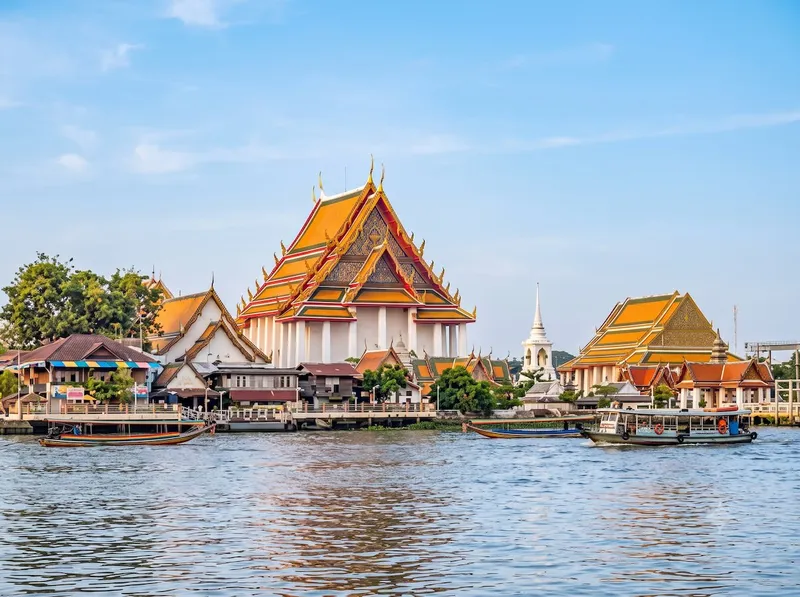
Across the river from the Grand Palace, the area around Wat Rakhang (Temple of the Bells) hosts a smaller but historically significant amulet market. Wat Rakhang is famous for the amulets of Somdej Toh — widely considered the greatest amulet maker in Thai history.
What to expect: A quieter, more contemplative market. Many dealers specialize in Somdej-type amulets and Rattanakosin-era pieces. The temple itself is worth visiting for its stunning murals and peaceful atmosphere.
Best for: History-oriented collectors interested in the Somdej Toh lineage and classic Rattanakosin amulets.
Other notable spots
Amulet markets at major temples: Wat Mahathat, Wat Suthat, and Wat Bowonniwet all have small amulet stalls where monks' amulets from those specific temples are sold. These are among the most trustworthy sources since you're buying directly at the temple of origin.
Pantip Plaza area: Several dedicated amulet shops operate in the streets around Pantip Plaza in Pratunam. These tend to cater to middle-class Thai collectors and offer mid-range pieces with certificates.
Online shift: Increasingly, Thai amulet trading happens on Facebook groups, LINE, and dedicated platforms. But the in-person markets remain essential for authentication — experienced collectors can feel the weight, inspect the texture, and detect subtle signs that photographs cannot capture.
Practical tips for foreign visitors
Language: Learn basic Thai amulet terms before visiting. Our glossary of 80+ Thai amulet terms is a good starting point. Key phrases: "Nee phra arai?" (What amulet is this?), "Thao rai?" (How much?), "Lot dai mai?" (Can you reduce the price?).
Payment: Cash is king. Most market dealers don't accept cards. ATMs are nearby at all major markets. Bring Thai baht — foreign currency is not accepted.
Authentication: For expensive purchases, ask if the amulet comes with a certificate from a recognized competition or authentication service. The Samakom (amulet association) certificate is the gold standard. Read our authentication guide before buying anything over 5,000 baht.
Etiquette: Amulets are sacred objects. Handle them respectfully — don't toss them around or place them on the ground. Use the term "bucha" (worship/obtain) rather than "buy." Remove your shoes if entering any temple area.
Scam awareness: Tourist-area shops near Khao San Road and Silom often sell factory-made replicas at inflated prices. Stick to the established markets listed above. If a deal seems too good to be true, it is. See our scam protection guide for red flags.
Planning your visit
A dedicated amulet day in Bangkok should start at Tha Phra Chan in the morning (take the Chao Phraya Express Boat to Tha Phra Chan pier), cross the river to Wat Rakhang after lunch, and finish at a temple of your choice. Save Chatuchak for a separate weekend day — it deserves its own trip.
FAQ
Q: Can I bargain at Thai amulet markets?
A: Yes, but respectfully. Prices at Tha Phra Chan have less room for negotiation on premium pieces. At Chatuchak, 10-20% discount is common for cash purchases.
Q: Are amulet markets open every day?
A: Tha Phra Chan operates daily but is busiest on weekends. Chatuchak Section 1 is weekend-only (Sat-Sun). Temple stalls vary.
Q: Can I export amulets from Thailand?
A: Modern amulets (less than 100 years old) can be taken out freely. Antique Buddha images may require a Fine Arts Department export permit. Standard collector amulets almost never trigger this requirement.
Last updated: June 2026 | By the Merit Messenger team, based in Bangkok
Can't visit Bangkok? Browse our authenticated collection online — every piece comes with provenance documentation.