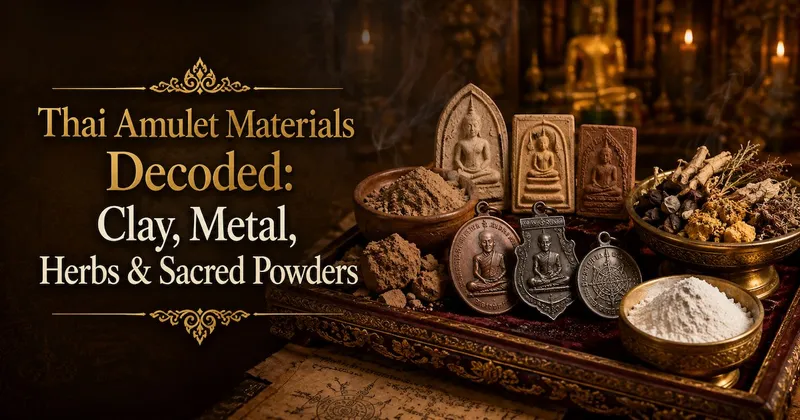
Thai amulet materials fall into two broad families — powder/clay-based (nuea phong) and metal-based (nuea loha). Each material has spiritual significance, affects durability, and influences market value. Understanding materials is essential for authentication.
Why materials matter
In Thai amulet culture, the material is never just a physical medium — it carries spiritual weight. Sacred powders contain ingredients gathered over years of ritual practice. Temple metals may include melted-down older amulets, donated jewelry, or historically significant bronze. The material connects the amulet to its lineage, its creator monk, and the ceremonies that consecrated it.
For collectors, material identification is also the first line of defense against fakes. A genuine Somdej amulet from the 1800s should have specific powder characteristics that modern reproductions cannot perfectly replicate. Knowing what to look for starts with understanding the material categories.
Powder and clay amulets (Nuea Phong)
Powder-based amulets are the most traditional form. The base material — called "phong" — is a mixture of sacred ingredients that varies by temple and monk.
Common powder ingredients:
Phong Itthije & Phong Puttakhun: The two most sacred powder types in Thai Buddhism. Phong Itthije is made from ground chalk used by monks to write sacred formulas on temple blackboards. After a full board of prayers, the chalk dust is collected. Phong Puttakhun involves a more complex ritual where sacred geometry (yant) is written and erased repeatedly. A single batch can take years to accumulate enough powder.
Wan 108: A collection of 108 sacred herbs and plants, each chosen for specific spiritual properties. Forest-dwelling monks (phra thudong) gather these during their wandering practice. The number 108 is auspicious in Buddhism, representing the 108 defilements to overcome.
Din: Sacred earth, often from seven specific locations — temple grounds, city gates, crossroads, termite mounds, and other ritually significant sites. Each type of earth carries different symbolic power.
Poon: Limestone paste, sometimes mixed with shell or mineral powder. Creates a white, chalky amulet. Used extensively in Somdej-type amulets.
What to look for: Genuine old powder amulets develop a natural patina. The surface may show tiny bubbles, uneven texture, or visible herb fragments. Modern fakes often have suspiciously uniform surfaces. Under magnification, authentic sacred powder shows organic irregularities that molds cannot reproduce.
Metal amulets (Nuea Loha)
Metal amulets emerged as a distinct tradition and now represent some of the most collected categories.
Nuea Thong Daeng (Copper): The most common metal for rian (coin) amulets. Develops a distinctive dark brown to green patina over decades. Copper amulets are affordable and durable, making them popular for everyday wear.
Nuea Samrit (Bronze): An alloy of copper and tin, sometimes with other metals. Produces a warmer tone than pure copper. Many temple bells and Buddha statues use bronze, and melted-down old temple items sometimes become amulet material — adding historical significance.
Nuea Chin (Lead-Tin Alloy): A traditional alloy used for centuries. Heavier than it looks and develops a distinctive dull gray surface. Chin amulets from the Ayutthaya period are among the most valuable antique pieces.
Nuea Alpaka (Alpaca/German Silver): A nickel-copper-zinc alloy with a silver appearance but no actual silver content. Popular for mid-range rian amulets from the 1950s onward.
Nuea Ngern (Silver): Used for special edition amulets in limited quantities. Silver pieces from famous monks command significant premiums over their base-metal equivalents.
Nuea Thong Kham (Gold): Reserved for the most premium editions. Gold amulets are typically produced in very small numbers — sometimes fewer than 100 pieces — and are priced accordingly. They're collected as much for material value as spiritual significance.
Nuea Nava Loha (Nine-Metal Alloy): A ritually significant alloy combining nine specific metals: gold, silver, copper, tin, lead, iron, mercury-treated metal, zinc, and antimony. The nine metals correspond to the nine celestial bodies in Thai astrology. Genuine nava loha has a distinctive dark, almost black appearance with subtle multi-tonal reflections.
Special and mixed materials
Muan Sarn: A broad term meaning "ingredients" — refers to the total sacred mixture in any amulet. When a listing says "muan sarn of LP [name]," it means the amulet contains powder personally prepared by that monk, which significantly increases value.
Nam Man (Sacred Oil): Not an amulet material per se, but sacred oils are sometimes mixed into powder amulets or used to coat metal ones. Some amulet types, like certain takrut, are stored in sacred oil.
Takrut Materials: Takrut (rolled scroll amulets) use thin metal sheets — typically lead, copper, silver, or gold — inscribed with sacred text before rolling. The metal choice affects both the spiritual properties attributed to the takrut and its market value.
Bone and Ivory: Historical amulets sometimes incorporated bone or ivory, but modern production has largely moved away from animal materials due to conservation concerns and legal restrictions on ivory trade.
How material affects value
For the same amulet design from the same ceremony, the material hierarchy typically runs: gold > silver > nava loha > bronze > copper > lead-tin > powder/clay. However, there are major exceptions. A powder Somdej Wat Rakhang from 1868 is worth more than almost any gold amulet made last year. Age, provenance, and the creating monk's reputation matter more than material alone.
Limited edition numbering also plays a role. If a ceremony produced 10,000 copper pieces but only 99 silver ones, the silver version will command a disproportionate premium — not just for the metal value, but for its scarcity.
Material authentication basics
Understanding materials helps you spot fakes:
Weight test: Each material has a characteristic density. A lead-tin amulet should feel noticeably heavier than a similarly sized copper one. If something feels wrong in your hand, investigate further.
Patina inspection: Genuine old metal develops patina naturally over decades. Artificial aging (using chemicals or heat) often looks uniform, while real patina is uneven and builds up more in recessed areas.
Magnet test: Pure copper, bronze, silver, and gold are non-magnetic. If an amulet sticks to a magnet, it likely contains iron or steel — a red flag for many amulet types.
Surface texture: Old powder amulets have a specific "feel" that experienced collectors recognize immediately. The surface should show natural aging — tiny cracks, slight color variations, organic irregularities. Machine-pressed modern fakes tend to be too smooth and uniform.
For comprehensive authentication guidance, see our full authentication guide. For material-specific terminology, check our glossary.
FAQ
Q: Are powder amulets fragile?
A: Yes, compared to metal. Many collectors encase powder amulets in waterproof acrylic or gold/silver cases (called "talap") to protect them from moisture and physical damage.
Q: Does the material affect spiritual power?
A: In traditional belief, the consecration ceremony and the monk's spiritual attainment matter most. However, certain materials are associated with specific powers — for example, lead-tin is traditionally linked to invulnerability (kong krapan).
Q: Can I tell the material from photos alone?
A: Sometimes, but not always. Weight, texture, and patina are best assessed in person. This is one reason why buying from trusted sources like Merit Messenger — where we verify materials firsthand — matters.
Last updated: June 2026 | By the Merit Messenger team, based in Bangkok