What Are Thai Amulets?
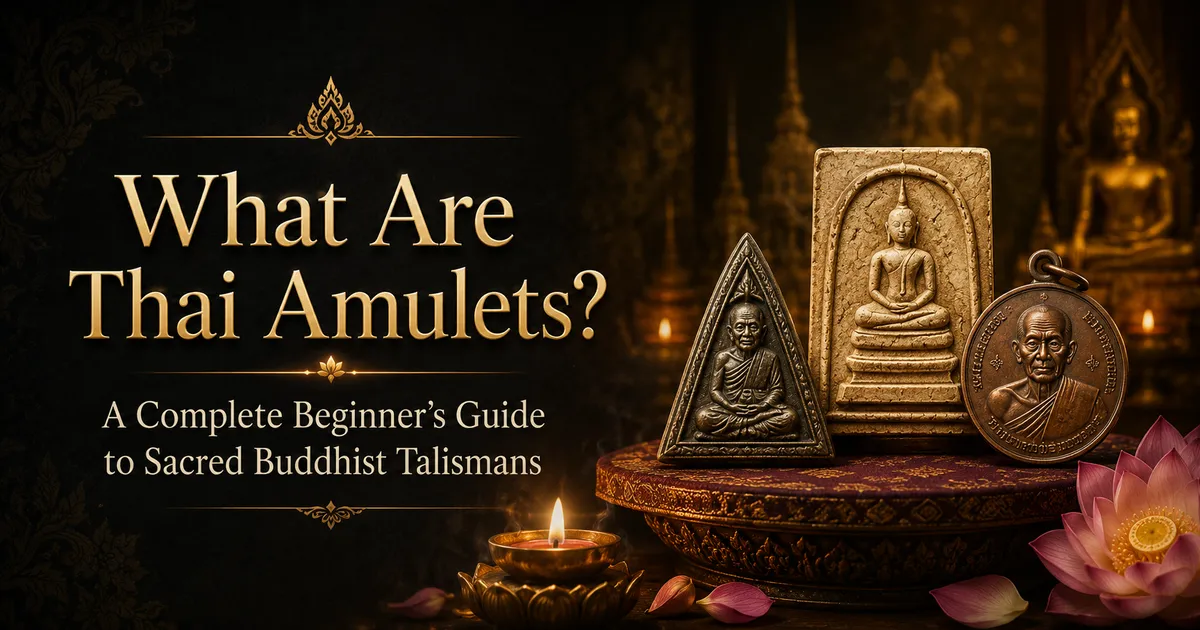
Thai amulets are small sacred objects — typically depicting Buddha images, revered monks, or protective symbols — that have been blessed by Buddhist monks in consecration ceremonies. Worn close to the body, usually on a chain around the neck, they are believed to bring spiritual benefits ranging from protection and prosperity to love and career success. For millions of people across Southeast Asia, Thai amulets are a living part of daily Buddhist practice, not relics of the past.
Whether you are encountering Thai amulets for the first time or looking to deepen your understanding before choosing one, this guide covers everything you need to know: their origins, how they are made, the main types, what each one does, and how to get started.
A Brief History of Thai Amulets
Thai amulets trace their origins to the earliest days of Buddhism in Southeast Asia. Originally, small Buddha images were created to be enshrined inside stupas (chedi) — the dome-shaped structures found at every Thai temple. These miniature images served as relics, preserving Buddhist teachings in physical form.
Over centuries, the practice evolved. Monks began creating amulets specifically for laypeople to carry and wear. Each amulet was consecrated through chanting, meditation, and ritual — a process called Puttapisek — which is believed to imbue the object with spiritual energy. By the 19th century, amulets associated with famous monks had become deeply embedded in Thai culture. Today, the tradition continues to thrive, with new amulets created at temple ceremonies across Thailand every year.
How Thai Amulets Are Made
Creating a Thai amulet is a deliberate spiritual process, not mass manufacturing. Here is how it typically works:
- Material preparation — The monk or master selects materials with spiritual significance: sacred powder mixed from temple ingredients (crushed sacred texts, flower pollen, temple earth, incense ash), or metals such as Nawaloha (a nine-metal alloy with deep symbolic meaning). The choice of material is itself a spiritual decision.
- Molding and crafting — The amulet is shaped by hand or pressed into molds. Minor imperfections are normal and even valued — they indicate handcrafting rather than factory production.
- Consecration (Puttapisek) — This is the most important step. Monks chant sacred texts, meditate, and perform rituals over the amulets. A consecration ceremony can last from several hours to multiple days, and may involve a single master or dozens of monks. The spiritual authority and practice of the consecrating monk is what gives the amulet its power.
The result is an object that carries both the material essence of its ingredients and the spiritual energy of the blessing ceremony.
The Main Types of Thai Amulets
Thai amulets can be broadly divided into four categories based on what they depict. Each category has its own significance and associated benefits.
1. Buddha Image Amulets
These are the most traditional type, depicting the Buddha in various postures — meditation, subduing Mara, giving blessings, or reclining. The most prestigious is Phra Somdej, often called the "King of Amulets," which shows a seated Buddha on a tiered pedestal. Buddha image amulets are considered all-around spiritual protectors and are suitable for virtually anyone.
2. Monk Image Amulets (Roop Lor)
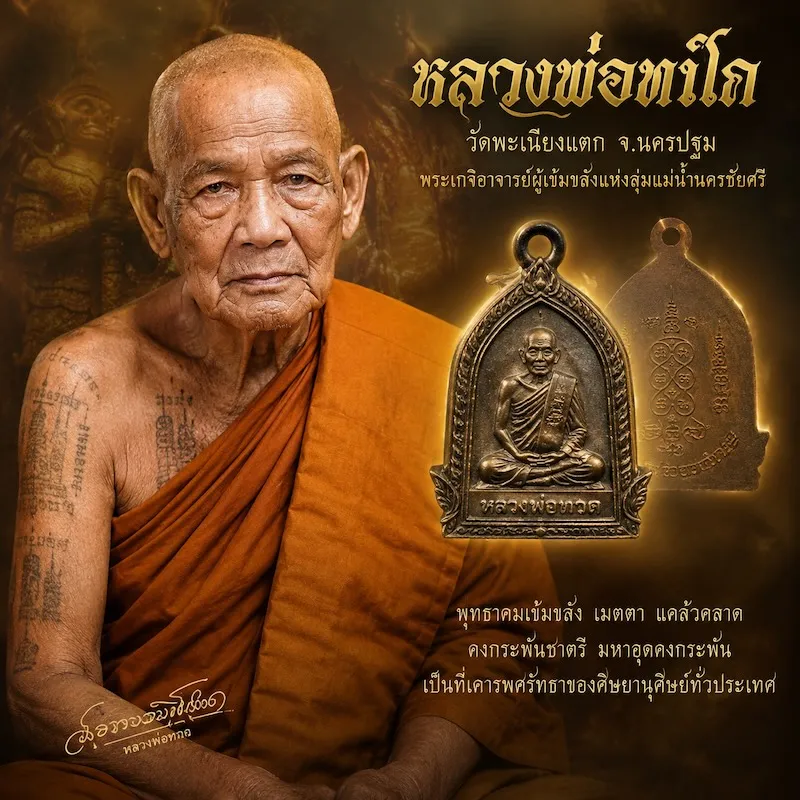
These depict revered monks — masters whose spiritual practice and reputation give their image protective power. Some of the most beloved include Luang Phor Thuad (legendary for turning seawater fresh and protecting travelers), Luang Phor Boon (famous for protection amulets), and Luang Phor Koon (associated with wealth and success). Wearing a monk image amulet is like carrying the spiritual presence of that master with you.
3. Deity and Mythological Figure Amulets
Thai Buddhist culture incorporates Hindu and Brahmanist deities alongside Buddhist figures. Common deity amulets include:
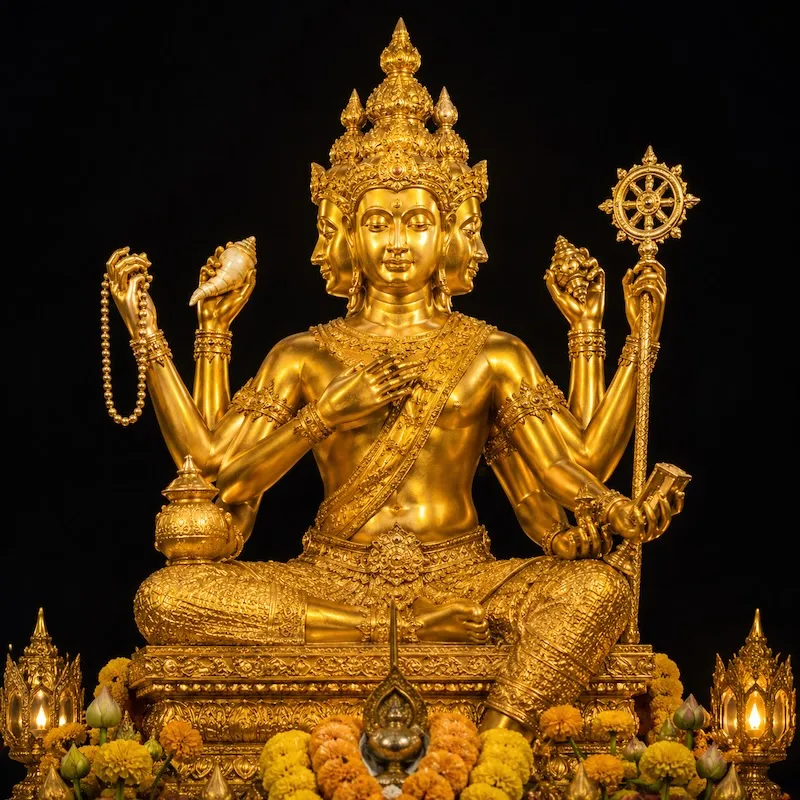
- Phra Phrom (Four-Faced Brahma) — blesses career, wealth, love, and health simultaneously
- Ganesha — removes obstacles, favored by entrepreneurs and artists
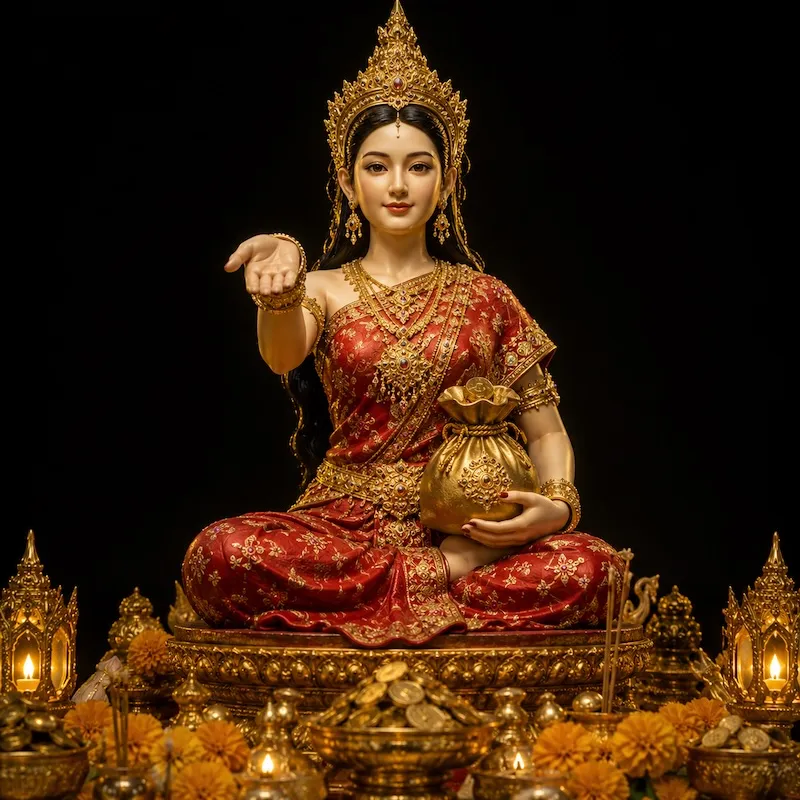
- Mae Nang Kwak — the beckoning lady, attracts customers and business prosperity
4. Symbolic and Animal Amulets
Some amulets feature symbolic objects or sacred animals rather than human figures:
- Phra Pidta (Closed Eyes Buddha) — a figure covering its eyes, symbolizing blocking out negativity and danger
- Sacred turtles — associated with steady wealth accumulation
- Takrut (sacred scrolls) — rolled metal or cloth inscribed with sacred texts, worn for protection
The 7 Core Benefits of Thai Amulets
In the Thai tradition, amulets are categorized by their spiritual effects. Understanding these helps you choose one that matches your needs.
| Benefit | Thai Term | What It Does | Best Amulet Types |
|---|---|---|---|
| Wealth and prosperity | Maha Pokasap | Attracts financial opportunities, business success, stable income | Phra Somdej, Mae Nang Kwak, Sacred Turtle |
| Protection from harm | Kong Grapan Chadtri | Shields from physical danger, accidents, violence | Phra Pidta, Luang Phor Thuad, Takrut |
| Evasion of danger | Klaew Klaad | Helps you narrowly avoid accidents and misfortune | Luang Phor Thuad, Phra Pidta |
| Loving-kindness and social charm | Metta Mahaniyom | Makes others feel warmth and goodwill toward you | Khun Paen, Phra Somdej |
| Attraction and magnetism | Maha Sanaeh | Enhances personal charm, romantic appeal, persuasion | Khun Paen, Nine-Tailed Fox |
| Authority and respect | Maha Amnaj | Commands respect in professional and social settings | Phra Somdej, Phra Phrom |
| Overall luck enhancement | Serm Duang | Improves general fortune and favorable circumstances | Phra Somdej, Jatukham Ramathep |
Many amulets carry multiple benefits. Phra Somdej, for example, is valued precisely because it offers a broad range of effects — which is why it has earned the title "King of Amulets."
How to Choose Your First Thai Amulet
If you are new to Thai amulets, the selection process can feel overwhelming. Here is a practical framework:
Step 1: Identify Your Primary Need
Ask yourself what you are looking for most. Is it financial improvement? Physical safety? Better relationships? Career advancement? Starting with a clear intention narrows the field immediately.
Step 2: Choose a Type That Matches
Use the benefits table above to identify which amulet types align with your need. If you are unsure, Phra Somdej is the safest starting point — its all-around nature makes it suitable for anyone.
Step 3: Consider the Monk or Master
In Thai amulet culture, the spiritual authority of the monk who created and blessed the amulet matters more than almost anything else. A simple amulet blessed by a highly respected master is worth more — spiritually and financially — than an elaborate one with a weak lineage. Research which monks are known for the type of benefit you seek.
Step 4: Set a Realistic Budget
Thai amulet prices range enormously — from under $20 for recently made pieces to tens of thousands for rare, historically significant ones. As a beginner, there is no need to spend a fortune. Many authentic, properly consecrated amulets are available at accessible prices. Focus on spiritual connection and authenticity rather than rarity or collectibility.
Step 5: Verify Authenticity
Buy from a trusted source that can provide provenance information — temple records, consecration details, and clear photographs. Be wary of prices that seem too good to be true, and of sellers who cannot tell you which monk consecrated the amulet or at which temple.
Common Misconceptions About Thai Amulets
If you are approaching Thai amulets from outside the tradition, a few clarifications are important:
Thai amulets are not magic charms
In the Thai Buddhist understanding, amulets work within a framework of merit, intention, and spiritual practice. They are not shortcuts or guarantees. Wearing an amulet is one part of a broader approach to life that includes ethical behavior, hard work, and Buddhist practice.
They are not idolatry
Amulets are not worshipped as gods. They are regarded as physical vessels for the spiritual energy and blessings of monks — objects that help focus the wearer's mind and connect them with the merit and wisdom of the Buddhist tradition.
You do not need to be Buddhist to wear one
While Thai amulets come from a Buddhist context, there is no requirement that the wearer be Buddhist. What matters is respectful treatment of the amulet and sincere intention. Many people of different faiths and backgrounds wear Thai amulets and report positive experiences.
More expensive does not mean better
Price reflects rarity, age, and the fame of the consecrating monk — not necessarily greater spiritual power. A recently made amulet from a living master with strong spiritual practice can be just as meaningful as a vintage piece costing thousands of dollars.
Basic Rules for Wearing Thai Amulets
Thai amulets come with a set of traditional guidelines that reflect the respect owed to sacred objects:
- Wear above the waist — always on a chain around the neck, never below the belt line
- Remove before bathing or swimming — water and chemicals can damage the amulet and its casing
- Remove during intimacy — this is a matter of respect for the sacred nature of the object
- Handle with clean hands — wash your hands before putting on or taking off your amulet
- Store in an elevated place — when not wearing it, place it on a high shelf or altar, never on the floor
These guidelines are about respect, not rigid superstition. If you accidentally forget a rule, there is no punishment — simply be more mindful going forward.
Getting Started
Thai amulets offer a tangible connection to one of the world's richest spiritual traditions. Whether you are drawn to them for protection, prosperity, or personal meaning, the most important step is choosing with sincerity and buying from a source you trust.
Browse our collection to find amulets sourced directly from Thai temples, each one authenticated and accompanied by provenance details. If you are unsure where to begin, our team is available to help you find the right match for your needs.