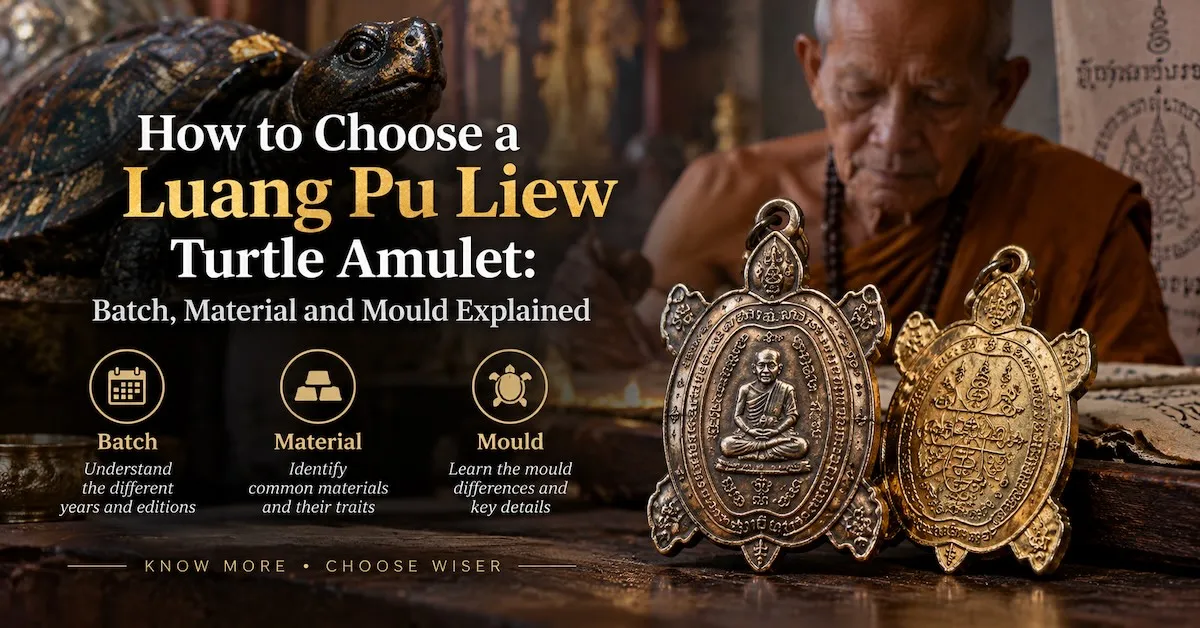
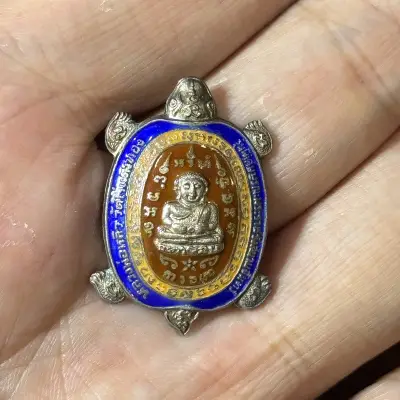
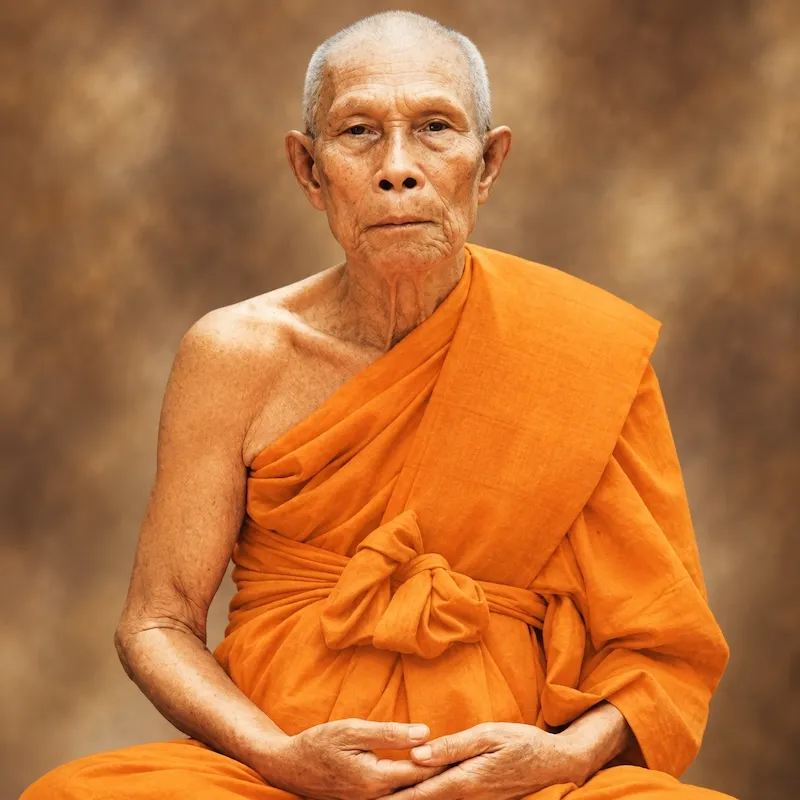
Luang Pu Liew created the Thai turtle-amulet tradition and issued dozens of batches, with prices differing more than tenfold. This guide unpacks the four Thai words on the certificate — batch, material, mould and year — using four real batches as worked examples.
TL;DR: Luang Pu Liew is the monk who made the Thai turtle amulet (Phaya Tao Ruean) a category of its own. He issued dozens of batches over several decades, and prices between them differ more than tenfold. The gap comes down to four things: batch, material, mould size and year. Learn to read the four Thai words on the certificate — run, nuea, phim and Por Sor — and you can judge for yourself whether a turtle amulet is fairly priced.
1. Who he was, and why every turtle amulet is measured against him
Luang Pu Liew Punnako was born in Nakhon Pathom in B.E. 2448 (1905) and passed away in B.E. 2543 (2000) at the age of 95. He spent most of his monastic life at Wat Rai Taeng Thong in Nakhon Pathom, known for austerity and for directing donations into building, schooling and relief work rather than keeping anything for himself.
Turtle-shaped amulets existed before him, but turning them into a recognisable, coherent tradition sustained across decades was his doing alone. Thais say that to talk about turtle amulets is to talk about Luang Pu Liew. This matters practically: the price of any turtle amulet on the market is, in effect, a comparison against his work.
In Thai belief the turtle stands for longevity and for wealth that accumulates steadily and stays — not a windfall. That is the amulet's core purpose: wealth retention, business luck, customer affinity and mentor support.
2. The four words on the certificate
The name line on a Thai certificate usually reads as a single string, for example: Rian Tao Ruean Luang Pu Liew, Run Traimas, Nuea Thong Daeng, B.E. 2536. Unpacked, it is the whole specification:
- Rian Tao Ruean — the category: turtle coin amulet
- Run (batch) — why the batch was issued and how it was consecrated
- Nuea (material) — copper, silver, powder, alloy; a main driver of price
- Phim (mould) — large, small or jumbo; prices differ within one batch
- B.E. (year) — Buddhist Era; subtract 543 for the Gregorian year
Check all four before comparing prices and you will rarely buy the wrong tier.
3. Batch: the name tells you where the money went
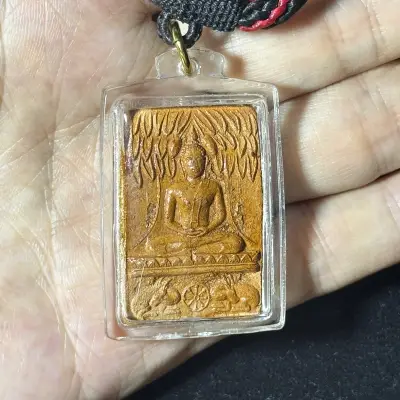
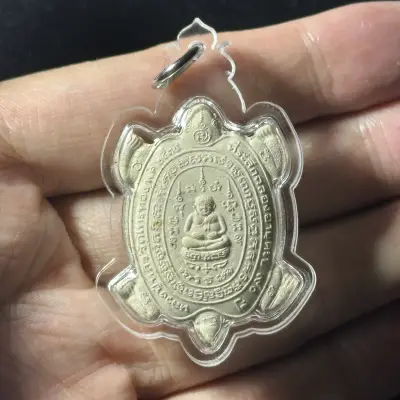
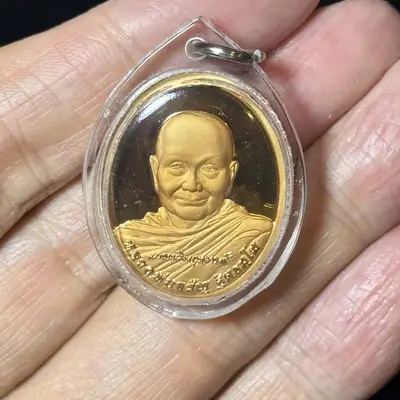
Thai temples often name a batch after the purpose it funded or the way it was consecrated. Four real examples currently in our shop:
- Run Traimas (three-month rains retreat) — Traimas is the vassa, the three-month retreat. Amulets of such a batch are consecrated continuously across the whole period rather than blessed once at a single ceremony. Collectors who value prolonged consecration look for these. See the B.E. 2536 copper piece
- Run Anamai (public health) — Anamai means public health; batches named this way are generally issued to fund a local health station or medical facilities. See the B.E. 2540 copper Jumbo
- Run Sanam Chan — issued to fund the restoration of Sanam Chan Palace, the residence of King Rama VI, with the purpose and year lettered in gold on the original temple box. See the B.E. 2538 silver-enamel piece
- Run Patchimawai (late life) — Patchimawai means the final stage of life. Issued in B.E. 2541 when the master was 93, two years before he passed, and among the last he consecrated in person. See the B.E. 2541 copper piece
Why batch matters to price: a documented purpose and a verifiable year make provenance hard to blur, and when a batch funds a temple's flagship project or a public cause, the temple usually commits its best sacred materials and most formal ceremony to it.
4. Material: copper, silver enamel or powder
- Copper (Nuea Thong Daeng) — the most common. Hard wearing, suits daily wear, and the patina deepens with age. The friendliest price point.
- Silver with fired enamel (Nuea Ngern Long Ya) — repeated glazing and firing over a silver body, labour intensive with a low yield, and typically issued in far smaller numbers than the copper of the same batch. The collector premium is long standing. Dislikes knocks and temperature shock, so keep it cased or for the shrine.
- Sacred powder (Nuea Phong) — closest to the traditional feel, but brittle and vulnerable to damp. A case is mandatory.
- Gold-plated alloy — mostly recent batches, the lowest price, good for a first piece.
A useful rule: for the same master and year, silver enamel usually costs more than double the copper. That premium buys craft and scarcity, not extra sacred power.
5. Mould: price differs inside one batch
- Phim Jumbo — the largest format of the batch. A bigger shell holds fuller, deeper script and clearer detail in the central figure; it wears with presence and is generally more sought after.
- Standard mould — moderate size, the easiest to wear daily, friendlier price.
- Small mould — light and discreet, suits close wear.
Mould affects size, engraving density and how it wears, not the nature of the object. On a limited budget, dropping to a standard mould is a better trade than dropping the material.
6. The tiers at a glance
- Entry (about ฿2,000–4,000) — recent gold-plated alloy batches, or a standard-mould copper piece with a documented year
- Core (about ฿5,000–9,000) — copper from the B.E. 2530s–2540s, certified, with a clear batch
- Collector (฿10,000 and up) — silver enamel, Jumbo moulds, pieces with their original temple box, or early releases from the B.E. 2510s–2520s
These are the actual bands in our own shop and are indicative only; price moves with condition, accessories such as an original box or case, and the market.
7. How to use the certificate
A Thai authentication card carries a number, the amulet name, the temple, the province, the issue date, two signatures and a QR code. Scan the QR first. Then check three things against the item itself: the batch and material in the name line, the temple (for Luang Pu Liew it should read Wat Rai Taeng Thong) and the province (Nakhon Pathom).
An uncertified turtle amulet is not necessarily a problem, but without expert examination no verbal claim about age or authenticity carries weight — in which case the price should sit in the uncertified band rather than at antique levels.
FAQ
Q: Is an early batch much better than a late-life one?
A: The difference is scarcity and price, not whether he consecrated it himself. Early batches from the B.E. 2510s–2520s are rare and expensive; late-life batches have documented years, were still personally consecrated, and cost far less. On a budget, a late batch is a sound choice.
Q: How do I convert Buddhist Era years?
A: Subtract 543. B.E. 2538 is 1995, B.E. 2541 is 1998.
Q: My copper turtle looks dark. Should I polish it?
A: No. That brown-to-golden patina took decades to form, it is part of the condition, and it does not come back once removed. Wipe with a dry cloth only.
Q: How is a turtle amulet worn?
A: On the chest with the turtle head upward, alone or alongside other amulets. Keeping the five precepts and giving to others is considered the most important part of wearing any amulet.
Q: Can pregnant women or children wear one?
A: By Thai custom, it is not recommended for pregnant women or children under 16.
Note: Thai amulets are objects of faith and cultural collection. Their purpose is to remind the wearer to keep precepts and act well. The blessings described here reflect Thai devotional tradition and are not a financial, medical or legal guarantee.
Last updated: September 2026 | Merit Messenger team, based in Bangkok
Every amulet we sell is sourced and verified in Thailand and photographed as received; certified items carry our ten-times refund guarantee. To see what is currently available, browse the shop or contact us about condition and casing. The pieces linked above are one of a kind; their pages stay online after they sell and remain useful as references for the same batch.