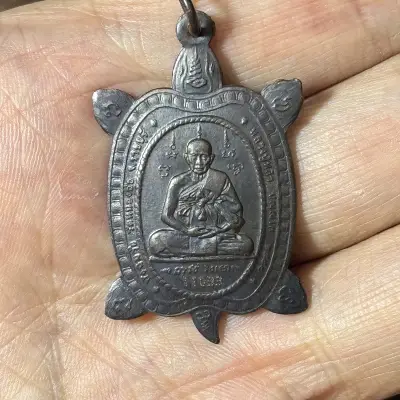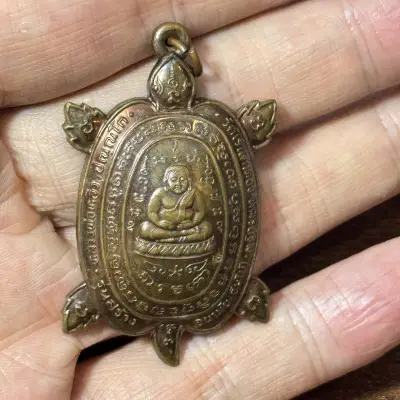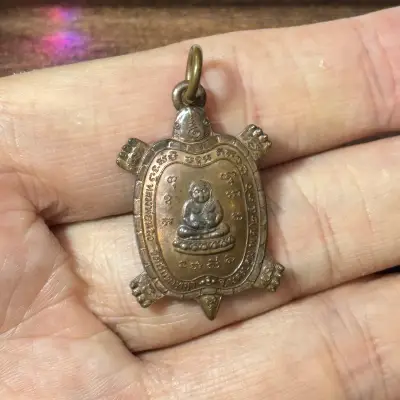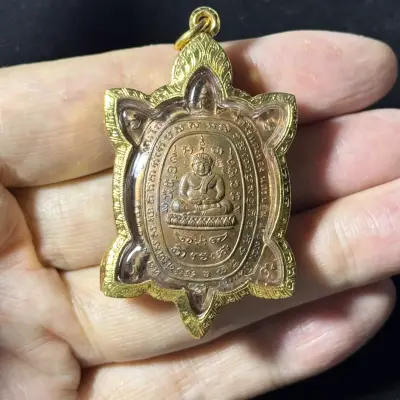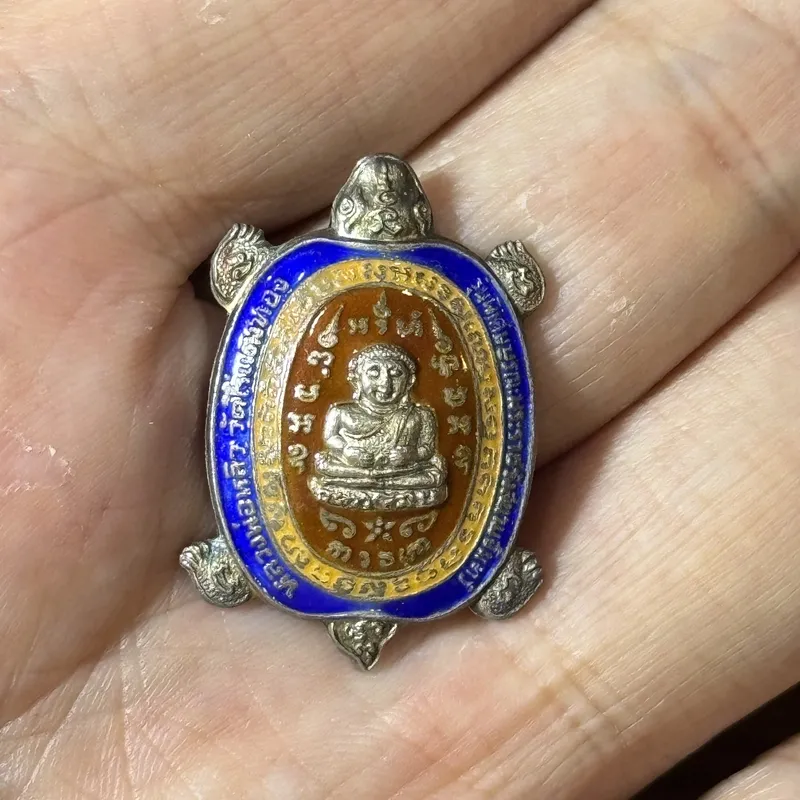
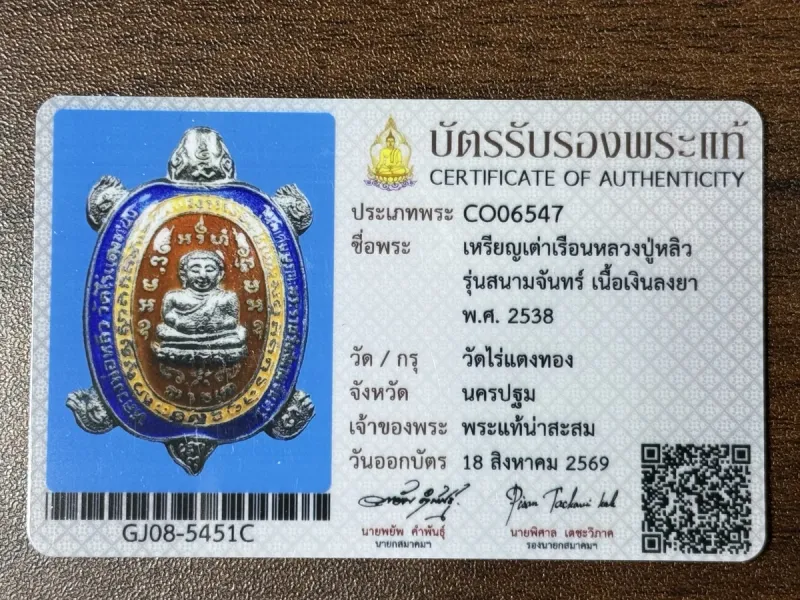
Luang Pu Liew turtle amulet (Phaya Tao Ruean) in silver with fired enamel (Nuea Ngern Long Ya), Run Sanam Chan, B.E. 2538 (1995), issued by Wat Rai Taeng Thong in Nakhon Pathom to raise funds for the restoration of Sanam Chan Palace, the residence built by King Rama VI. Marked Run Phiset (special batch). Comes with its original temple presentation box and Thai certificate CO06547. One piece only.
1. What is a Phaya Tao Ruean turtle amulet
Phaya Tao Ruean (พญาเต่าเรือน) means turtle king. The whole amulet is cast as a turtle with the master image set into the shell. In Thai belief the turtle stands for longevity and for wealth that accumulates steadily and stays, rather than sudden windfalls. The genre exists almost entirely because of one monk: Luang Pu Liew.
Key facts
- Type: Turtle coin amulet (Rian Tao Ruean)
- Batch: Run Sanam Chan, marked Run Phiset (special batch)
- Material: Silver with fired enamel in blue and amber
- Year: B.E. 2538 (1995), when the master was 90
- Temple: Wat Rai Taeng Thong, Nakhon Pathom
- Master: Luang Pu Liew Punnako (B.E. 2448 to 2543 / 1905 to 2000)
- Purpose: issued to fund the restoration of Sanam Chan Palace
- Included: original temple presentation box plus certificate CO06547 (card GJ08-5451C)
- Stock: one piece only
2. Sanam Chan Palace and why this batch exists
Sanam Chan Palace (พระราชวังสนามจันทร์) in Nakhon Pathom was built as a residence for King Rama VI and is a significant Thai heritage site. In B.E. 2538 Wat Rai Taeng Thong issued this batch of turtle amulets to raise restoration funds. The gold lettering on the original box, naming the master, the temple and the palace restoration of B.E. 2538, is the physical record of that purpose.
Amulets issued for a national heritage project carry particular weight for collectors: production was overseen jointly by the temple and the fundraising committee, and the year and background are documented rather than vague.
3. Who was Luang Pu Liew
Luang Pu Liew Punnako was born in Nakhon Pathom in B.E. 2448 (1905) and passed away in B.E. 2543 (2000) at the age of 95. He spent most of his monastic life at Wat Rai Taeng Thong, known for austerity and for directing donations into building, schooling and relief work. From the late B.E. 2510s he produced turtle amulets batch after batch and became the master the entire genre is measured against.
4. Blessings and who it suits
- Wealth attraction and wealth retention
- Business luck, customer affinity, sales
- Metta Maha Lap: mercy-driven charm and mentor support
- Steady accumulation, longevity and health
- Protection from danger and safe travel
Suited to business owners, sales professionals, those seeking financial stability, devotees of Luang Pu Liew and collectors who care about craftsmanship and condition. Not recommended for pregnant women or children under 16.
Note: Thai amulets are objects of faith and cultural collection. Their purpose is to remind the wearer to keep precepts and act well. The blessings described here reflect Thai devotional tradition and are not a financial, medical or legal guarantee of any kind.
5. Craftsmanship
Front: a silver turtle whose shell carries an outer ring of deep blue enamel inscribed in Thai with the temple and master names, and an inner ring of amber enamel around sacred syllables. Luang Pu Liew sits in meditation at the centre in bare silver, contrasting against the glaze. Head, four legs and tail are struck as one piece with yantra characters on the legs and tail. Run Phiset is marked at the top of the shell.
Edge: the thickness of the enamel layer and the hand-finished silver rim are visible, both natural marks of fired enamel work.
Back: master seal and yantra inscriptions. The silver carries the soft tone of close to thirty years of natural ageing, not artificial patination.
6. FAQ
Q: Is it authentic, and how can I check?
A: It ships with a Thai authentication card, certificate no. CO06547, card no. GJ08-5451C, issued 18 August B.E. 2569, naming the amulet, the temple (Wat Rai Taeng Thong) and the province (Nakhon Pathom), with two signatures and a QR code you can scan yourself. Backed by our ten-times refund guarantee.
Q: Why does silver with enamel cost more than copper?
A: Three reasons. The body is silver; fired enamel (long ya) is labour-intensive hand work requiring repeated glazing and firing, with a lower yield than plain copper; and enamelled versions were typically issued in far smaller numbers than the copper of the same batch. Well-preserved old enamel pieces hold a lasting premium.
Q: What does the original box add?
A: It documents the release. This box is printed with the temple name and the Sanam Chan Palace restoration of B.E. 2538. Few old amulets survive with their original box, so having it means the provenance chain is intact.
Q: Will daily wear damage the enamel?
A: Enamel dislikes knocks and sudden temperature change. A waterproof case is recommended for daily wear, or keep it for the shrine and important occasions. Ask at checkout and we will fit a case in Bangkok before shipping.
Q: How should I wear it?
A: On the chest with the turtle head upward, alone or with other amulets. Keeping the five precepts and giving to others is considered the most important part of wearing any amulet.
7. About this specific piece
Photographed as received, one piece only, sold with its original temple box and certificate. Our team is based in Bangkok, sources and verifies every amulet in Thailand, and ships worldwide.
Last updated: 2026-09-15 | Merit Messenger team, based in Bangkok