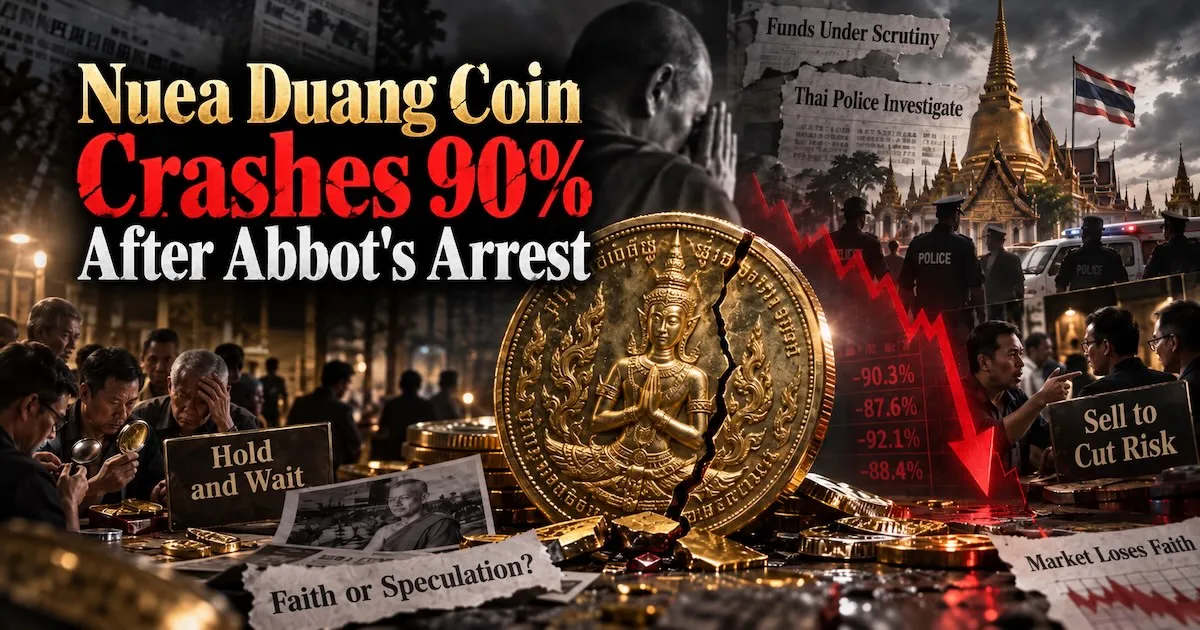
On September 11, 2026, Phra Ajarn Chote (also known as Phra Acariya Aticcoti Thamavaro), former abbot of Wat Phutthaisawan in Ayutthaya, was arrested and disrobed over allegations of embezzling more than 92 million baht in temple funds — a case still at the police investigation stage, with no court verdict yet (see Wat Phutthaisawan Abbot Arrested and Disrobed Over 92 Million Baht). Within days, the resale market for "Nuea Duang" (เหรียญเหนือดวง), the temple's flagship consecration coin that Phra Ajarn Chote helped create two decades ago, collapsed. Gold and silver versions that once traded for over a million baht are now changing hands for a fraction of that, with collectors reporting drops of more than 90 percent.
From Sold-Out to Unsellable
Nuea Duang was produced in Buddhist Era 2549 (2006) to mark Wat Phutthaisawan's elevation to royal temple status during the 60th anniversary of King Bhumibol's reign. The consecration happened in two stages: on August 15, 2006, the temple invoked the spirit of Jatukam Ramathep, and on August 20, up to 16 senior Thai monks jointly performed the Buddhist blessing ceremony. The set spans 14 material versions with a total mintage of more than 40,000 pieces, and it had long been considered a benchmark ceremonial coin among central Thailand collectors — see Jatukam Ramathep: The Modern Thai Amulet Phenomenon Explained.
Prices now vary wildly by channel. On marketplaces like Shopee, plain copper versions go for just a few hundred baht. On the price-comparison site Priceza, copper versions list between 10,000 and 99,999 baht, while silver versions sit around 400,000 baht. At physical stalls on Bangkok's Tha Phra Chan amulet street, copper versions still fetch about 78,000 baht and silver about 120,000 baht. Meanwhile, the amulet collectors' association in Udon Thani reports that rare gold and silver versions that once broke a million baht are now valued at only tens of thousands.
Bebe, head of the Udon Thani amulet collectors' association, told local media that rare-version valuations have been sharply cut, but the more telling detail is that almost no collector is willing to actually sell at current prices — meaning today's quoted figures reflect panic, not confirmed transactions. That distinction matters when judging whether an amulet's market price is real; see Thai Amulet Auctions: How Prices Actually Form, and How to Judge Whether One Is Trustworthy.
A Split Response: Cash Out or Buy the Dip
The day Phra Ajarn Chote was arrested, several Bangkok amulet dealers, including Aris Amulets and the well-known dealer Diana, announced they would buy back Nuea Duang coins in full with no deduction — a response covered in our earlier report on the full-refund program dealers rolled out after the arrest. Those refunds calmed some original buyers, but they did not stop the broader resale market from sliding further.
Separately, Nat, a well-known Jatukam Ramathep researcher and reality-TV collector personality, has publicly said his own faith in Jatukam Ramathep is unshaken by Phra Ajarn Chote's personal legal troubles, and that he plans to gradually buy back coins from panicked sellers. His central argument: Nuea Duang's consecration was never a one-man ritual — 16 senior monks presided over the ceremony in 2006, so the coin's religious legitimacy shouldn't be judged solely on the later conduct of one of them.
What This Means for Collectors
The episode highlights a distinction overseas buyers often miss: an amulet's religious consecration and its creator's personal conduct are legally and spiritually separate matters. A coin blessed by 16 monks doesn't lose its consecration because one participant is later charged with a crime — but market prices almost always move with the creator's reputation anyway. That gap between spiritual legitimacy and market price is exactly what's driving Nuea Duang's crash, and it's a structural weakness shared by many "celebrity monk" amulets in Thailand.
For collectors, the real risk right now isn't holding an old Nuea Duang — it's bargain-hunting during the confusion. Wide price swings between channels are exactly the conditions where counterfeits and misrepresented pieces slip into the market. Anyone considering buying into this dip should verify Samakom Phra certification and provenance before paying, rather than chasing the lowest listed price; see What Is a Samakom Phra Certificate? A Complete Guide for Overseas Buyers. We'll continue following both the criminal case and the coin's market fate.
Source: MGR Online, The Thaiger, Thairath