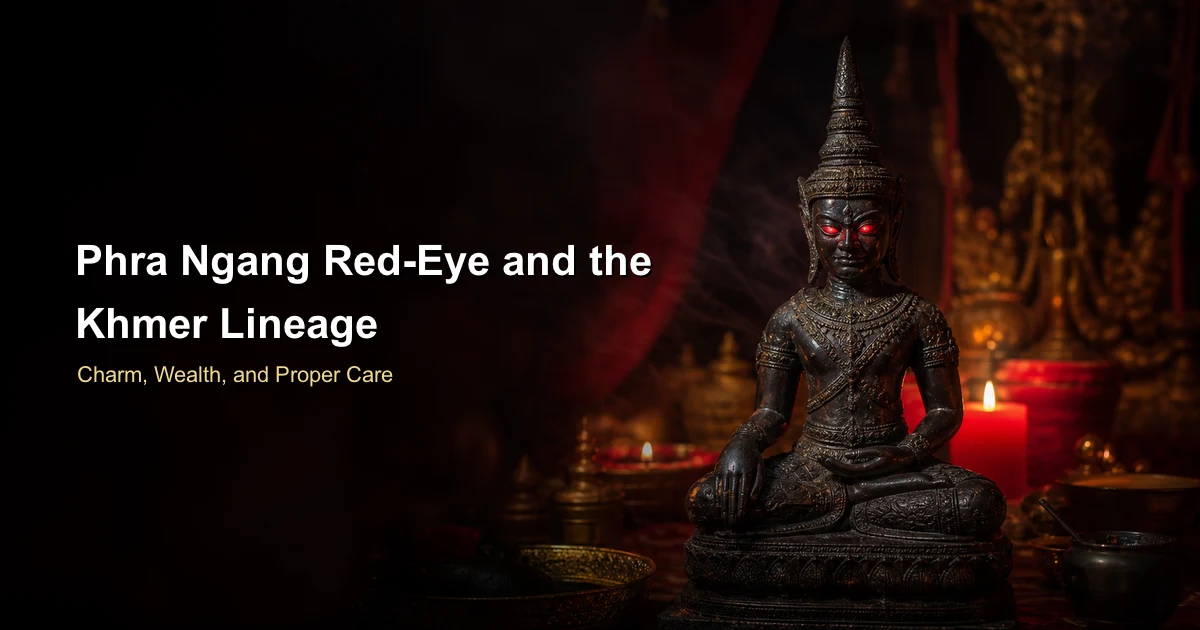
A deeper look at the Khmer sorcery lineage behind Phra Ngang, why collectors chase the red-eye variant, and how to wear and honor a spirit amulet — with two Luang Pho Koy pieces.
Beyond the Basics: The Khmer Side of Phra Ngang
Phra Ngang (พระงั่ง) — the red-faced spirit amulet worn for charm, attraction, and wealth — is one of the most talked-about pieces in the Thai sacred world. We cover the figure in general in our Phra Ngang overview. This guide goes a level deeper, into the Khmer (Cambodian) lineage that many devotees consider the true home of Phra Ngang, and into the coveted "red-eye" versions that collectors chase. If you are new to the distinction between spirit amulets and Buddhist amulets, start with our guide to yin amulets.
The Khmer Lineage
Phra Ngang belongs to the older Khmer sorcery tradition that runs along the Thai-Cambodian border, a body of magical practice distinct from mainstream Thai temple Buddhism. Masters in this lineage work with fierce, worldly powers rather than the serene energies of a standard Buddha amulet, and their consecrations draw on materials and methods specific to the tradition — potent alloys, spirit-invocation, and rites aimed at charm and command over circumstance.
This is why Phra Ngang is classed among the spirit (yin) amulets rather than the Buddhist ones. Worn correctly and respectfully, it is prized for results in exactly the areas most people care about most: attraction, popularity, and the pull of money and opportunity toward the wearer.
What Phra Ngang Is Believed to Do
- Charm and personal magnetism (maha saneh) — being noticed, remembered, and favored
- Attraction of the opposite sex — romantic and social pull
- Wealth and good business — drawing customers, deals, and opportunity
- Protection and warding off danger — the fierce guardian side of the spirit
For this reason Phra Ngang is a traditional favorite of people whose living depends on other people: those in sales, hospitality, entertainment, and any business built on charisma and relationships.
Why "Red-Eye" Versions Are Coveted
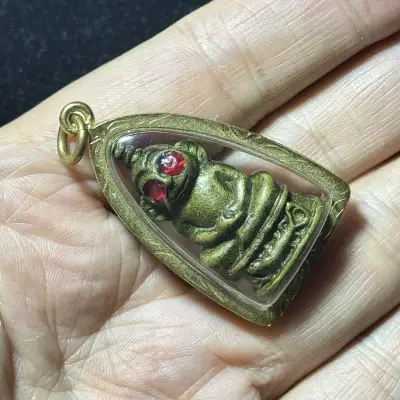
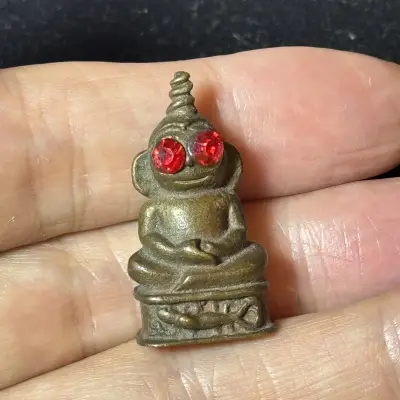
Within a given master's Phra Ngang output, the "red-eye" (ta daeng) variant is usually the most sought-after. The inset red eyes are read as a mark of heightened potency and presence, and because they are made in smaller numbers than plain versions, they command more attention from collectors. When a red-eye edition is also numbered and limited, its desirability climbs further.
The Pieces in Our Collection
We carry the red-eye Phra Ngang of Luang Pho Koy (Thammapalo), a noted Khmer-lineage master of the Thai-Cambodian border, consecrated at Wat Khao Din Tai in Buriram in B.E. 2551 (2008) and cast in sacred alloy from a full-run limited edition of 999. Two options are available:
Both come from the most sought-after variant of the edition, include an authenticity card and full guarantee, and are one of a kind in our inventory.
How to Wear and Honor a Phra Ngang
Because Phra Ngang is a spirit amulet, tradition treats its care differently from a Buddha piece. Common practice includes:
- Offerings. Many wearers make small regular offerings — traditionally items such as red beverages, sweets, or flowers — to keep the spirit content and engaged.
- Wear it lower. Unlike Buddhist amulets kept high on the body, spirit amulets are often worn lower or carried discreetly, in keeping with their worldly nature.
- Respect and clear intent. Set your intention honestly and treat the piece with respect; it is a working relationship, not a decoration.
- Keep it separate. Some devotees prefer not to mix a spirit amulet on the same chain as high Buddhist pieces.
Practices vary by lineage and teacher; if in doubt, ask an experienced practitioner rather than guessing.
Frequently Asked Questions
Is Phra Ngang a Buddhist amulet?
No. It is a spirit (yin) amulet from the Khmer sorcery tradition, not a Buddha image consecrated in mainstream temple practice. It is worn for worldly aims — charm, attraction, and wealth — and cared for according to spirit-amulet custom. See our yin amulet guide for the full distinction.
Do I really need to make offerings?
Within the tradition, offerings are how the wearer maintains a good relationship with the spirit, and most practitioners consider them important. How elaborate to be is a matter of your teacher's guidance and your own commitment, but neglect is generally discouraged.
Why choose the red-eye version specifically?
Red-eye variants are regarded as the more potent and are made in smaller numbers, which is why collectors seek them out. In this case the piece is also part of a limited run of 999, adding to its appeal.
Have questions before choosing cased or uncased? Message us on WhatsApp.