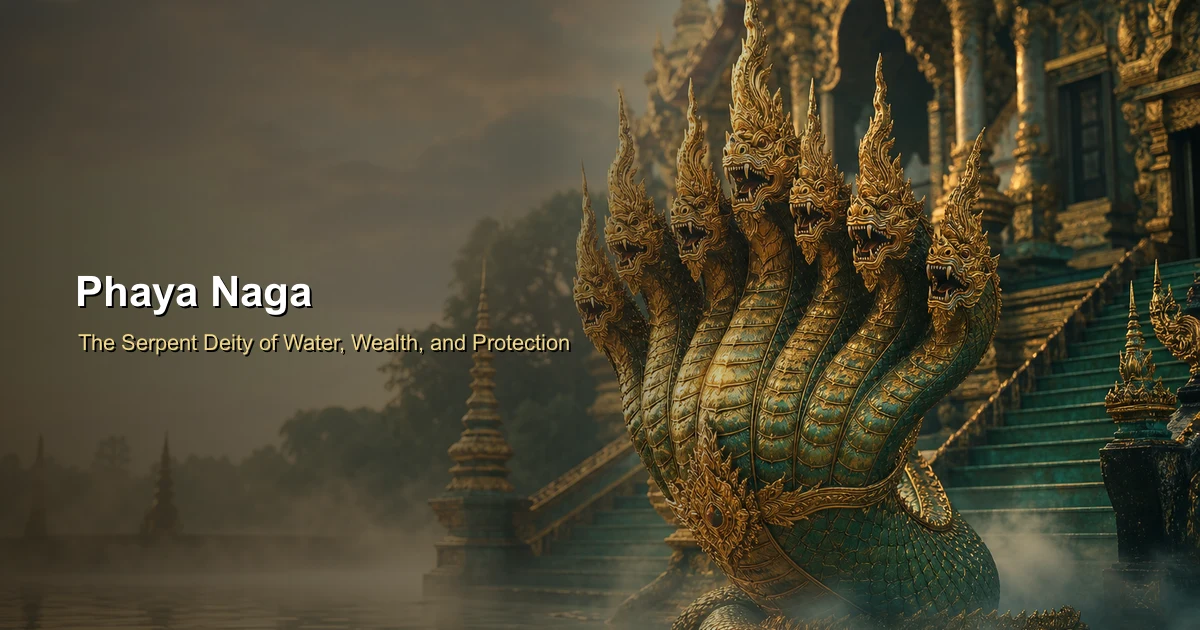
Phaya Naga (Thai: พญานาค) is the great serpent deity of Buddhist and Hindu myth, dwelling in rivers, lakes and seas, with devotion strongest along the Mekong. In Buddhist tradition the Naga king Mucalinda sheltered the Buddha from wind and rain with his own body after the Enlightenment, and so the Naga is venerated as a guardian of the Dharma and of those who practise.
Devotion Along the Mekong
In Thai popular belief the Naga is venerated as a powerful deity of protection, wealth and the dissolving of misfortune. Along the Mekong in Nong Khai Province, the "Naga fireball" phenomenon (Bang Fai Phaya Nak) at the end of the Buddhist Rains Retreat — mysterious glowing orbs that rise from the river into the night sky — has carried its fame far and wide, regarded as a sacred sign of the serpent deity's manifestation.
Domain
The Naga governs protection and wealth, able to keep devotees safe, dissolve misfortune and guard both spiritual practice and the peace of the home. Its power is believed to be bound to water and fortune, so those seeking wealth, safety and protection often venerate it, and traders and property owners enshrine it to guard the premises and draw prosperity.
Iconography
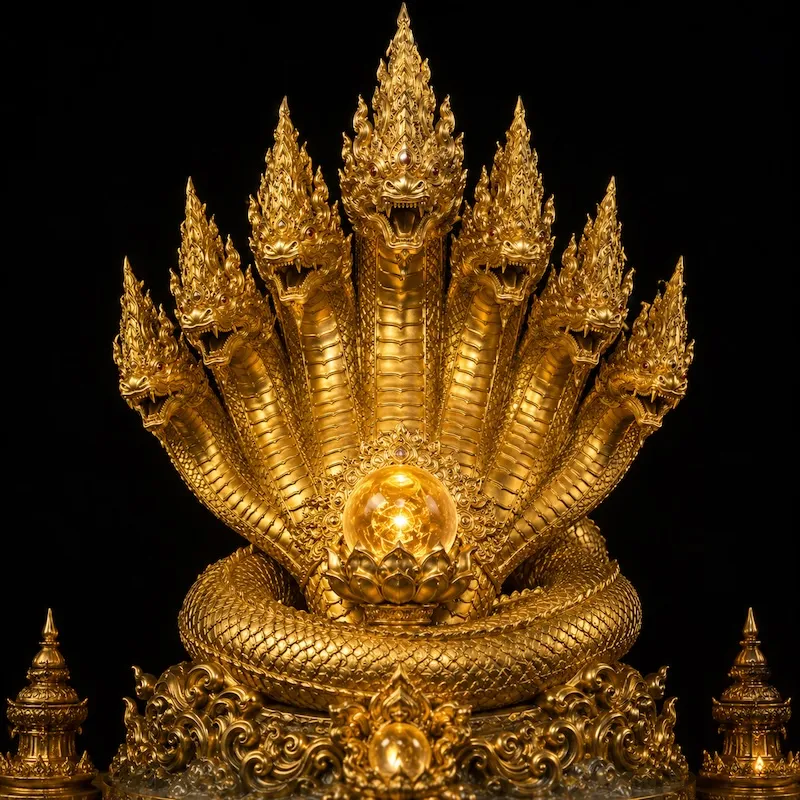
The Naga is depicted as a giant serpent with a crested crown and scaled body, often shown with one, three, seven or nine heads — the greater the number, the higher its power — and usually accompanied by water and a wish-granting jewel, symbolising its command of water and its gathering of wealth. Common offerings include pure water, flowers and fruit.
Wearing and Collecting
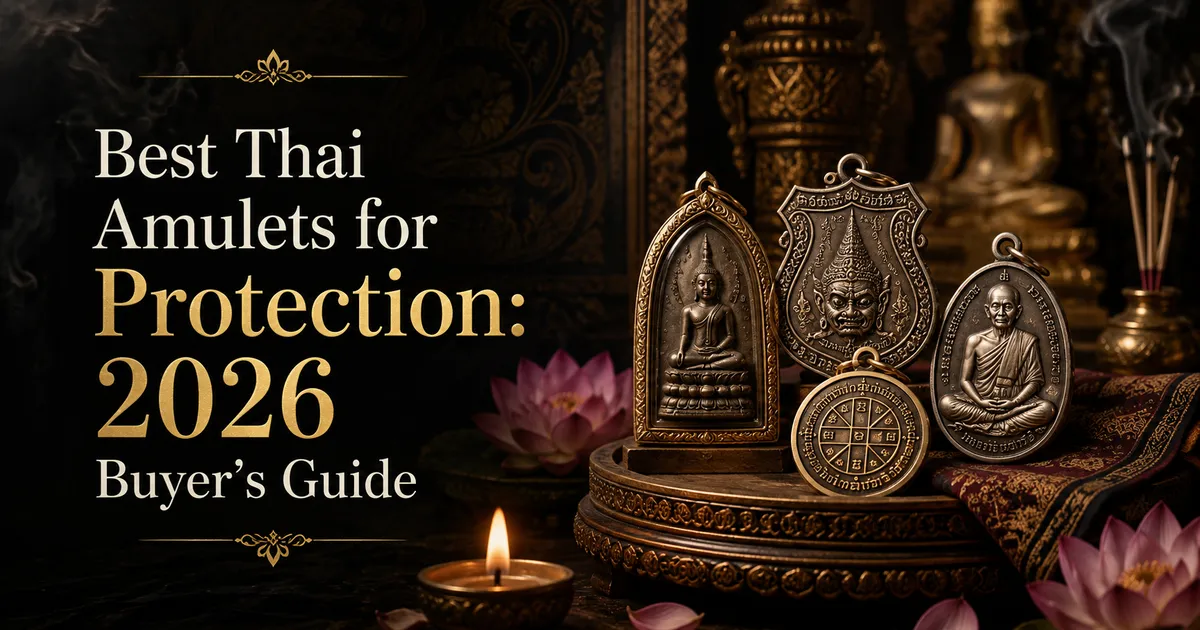
Phaya Naga amulets and images are a category of Thai sacred object that has become extremely popular in recent years, signifying protection and safety, the drawing of wealth and the dissolving of misfortune. They suit those seeking protection and good fortune, worn on the person and honoured with reverence and proper offerings, to accord with the serpent deity.