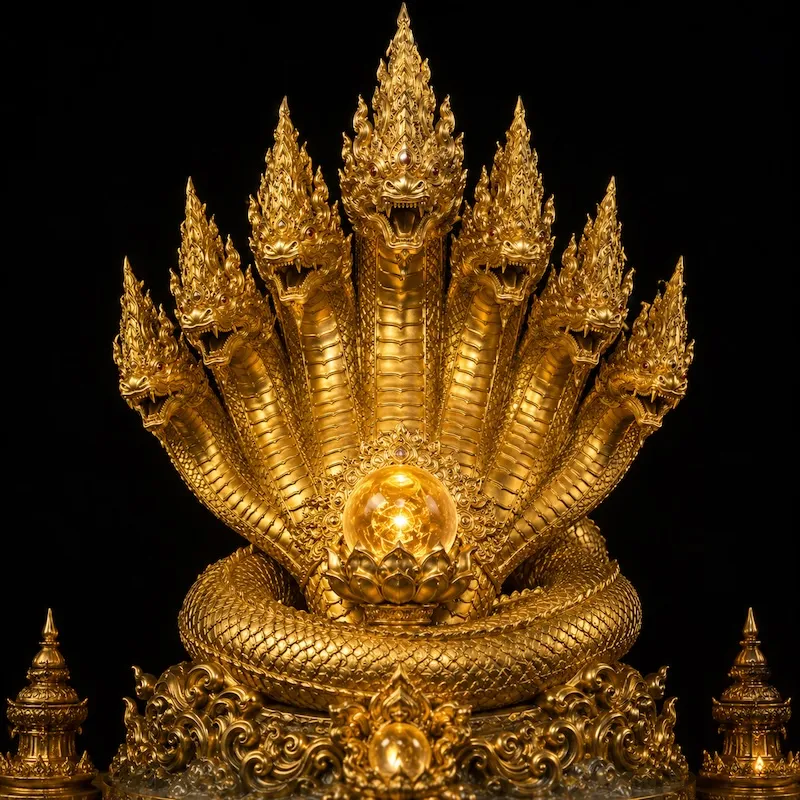
The great serpent-deity of the Mekong bridges Hindu and Buddhist worlds — guardian of sacred waters and treasure, protector of the Dhamma. What the Naga governs and how it is honored.
The Serpent Deity of Water, Wealth, and Protection
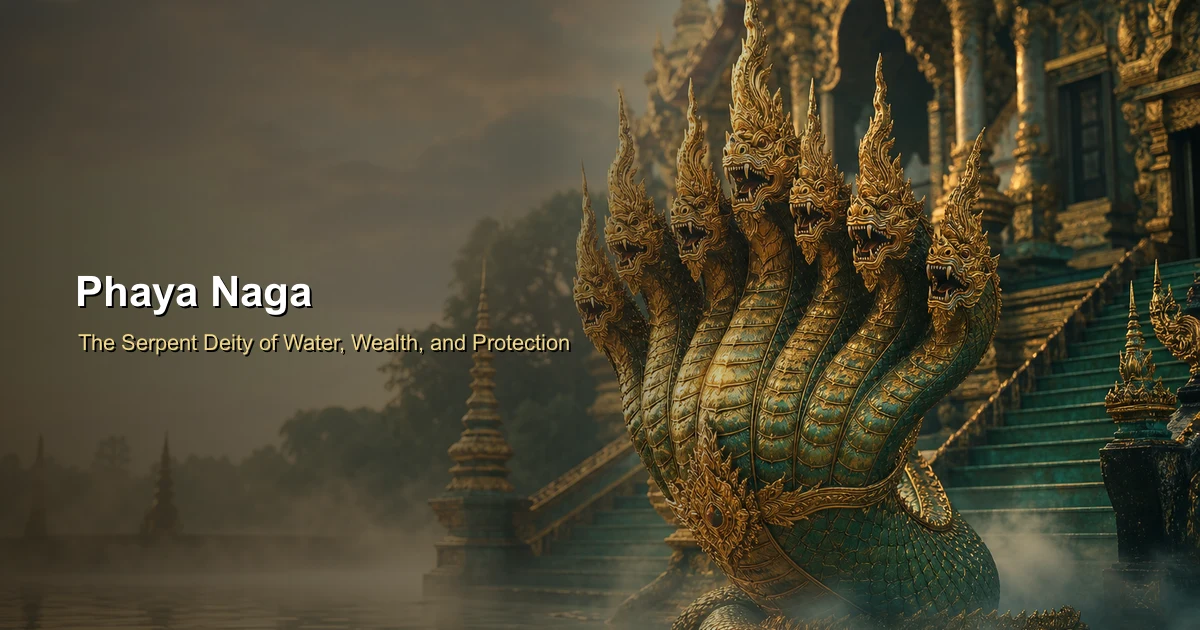
Phaya Naga (พญานาค) is the great serpent-deity of Southeast Asian belief — a majestic, multi-headed water-dragon revered across Thailand, Laos, and the Mekong region. Neither purely Hindu nor purely Buddhist, the Naga bridges both worlds: guardian of sacred waters and hidden treasure, protector of the Buddha and his teaching, and a powerful bringer of fortune. To this day, along the Mekong, devotees report the mysterious "Naga fireballs" rising from the river — a sign, they believe, of the serpent-lord's presence.
This guide explains who the Naga is, what the deity governs, and why Naga veneration is so beloved. See also our Phaya Naga deity page.
What Phaya Naga Governs
- Protection and guardianship — a powerful defender of devotees and sacred places
- Wealth and treasure — the Naga is the traditional keeper of hidden riches
- Dispelling misfortune — clearing obstacles and calamity
- Support for spiritual practice — the Naga is a guardian of the Dhamma
The Naga's association with water gives it a special resonance: water is life, flow, and abundance. As lord of the rivers and the underworld's treasure, the Naga is honored by those seeking both protection and prosperity that flows and renews.
How to Recognize It
The Naga is depicted as a magnificent serpent, often with multiple heads (frequently seven), a crest, and jeweled scales. In one of Buddhism's most famous images, the great Naga Mucalinda spreads his hood to shelter the meditating Buddha from a storm — an emblem of the serpent as protector of enlightenment. Naga forms adorn temple stairways and rooftops across Thailand, guarding the threshold between the ordinary and the sacred.
The Naga in Buddhism
Far from being a mere folk figure, the Naga is woven into Buddhist scripture. Naga kings attend the Buddha, protect his relics, and guard sacred sites and texts. This dual identity — Hindu serpent-lord and Buddhist guardian — is why the Naga sits so comfortably at the heart of Thai devotion, honored for worldly protection and prosperity while also revered as a protector of the path itself.
Who Should Honor Phaya Naga?
- Anyone seeking strong protection combined with prosperity
- People wanting steady, flowing wealth — abundance that renews like water
- Those facing obstacles or misfortune they need cleared
- Meditators and practitioners who value the Naga as a guardian of the Dhamma
How It Is Honored
Naga offerings often include fresh water, flowers (especially in cool colors), fruit, and sometimes items associated with rivers. Saturday is associated with the Naga by some traditions, and cool colors — greens and blues — reflect the serpent's watery nature. As always, sincerity and respect matter more than the scale of the offering.
Related Sacred Pieces in Our Collection
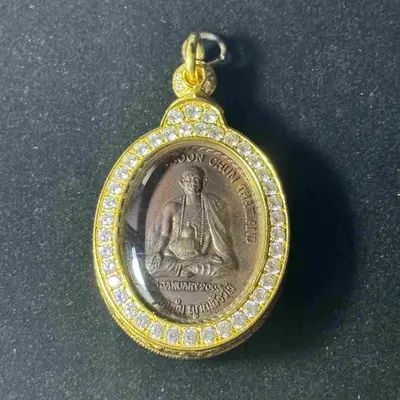
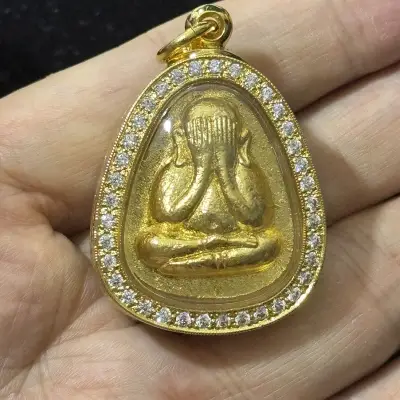
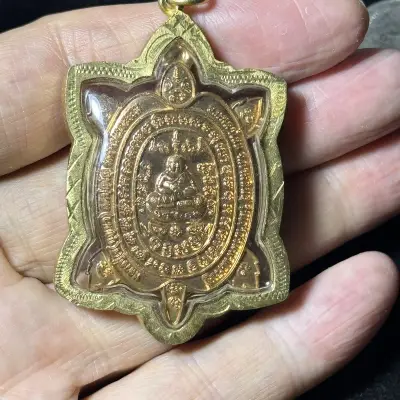
Devotees drawn to the Naga's blend of protection and flowing prosperity often appreciate other auspicious water-and-fortune pieces. The Luang Pu Je Phaya Tao Ruean (wealth turtle) shares the theme of patient, accumulating fortune, while the Kruba BoonChum Lotus Guru offers strong protection and obstacle-clearing, and the Luang Pho Khun Million-Silver Phra Pidta pairs wealth attraction with warding.
Frequently Asked Questions
Is the Naga a Hindu or Buddhist deity?
Both. The Naga originates in Hindu-Indian tradition but is deeply integrated into Buddhism as a guardian of the Buddha, his relics, and the Dhamma. In Thailand this dual identity makes the Naga one of the most widely revered protective powers.
What are the "Naga fireballs"?
Along the Mekong River, glowing balls of light are reported rising from the water, especially around the end of Buddhist Lent. Devotees regard them as a sign of the Naga's presence — a phenomenon that draws crowds each year.
Why is the Naga associated with wealth?
In tradition, the Naga is the keeper of hidden treasure and lord of the life-giving waters. This makes it a guardian of both protection and prosperity — fortune that flows and renews like a river.
Curious about honoring the Naga? Reach out on WhatsApp.