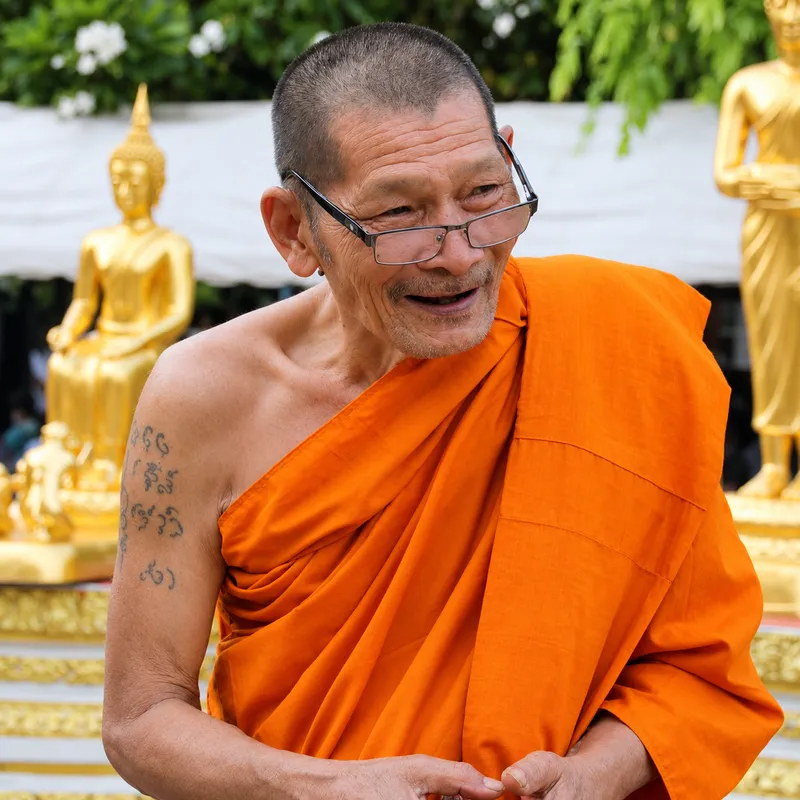
Life of Luang Pu Maha Sila
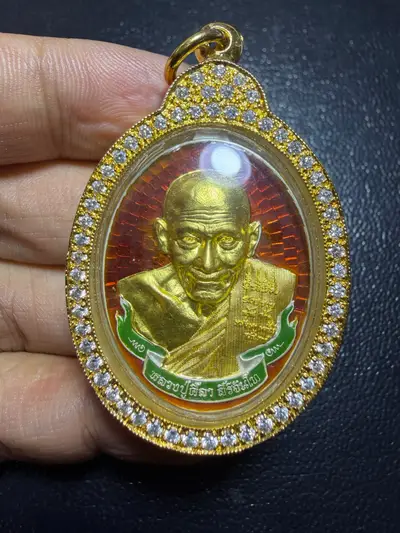
Luang Pu Maha Sila Sirichantho (หลวงปู่มหาศิลา สิริจันโท), usually shortened to Luang Pu Sila in the Thai press, was born Sila Nilchan on 14 October 1945 (BE 2488) in Rattanaburi district, Surin, to a farming family. According to Daily News, the family moved to Chiang Khwan district in Roi Et when he was small, and he became a novice at the village temple, Wat That Prathap.
He took full ordination in BE 2509 (1966) at Wat Burapha Phiram in Roi Et under Phra Siriwutthimethi, then the provincial sangha head, receiving the monastic name Sirichantho. He passed the highest Dhamma studies grade and Pali grade six; the word "Maha" in his name marks a monk who has passed Pali grade three or above. He then taught monks and novices at Wat Nikhom Khanaram.
His monastic life was not unbroken. Thairath and Daily News both report that he disrobed twice: once to work as a schoolteacher, re-ordaining in February BE 2522 (1979), and once for several months in BE 2539 (1996) to nurse his mother and sister, re-ordaining on 22 December that year at Wat Saeng Prathip under his original monastic name.
In BE 2560 (2017) the abbot of Wat Pho Si Sa-at (วัดโพธิ์ศรีสะอาด) in Chiang Khruea, Mueang Kalasin, invited him to stay. Preferring solitude, he lived in the Kae Pe sangha garden within the temple grounds, which has since been raised to a temple in its own right, Wat Suan Tham Piti. In BE 2565 (2022) he re-ordained into the Dhammayut order at Wat Bueng Phra Lan Chai and moved to Wat Phra That Muen Hin in Khao Wong district, becoming abbot the following year. In March BE 2569 (2026) he was raised to the "Thep" rank with the title Phra Thep Watcharathammasophon. That April he offered to step down as abbot on grounds of age and health. As of reports from October 2026 he is living and receiving visitors at Wat Suan Tham Piti.
Training and Lineage
Thai coverage stresses two things. The first is scholarship: he reads the Isan Tham script, old Khom and Thai Noi. Khaosod records that in BE 2517 (1974) he crossed the Mekong to practise at Phu Khao Khwai in Laos, where he met elders including Luang Pu Thongma Thawaro and Luang Pu Li Kusalatharo and studied palm-leaf texts in the line of Samret Lun of Champasak. The second is long years of wandering practice in forests and abandoned cremation grounds across Udon Thani, Nong Khai, Chaiyaphum, Khon Kaen and Kalasin. On that reputation he is regularly invited to consecration ceremonies across the Northeast and has taken part in the Phra Kring consecration at Wat Suthat in Bangkok.
Notable Editions
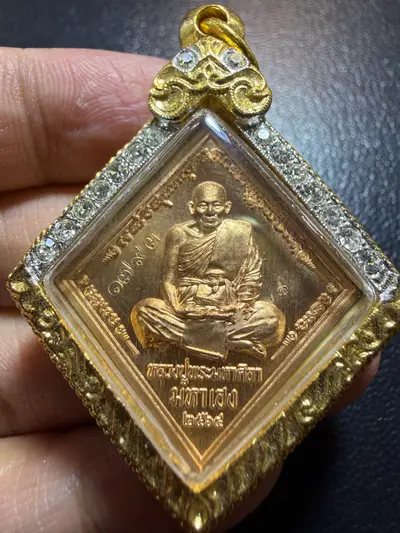
His amulets are recent. Nearly all date from BE 2560 onward, made by groups of disciples with his permission to fund temples and charity. The following are documented in Thai newspapers:
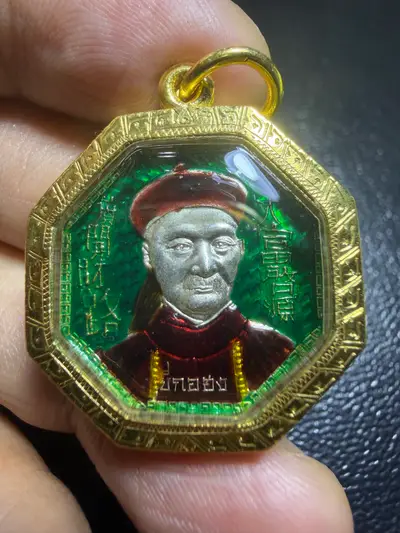
- BE 2560 Charoen Phon (รุ่นเจริญพร) portrait coin: egg-shaped, with "Wat That Prathap, Roi Et" on the reverse, made to fund that temple's wall and school scholarships. Consecrated 21 April 2017. Khaosod gives small mintages: 18 enamelled silver, 20 silver, 39 nawaloha, 200 alpaca. It is the earliest edition found in print.
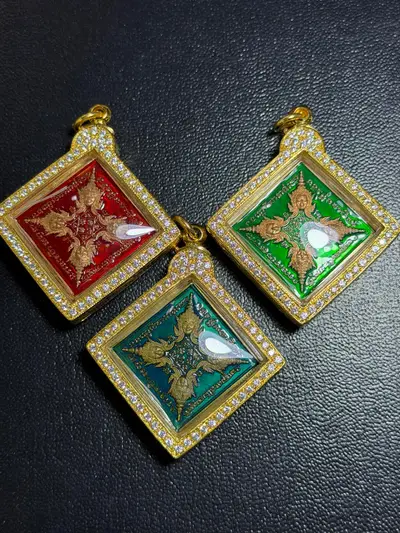
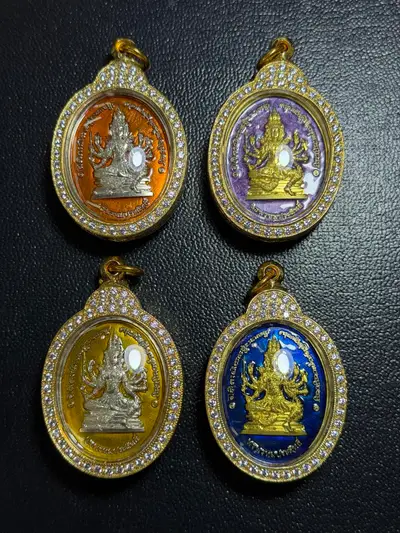
- BE 2564 Thong Sila Phan Lan (รุ่นทองศิลาพันล้าน) shield coin: Indra on the three-headed elephant on the reverse; gold, silver, nawaloha, alpaca and other metals. He consecrated it alone on 29 April 2021 in the ordination hall of Wat Pho Si Sa-at.
- BE 2564 Kae Pe sangha garden editions: Maha Lap, Chao Sua Udom Sap, and the first cast "hoe" medal, Lap Yot. Consecrated on 16 September 2021 with three other monks; Khaosod describes each as a very small run.
- BE 2567 Som Pratthana and Nuea Duang 2: first consecration on 2 July 2024 at Wat Phra That Muen Hin with him presiding and more than ten monks seated. These were organised by lay disciples and had a second ceremony in Saraburi, so they are group consecrations.
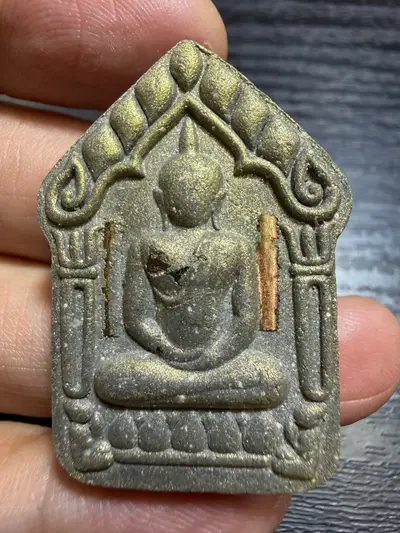
- BE 2569 Khun Phaen Ruai Kot Lang Suea, first edition: final consecration on 29 March 2026 at Wat Suan Tham Piti, funding a road inside the temple.
- BE 2569 Kathin Maha Mongkhon 69 coin (the "tiger-back" coin): first striking and consecration on 4 October 2026; Daily News reports he checked the design and wrote the tiger yantra himself.
Daily News adds that his best-known object is a takrut made to hang on a dog's collar; Thai devotees tell stories of dogs wearing it escaping harm, which should be read as folklore.
Collecting Notes
- He is living, so everything to date is lifetime work. The distinction that matters is between pieces he consecrated alone and group ceremonies, which are often registered under the organising temple or edition name.
- The temple on the paperwork changes with the year: Wat Pho Si Sa-at or the Kae Pe sangha garden for roughly BE 2560 to 2565, Wat Phra That Muen Hin from BE 2565, Wat Suan Tham Piti for BE 2569. He was never abbot of Wat Pho Si Sa-at; he lived in the sangha garden on its grounds.
- Certificates handled by this site often give only "หลวงปู่ศิลา" (Luang Pu Sila), while the press and the coins use "หลวงปู่มหาศิลา สิริจันโท". They are the same monk; the monastic name Sirichantho is the identifier.
- Published mintages exist only for a few editions. Figures circulating online for the others mostly come from sellers and are not repeated here.