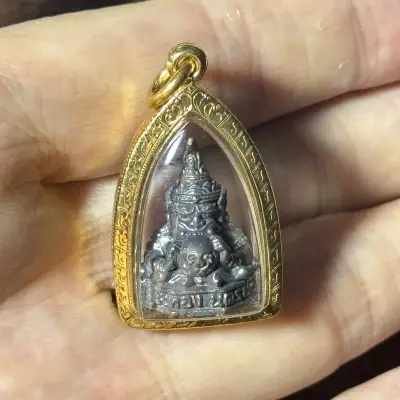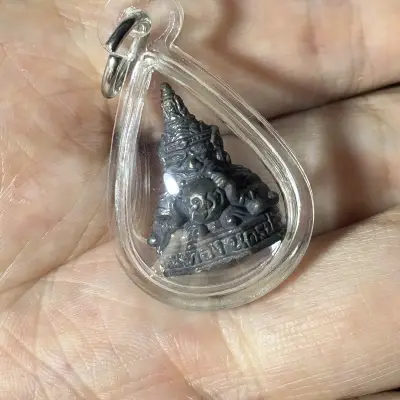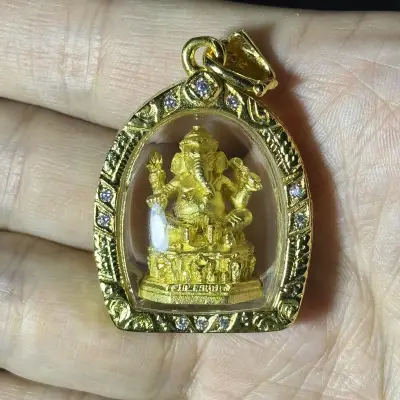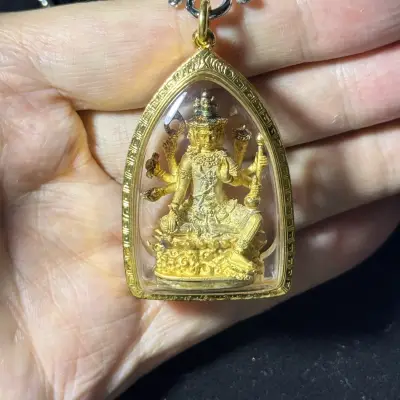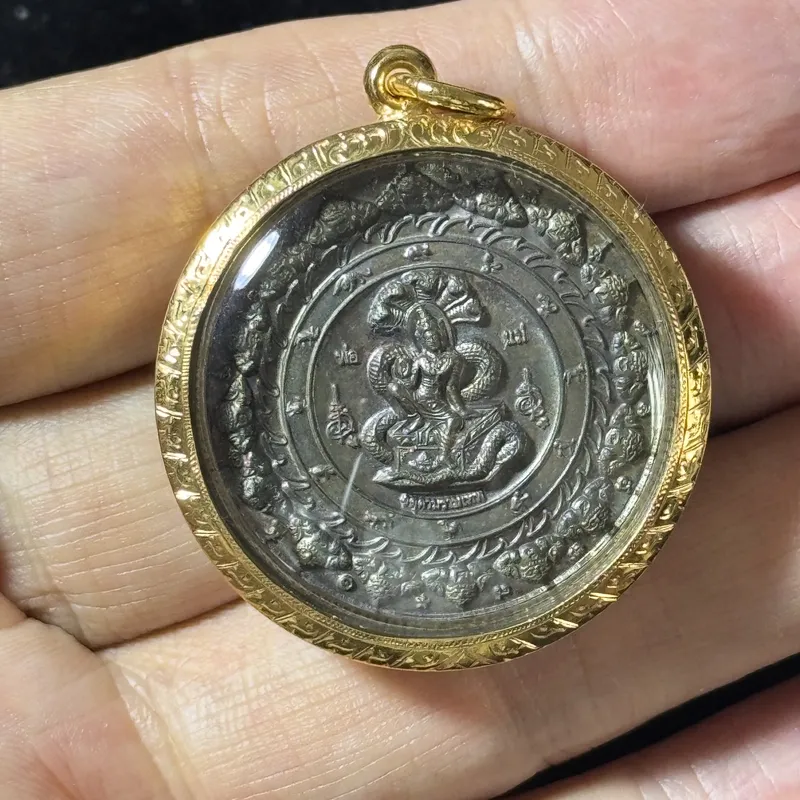
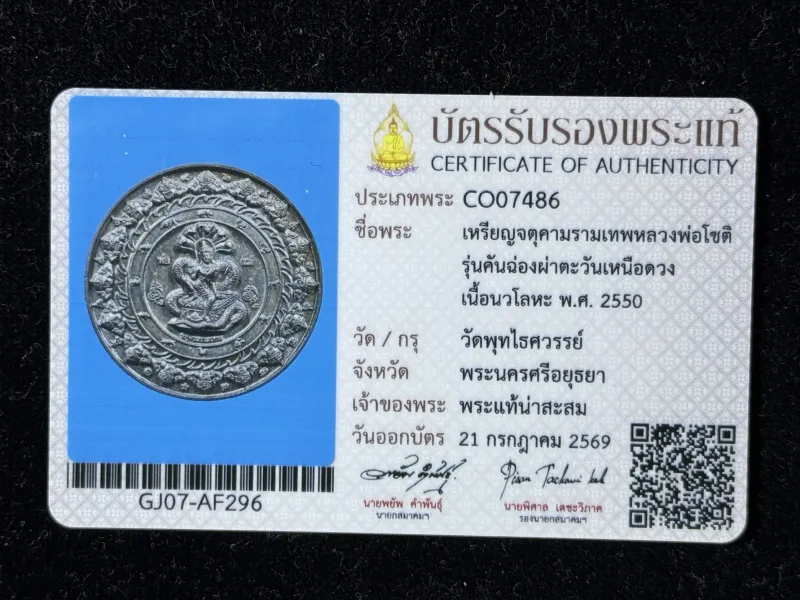
A Jatukam Ramathep "sacred mirror" coin from the Khan Chong Pha Tawan Nuea Duang series, created in B.E. 2550 (2007) under Phra Ajarn Chote at Wat Phutthaisawan, a royal temple of Ayutthaya founded in 1353. Nawa nine-metal alloy, deity front, mirror-polished yantra back — believed to deflect ill will and lift rank and fortune. Certificate No. CO07486 included. One piece in stock, restockable · ฿15,500.
1. What Is Jatukam Ramathep — and What Is the "Mirror" Series?
Jatukam Ramathep (จตุคามรามเทพ) is the guardian deity of the Great Relic Stupa of Nakhon Si Thammarat, revered as "the lord who rules over the four directions" and famed for answering what is sincerely asked. The first amulets appeared in 1987; by B.E. 2550 (2007) the devotion had swept the whole country, with an estimated 22 billion baht changing hands that single year.
This piece is Wat Phutthaisawan’s Khan Chong (คันฉ่อง) issue of that peak year. A khan chong is a traditional Thai bronze hand-mirror, and the design turns the entire reverse of the coin into one: polished to a mirror finish and engraved with yantra script. In Thai (and Chinese) folk belief a sacred mirror reveals what hides and reflects malice back to its sender; the rest of the series name — Pha Tawan ("splitting the sun"), Nuea Duang ("above fate"), Yok Thana ("raising status") — stacks blessing upon blessing: break through the gloom, rise above your stars, ascend in rank.
Key Facts
- Type: Jatukam Ramathep coin (เหรียญจตุคามรามเทพ), sacred-mirror reverse
- Series: Khan Chong Pha Tawan Nuea Duang (คันฉ่องผ่าตะวันเหนือดวง), B.E. 2550
- Material: nawa loha (นวโลหะ) — the traditional nine-sacred-metal alloy, a premium grade within the batch
- Temple: Wat Phutthaisawan, royal temple of Ayutthaya, founded 1353
- Master: Phra Ajarn Chote, the temple’s abbot
- Front: the deity enthroned amid naga and flame motifs
- Back: mirror-polished field engraved with yantra
- Case: ornate gold-plated bezel case (not solid gold) with bail — ready to wear
- Stock: 1 piece on hand, restockable
2. Who Is Phra Ajarn Chote?
Phra Ajarn Chote (Athichot Thammavaro), born 21 November 1959, ordained at Wat Phutthaisawan on 22 January 1997 and now serves as abbot of this royal monastery, holding the title Phra Khru Phawana Phattharakhun. He began the temple’s sacred-object program in 2002; his 2006–2007 Jatukam series made the ancient temple one of central Thailand’s most visited sacred-arts destinations, today famed for its Lek Lai iron relics, Jatukam shrine and Mother Earth hall.
3. Blessings
- Deflection — the mirror reverse is believed to bounce hostility, envy and misfortune away like armor
- Warding — engraved yantra guards against dark influence, gossip and hidden rivals
- Promotion — Yok Thana, "raising status": support for career ascent and standing
- Protection — the deity’s four-directions guardianship for safe passage
- Fortune reversal — Pha Tawan Nuea Duang, "split the sun, rise above fate", for those pushing through a low season
- Prosperity — the classic Jatukam blessing for business and leadership
Note: amulets support mindful living and merit-making; they are not guarantees. Keeping the five precepts aligns the wearer with the blessing.
4. Craftsmanship
Front: the deity sits at the hub of a dharma wheel ringed by naga serpents and flame reliefs, the nawa alloy showing a deep, antique bronze tone. Back: a full mirror-polished field finely engraved with yantra — the "demon-revealing mirror" that gives the series its Chinese nickname. Mounted in an ornately stamped gold-plated case (not solid gold) with built-in bail.
5. FAQ
Q: Is "demon-revealing mirror" the official name?
A: The Thai name is Khan Chong (คันฉ่อง), the traditional bronze mirror, and the certificate registers the series as Khan Chong Pha Tawan Nuea Duang. Chinese collectors use the nickname because the protective symbolism matches the zhaoyaojing of Chinese folklore.
Q: What is nawa loha?
A: A revered Thai casting alloy blending nine metals (including gold, silver and copper) by traditional formula. It darkens beautifully with age and typically ranks above plain copper versions within the same batch.
Q: How is this different from a regular Jatukam coin?
A: Most Jatukam coins are relief-cast on both faces. The mirror series is instantly recognizable for its polished, yantra-engraved reverse and its dual theme of defense and ascent.
Q: Are 2550-era pieces still easy to find?
A: B.E. 2550 was the peak of the Jatukam era; temple originals dispersed long ago, and certified nawa-alloy pieces in clean condition grow scarcer each year. This one comes from a veteran Bangkok collector channel.
Q: How do I verify the certificate?
A: Scan the QR code on the card for instant verification, or look up No. CO07486 (GJ07-AF296).
Q: Will it be restocked?
A: One piece is on hand. After it sells, we can source the same model through our Bangkok collector network, certified to the same standard (typically 7–14 days).
6. About This Piece
- Ready to wear in a gold-plated bezel case (not solid gold) with bail
- Certificate of Authenticity No. CO07486 (GJ07-AF296), issued 21 July B.E. 2569
- Price: ฿15,500
- Stock: 1 piece, restockable (pre-order after sellout)
- Photographed in-house by our Bangkok team · 10x refund guarantee
Last updated: 2026-08-09 | Merit Messenger Team (Bangkok-based)