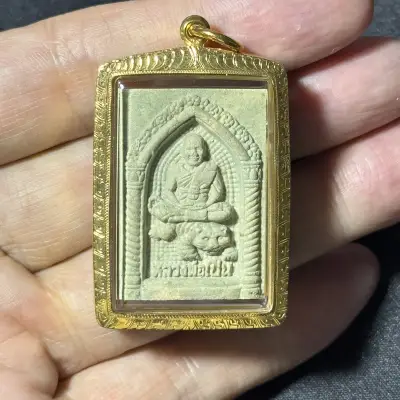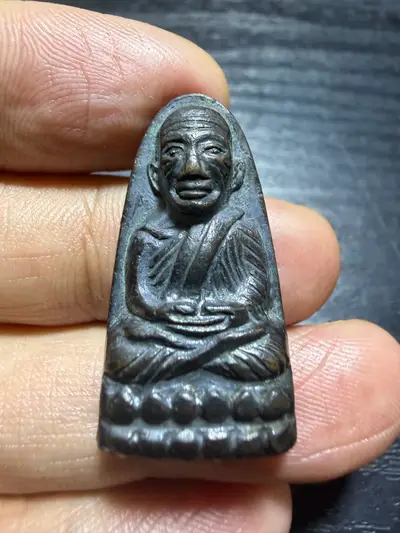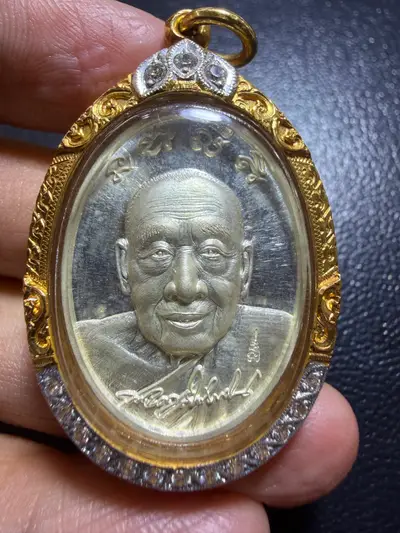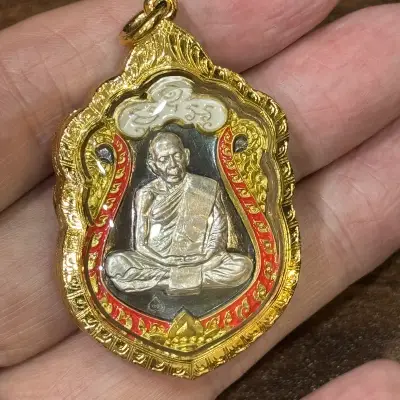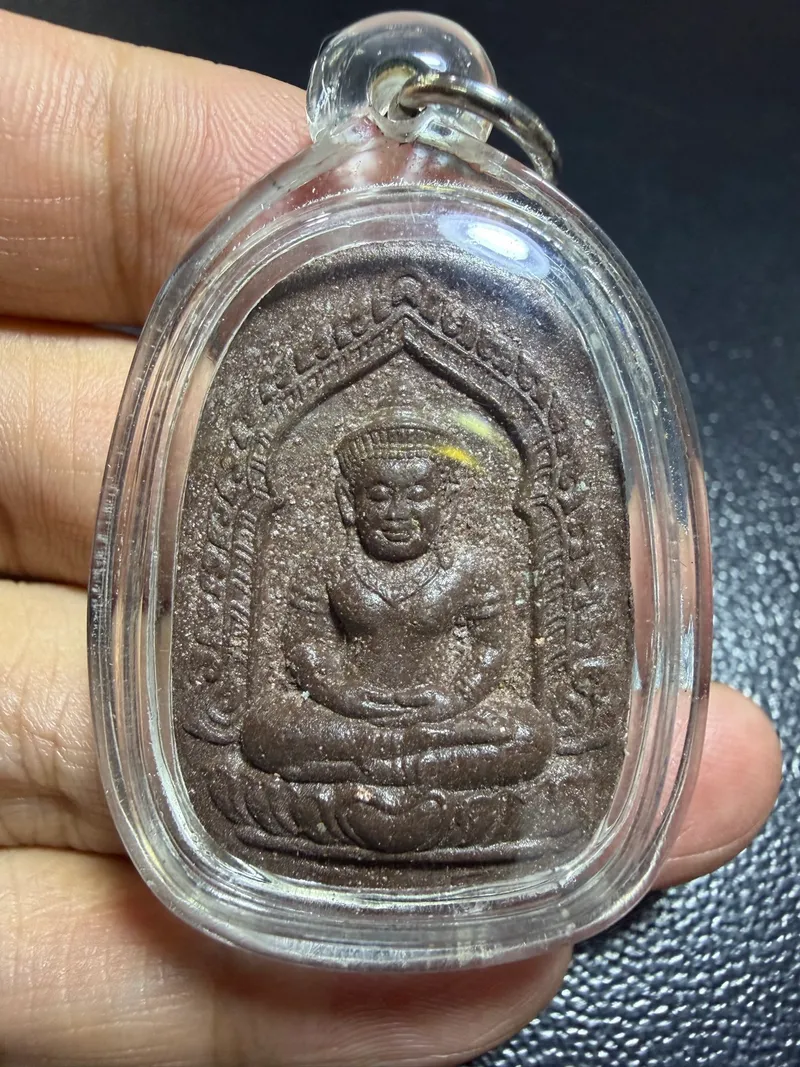
Luang Pu Hong Phra Khun Paen Bayon, made at Wat Phetchaburi (Susan Thung Mon), Surin, in B.E. 2547 (2004), in sacred powder mixed with wan herbs (เนื้อผงว่าน). "Bayon" (บายน) refers to the Khmer Bayon-style Buddha image; Surin borders Cambodia, and Luang Pu Hong (หลวงปู่หงษ์) is one of the most respected masters of the region. The front shows a crowned, Khmer-style Buddha seated in a pointed niche on a lotus base; the back is stamped with a yantra, and the powder grain and herb fibres are clearly visible under a natural purple-brown surface. According to the supplier, this batch blended leftover sacred material from Luang Pu Hong's earlier batches with a range of wan herbs gathered over about two years. Certified by the Thai Buddha Image Admiration Association, formal card No. P01259 with a QR code. Fitted in a clear waterproof case, ready to wear. One piece only; it is held by a partner supplier, so please submit a request and we confirm availability by email within 24 hours.
What is the Luang Pu Hong Phra Khun Paen Bayon (พระขุนแผนบายนหลวงปู่หงษ์)?
Phra Khun Paen (พระขุนแผน) is named after Khun Paen, the handsome, brave and much-loved hero of Thai folklore, so Khun Paen amulets are traditionally worn for charm, popularity and the support of helpful people. "Bayon" (บายน) is the name of the Bayon temple at Angkor, and a Bayon-style image carries a Khmer crown and facial features. Luang Pu Hong (หลวงปู่หงษ์) was the master of Wat Phetchaburi (วัดเพชรบุรี), also known as Susan Thung Mon (สุสานทุ่งมน), in Surin, and this batch joins the Khun Paen charm tradition with the Khmer style of his region.
The material is sacred powder mixed with wan herbs (เนื้อผงว่าน), the medicinal and sacred plants Thais call "wan". According to the supplier, this batch gathered leftover sacred powder from Luang Pu Hong's earlier batches and took about two years to prepare.
Key facts
- Type: Phra Khun Paen (พระขุนแผน), Bayon style (บายน)
- Material: sacred powder with wan herbs (Nuea Phong Wan / เนื้อผงว่าน)
- Temple: Wat Phetchaburi (วัดเพชรบุรี), Susan Thung Mon (สุสานทุ่งมน), Surin Province
- Master: Luang Pu Hong (หลวงปู่หงษ์)
- Year: B.E. 2547 (2004)
- Certification: Thai Buddha Image Admiration Association formal certificate (บัตรรับรองพระแท้), No. P01259, barcode GJ09-02AB5, issued 8 September B.E. 2569 (2026), with a QR code
- Case: clear waterproof case
- Stock: one piece only, held by a partner supplier
Who was Luang Pu Hong?
Luang Pu Hong (หลวงปู่หงษ์) was a revered master of Surin in north-eastern Thailand, based at Wat Phetchaburi. "Susan" (สุสาน) in the temple's other name means cemetery. He was known across the north-east for ascetic (thudong) practice and meditation. Surin sits on the Thai-Cambodian border, where Khmer-lineage practices are still alive, and his amulets often show Khmer styling. He has devotees across Thailand and abroad.
Blessings
- Charm and popularity: the core of the Khun Paen tradition
- Helpful people: support from elders, managers and clients
- Wealth: earned income and business customers; the supplier also mentions windfall luck
- Protection: safe travel and warding off danger
Please note: an amulet supports your own efforts and intentions; it does not guarantee any outcome. Keeping the Five Precepts is traditionally encouraged.
Craftsmanship
The amulet has a rounded-arch outline, narrower at the top. The front shows a pointed niche framed by a band of stamped ornament and script, with a Buddha seated inside wearing a Khmer-style crown, hands in meditation, on a lotus base. The back is stamped with a yantra: two interlaced curved lines enclosing sacred letters at the top, and a line of script with a framed panel below. The surface is purple-brown, with herb fibres and powder grain clearly visible and natural wear at the edges.
FAQ
Q: How does a Bayon Khun Paen differ from a standard Khun Paen?
A: Most Khun Paen amulets show a Thai-style Buddha seated under an arch. The Bayon version gives the image a Khmer crown and features taken from the Buddha images of the Bayon at Angkor, reflecting Surin's Khmer heritage. The association certificate registers the piece as "พระขุนแผนบายนหลวงปู่หงษ์".
Q: What does the certificate say?
A: The piece comes with the Thai Buddha Image Admiration Association's formal blue-and-white certificate, No. P01259, naming it "พระขุนแผนบายนหลวงปู่หงษ์ เนื้อผงว่าน พ.ศ. 2547", temple "วัดเพชรบุรี (สุสานทุ่งมน)", province "สุรินทร์", issued 8 September B.E. 2569 (2026), with a QR code you can scan to verify.
Q: Can I wear a powder amulet every day?
A: Yes. It is already in a clear waterproof case. Powder amulets dislike long soaking and hard knocks, so take it off for showers and swimming and avoid dropping it.
Q: Who is it suited to?
A: Business owners, sales professionals, anyone who relies on goodwill and helpful people, and collectors of the Surin masters.
Q: Why do I request first and pay later?
A: This piece is held by a partner supplier rather than in our Bangkok stock. So that nobody pays for a piece that has already gone, we confirm with the supplier first and reply by email within 24 hours. If it is available, the email includes a payment link valid for 24 hours. Submitting a request costs nothing.
About this piece
- Includes: one Khun Paen in herbal sacred powder (in a clear waterproof case) and the Thai Buddha Image Admiration Association formal certificate (No. P01259)
- Price: ฿10,000
- Stock: one piece only
- How to buy: submit a request on this page; pay through the emailed link once availability is confirmed
Last updated: 2026-10-29 | Merit Messenger team (Bangkok-based)