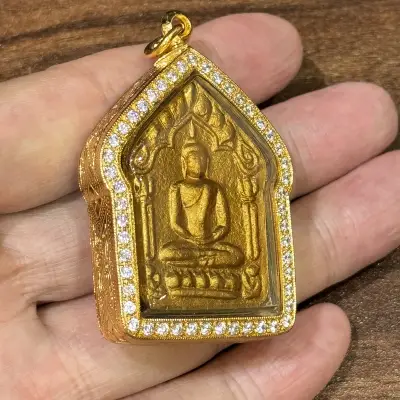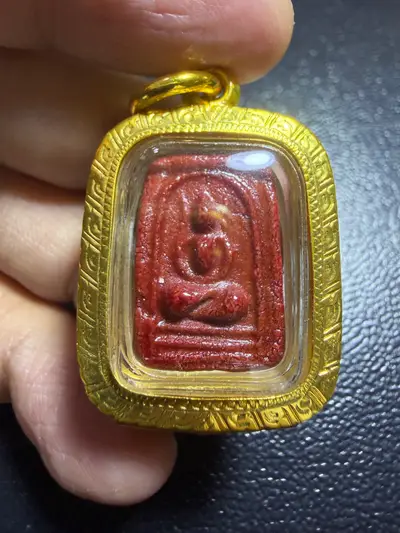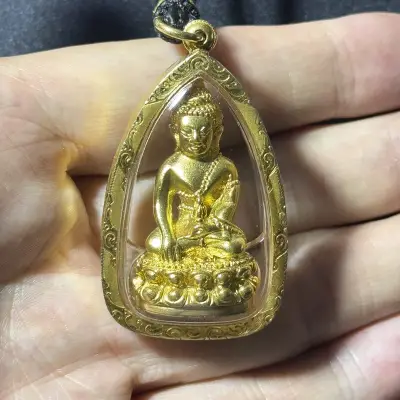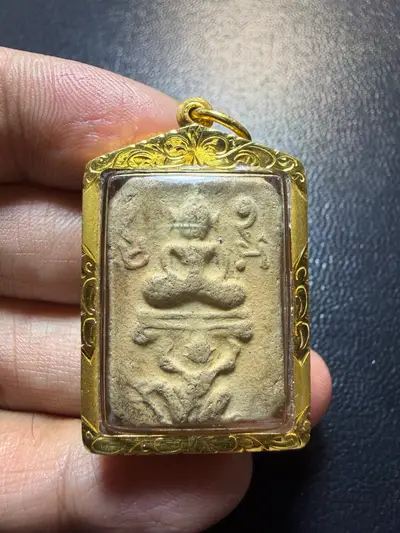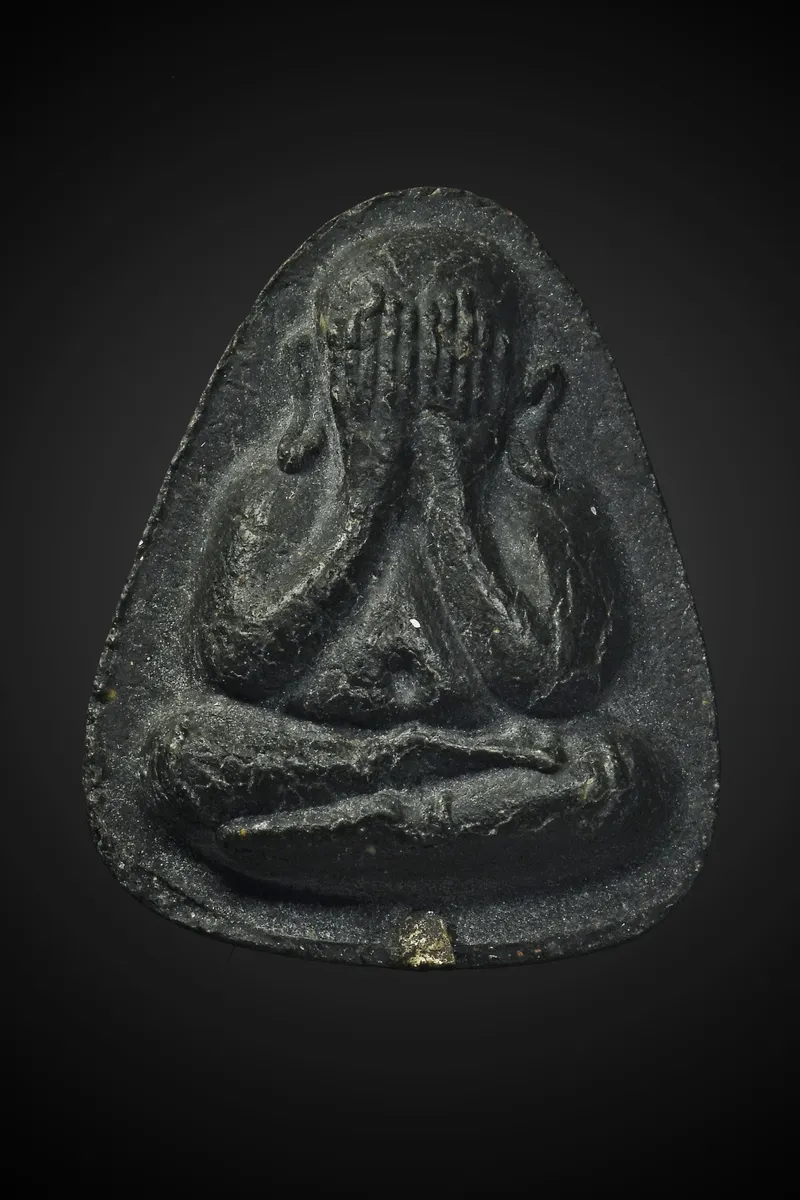
Phra Pidta (the "closed-eyes" Buddha) of Luang Pu To (หลวงปู่โต๊ะ), Wat Pradu Chimphli, Bangkok. This is the B.E. 2521 (1978) "Bo Ni In Na" (Plod Nee, รุ่นปลดหนี้) batch; according to the supplier, "Bo Ni" means clearing debts, so it is also known as the debt-clearing Pidta, and its full name translates as great wealth and plenty. Black sacred powder; the back carries a stupa-shaped yantra and the cast inscription "หลวงปู่โต๊ะ วัดประดู่ฉิมพลี", so both master and temple can be read on the piece itself. The supplier grades it in fine condition; the surface shows natural wear and a few light specks. Judged genuine by the Thai Buddha Image Admiration Association, No. 07003; the formal certificate is included. One piece only; it is held by a partner supplier, so please submit a request and we confirm availability by email within 24 hours.
What is the Luang Pu To Phra Pidta?
A Phra Pidta (พระปิดตา) shows the Buddha covering his face with his hands, a symbol of closing the senses and turning inward. In Thai tradition it is worn to guard and gather wealth and to avoid danger. Luang Pu To (หลวงปู่โต๊ะ) of Wat Pradu Chimphli (วัดประดู่ฉิมพลี), on the Thonburi side of Bangkok, was a revered meditation master, and his Pidta and powder amulets are well known to Thai collectors.
According to the supplier, this piece belongs to Luang Pu To's "Bo Ni In Na" batch, first blessed in B.E. 2521 (1978). "Bo Ni" means clearing debts, hence the nicknames "debt-clearing Pidta" and "debts cleared"; the full name translates as great wealth and plenty. The supplier describes it as one of Luang Pu To's most representative Pidta and a mainstream batch among Thai collectors.
Key facts
- Type: Phra Pidta (พระปิดตา)
- Batch: Bo Ni In Na / Plod Nee, รุ่นปลดหนี้ (the debt-clearing Pidta; full name meaning great wealth and plenty, per the supplier)
- Material: black sacred powder (by appearance; not stated on the receipt)
- Back: stupa-shaped yantra with "หลวงปู่โต๊ะ วัดประดู่ฉิมพลี" cast around the edge
- Temple: Wat Pradu Chimphli (วัดประดู่ฉิมพลี), Bangkok
- Master: Luang Pu To (หลวงปู่โต๊ะ)
- Year: first blessed B.E. 2521 (1978), ceremonies completed B.E. 2523 (per the supplier)
- Condition: graded fine by the supplier
- Certification: judged genuine (แท้) by the Thai Buddha Image Admiration Association, No. 07003, barcode GJ09-C6649, amulet name "หลวงปู่โต๊ะ", dated 22 September B.E. 2569 (2026); the formal certificate is included
- Stock: one piece only, held by a partner supplier
Who was Luang Pu To?
Luang Pu To was abbot of Wat Pradu Chimphli and was known throughout central Thailand for his meditation practice, strict discipline and kindness. He blessed many kinds of sacred objects, and his Pidta are among the most widely collected. According to the supplier, this batch was blessed for about three years together with the "Jumbo 2" batch: first consecrated in B.E. 2521, with the ceremonies completed in B.E. 2523 when the master passed away.
Blessings
- Wealth: Pidta are traditionally worn to guard and gather wealth
- Safety: avoiding danger and travelling safely
- Protection: warding off evil and negative energy
A story told about this batch: according to the supplier, soon after the first blessing a devotee whose business was struggling took one home, his business gradually recovered, and more people came to the temple for the batch, which is how it became known as the debt-clearing Pidta. This is a story in circulation, not a promise of the same result.
Please note: an amulet supports your own efforts and intentions; it does not guarantee any outcome and is no substitute for financial planning. Keeping the Five Precepts is traditionally encouraged.
Craftsmanship
A round-topped triangular plaque in black sacred powder. The Buddha sits cross-legged with both hands over his face and a full belly, with a small light-coloured inclusion at the centre of the base. The back has a stupa-shaped yantra with sacred syllables in a square frame, and "หลวงปู่โต๊ะ วัดประดู่ฉิมพลี" cast along the lower edge and sides. The sides show the powder's layered texture and natural wear. It is currently uncased, in the association's sealed box.
FAQ
Q: What is the yellow card in the photos, and which card do I receive?
A: The yellow card is the Thai Buddha Image Admiration Association's authentication receipt, issued on the spot once a piece is judged genuine; the formal certificate is collected on the Thursday of the following week. This piece's yellow card is No. 07003, amulet name "หลวงปู่โต๊ะ" (Luang Pu To), marked "แท้" (genuine), with the "มีซ่อม" (repaired) box left blank, dated 22 September B.E. 2569 (2026). The buyer receives the association's formal certificate.
Q: How do I know it is Luang Pu To's?
A: The association receipt names "หลวงปู่โต๊ะ", and the back of the piece is cast with "หลวงปู่โต๊ะ วัดประดู่ฉิมพลี". The batch name "Bo Ni In Na" and the year B.E. 2521 are per the supplier.
Q: Can I wear a powder Pidta every day?
A: Yes, ideally in a waterproof case. Powder dislikes long soaking, so take it off for bathing or swimming.
Q: Who is it suited to?
A: Business owners and anyone who wants to hold on to what they earn, frequent travellers, and collectors of Pidta from Bangkok's old temples.
Q: Why do I request first and pay later?
A: This piece is held by a partner supplier rather than in our Bangkok stock. So that nobody pays for a piece that has already gone, we confirm with the supplier first and reply by email within 24 hours. If it is available, the email includes a payment link valid for 24 hours. Submitting a request costs nothing.
About this piece
- Includes: the amulet (uncased, in the association's sealed box) and the Thai Buddha Image Admiration Association formal certificate (No. 07003)
- Price: ฿112,000
- Stock: one piece only
- How to buy: submit a request on this page; pay through the emailed link once availability is confirmed
Last updated: 2026-10-29 | Merit Messenger team (Bangkok-based)