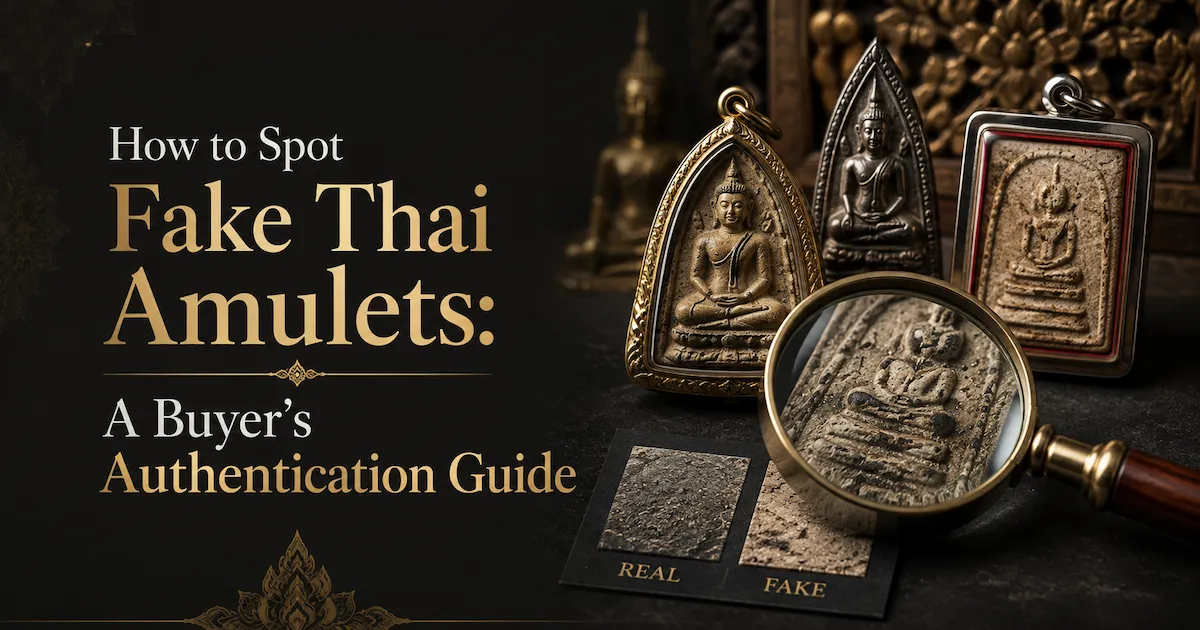
Genuine Thai amulets show natural aging (uneven patina, micro-chips, organic wear patterns), have precise detailing from hand-carved molds, and come with verifiable provenance. Fakes look too perfect, feel too light, smell wrong, and are sold with pressure tactics. This guide teaches you 7 practical tests you can do before buying.
Why fakes are everywhere
The Thai amulet market is worth billions of baht annually, which inevitably attracts counterfeiters. Some estimates suggest that over 70% of amulets sold in tourist areas are reproductions. This doesn't mean you can't find authentic pieces — it means you need to know what to look for.
Counterfeits range from obvious tourist trinkets (mass-produced plastic pendants) to sophisticated forgeries that fool even experienced collectors. The good news: with practice and the right knowledge, most fakes reveal themselves through a few reliable tests.
The 7-point authentication checklist
1. Surface detail and mold quality
Authentic amulets are made from hand-carved molds, which produce fine, crisp details — especially in the facial features of the Buddha image, the lines of the robes, and any inscriptions on the back. Under magnification, you should see:
- Sharp edges on raised elements, not rounded or blobby
- Consistent depth in recessed areas
- Slight imperfections that come from handwork — no two genuine amulets from the same batch are perfectly identical
Fakes made from rubber molds of originals lose detail with each generation. The features look softer, blurrier, and less defined — like a photocopy of a photocopy.
2. Material and weight
Different amulet types use specific materials, and experienced handlers can feel the difference:
- Powder/clay amulets (phong): Should feel dense and slightly chalky. Fakes often use modern cement or plaster, which feels smoother and lighter.
- Metal amulets: Genuine bronze, copper, or lead-tin alloys have a specific heft. Zinc or aluminum fakes feel noticeably lighter.
- Gold-leaf surfaces: Authentic gold leaf is applied by hand — look for uneven edges, slight thickness variation, and natural wear at high-contact points. Machine-sprayed gold finishes are unnaturally uniform.
3. Aging and wear patterns
This is often the most reliable test. A genuine old amulet has been worn against skin, jostled in a pocket, or stored for decades. It shows:
- Natural patina: Metal oxidizes unevenly — darker in recesses, lighter on raised surfaces that get rubbed
- Micro-chips and scratches: Random, organic damage patterns — not uniform abrasion
- Discoloration from body oils: Genuine wear leaves a slightly greasy feel and dark staining in crevices
Artificially aged fakes use chemical treatments that create suspiciously uniform "patina" or damage that follows a pattern rather than random wear.
4. The smell test
This sounds unusual, but experienced collectors swear by it. Genuine old powder amulets develop a distinctive musty, earthy scent from decades of aging — similar to old books or antique wood. Fresh fakes smell like wet cement, chemical adhesive, or nothing at all. Metal amulets are less useful for this test, but even they develop a specific metallic-and-skin-oil scent over time.
5. Base and edge examination
The base (bottom) and edges of an amulet often reveal the most about authenticity:
- Mold lines: Genuine amulets from two-part molds have subtle mold lines that are hand-finished. Machine-made fakes have razor-sharp or completely invisible mold lines.
- Base texture: The bottom of a genuine powder amulet often shows the texture of the surface it was dried on (bamboo mat, cloth, or metal tray).
- Hand-inscribed elements: Many monks add hand-written sacred scripts (yant) on the back. These show natural pen pressure variation. Stamped or laser-engraved scripts are too uniform.
6. Provenance and documentation
The most valuable amulets come with a chain of custody:
- Temple certificates: Some temples issue certificates for amulets distributed during specific ceremonies
- Competition certificates: High-value amulets may have been entered in amulet competitions (ngan phra) where experts grade authenticity
- Dealer guarantee: Reputable dealers offer money-back authenticity guarantees and welcome third-party verification
Be aware that certificates can also be forged. The certificate is supporting evidence, not proof on its own.
7. Dealer behavior red flags
How the seller behaves tells you as much as the amulet itself:
- Pressure to buy now: "Someone else wants this" or "Price goes up tomorrow" — walk away
- Refuses close inspection: Won't let you use a loupe or take your time examining
- Vague about origin: Can't name the temple, monk, or ceremony — just "very old, very powerful"
- Too-good-to-be-true pricing: A "Somdej Wat Rakang" for $50 is not a bargain — it's a fake
- No return policy: Legitimate dealers stand behind their pieces
Where fakes are most common
- Tourist markets: Chatuchak Weekend Market, Khao San Road, and similar tourist spots sell mostly reproductions — often openly, but sometimes passed off as genuine
- Online marketplaces: eBay, Etsy, and Amazon listings require extra caution. Stock photos and copy-pasted descriptions are red flags.
- Street vendors near temples: Vendors outside popular temples (especially Wat Phra Kaew and Wat Pho) often sell mass-produced souvenirs, not consecrated amulets
Where to buy with confidence
- Directly from temples: Amulets distributed during temple ceremonies (phutthaphisek) are guaranteed authentic
- Established specialist dealers: Look for dealers with years of reputation, physical presence, and transparent return policies
- Amulet societies and competitions: Pieces that have been graded by expert panels carry the highest confidence
A note on reproductions vs. fakes
Not all non-original amulets are "fakes" in the dishonest sense. Many temples produce modern editions of famous historical amulets, clearly labeled as new productions and properly consecrated. These carry genuine spiritual value — they're simply not antiques. The problem is only when a reproduction is misrepresented as an original to inflate the price.
FAQ
Q: Can I authenticate an amulet from photos alone?
A: Photos help, but they're not sufficient for high-value pieces. Weight, texture, smell, and the "feel" of the material can't be assessed from images. For expensive amulets, always inspect in person or use a dealer who offers returns.
Q: Are there professional authentication services?
A: Yes. In Thailand, organizations like the Samakom Phra Khrueang (Amulet Society) hold regular competitions where experts grade amulets. Some dealers also offer paid authentication services. For high-value purchases, this is money well spent.
Q: I bought an amulet and now I'm not sure it's real. What should I do?
A: Don't panic. If you bought from a reputable dealer, contact them — most offer exchanges or refunds. If you bought from a market vendor, consider it a learning experience and a souvenir. If the amulet was consecrated at a temple (even if it's a modern production), it still carries spiritual value regardless of its collectible value.
Q: Do genuine amulets always cost a lot?
A: No. Modern amulets from reputable monks can be quite affordable — many temples distribute them for small donations (100-500 baht). It's the rare, antique pieces from famous masters that command high prices. A genuine modern amulet for $20 is perfectly real; a "100-year-old Somdej" for $20 is almost certainly fake.
Last updated: June 2026 | By the Merit Messenger team, based in Bangkok
Want authentic Thai amulets with a money-back guarantee? Browse our collection — every piece comes with full provenance documentation. Questions? Contact us for free authentication advice.