What Is Kumanthong?
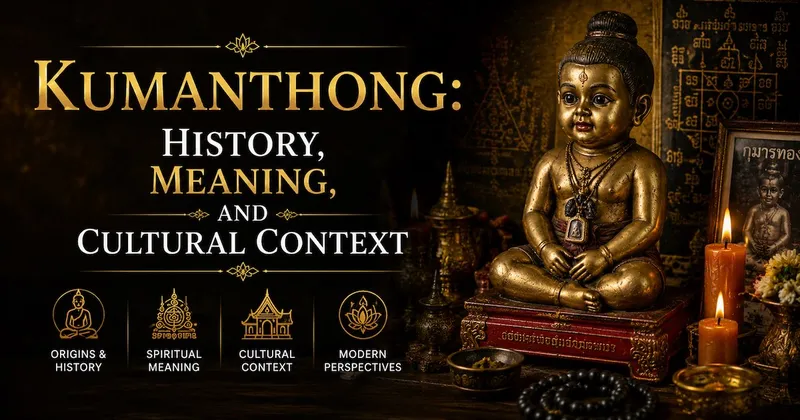
Kumanthong (literally "Golden Boy") is a figure from Thai spiritual tradition depicted as a young child, typically a boy, often shown in a seated or standing posture. In the modern Thai amulet market, Kumanthong amulets are associated with wealth attraction, good fortune, and business success. The figure serves as a spiritual helper — a benevolent child spirit that assists and protects its owner.
Kumanthong is also one of the most sensationalized topics in international coverage of Thai Buddhism, often described in lurid terms that bear little resemblance to how the figure is actually understood and used by Thai practitioners today. This guide provides the factual cultural context.
Literary Origins
Kumanthong originates from the same Thai literary epic as the Khun Paen amulet — Khun Chang Khun Phaen. In the story, the warrior Khun Paen creates a Kumanthong as a spiritual companion and protector for battle. The literary version of the creation involves practices that are dramatic and supernatural — suitable for epic poetry but not representative of modern Buddhist practice.
It is essential to distinguish the literary legend from contemporary reality. Modern Kumanthong amulets are created by Buddhist monks using standard amulet-making materials (sacred powder, metal) and consecrated through standard Buddhist ceremonies. They are not connected to the extreme practices described in the ancient story, just as modern Christmas celebrations are not connected to the historical practices of medieval winter solstice rituals.
Modern Kumanthong Practice
In contemporary Thailand, Kumanthong amulets and statues are widely available and culturally mainstream. Here is how they are actually used:
- Business prosperity — Shop owners and business operators keep Kumanthong statues at their premises, treating the figure as a spiritual helper that attracts customers and good fortune. Daily offerings of food, drink, and toys are common — reflecting the childlike nature of the figure.
- Personal wealth — Wearable Kumanthong amulets are carried for financial luck and the attraction of opportunities.
- Companionship — Some devotees develop a personal relationship with their Kumanthong, speaking to it, offering treats, and treating it as a spiritual member of the household. This is affectionate and familial, not sinister.
- Children's well-being — Parents sometimes acquire Kumanthong amulets as protectors for their children, leveraging the child-spirit figure as a guardian for their actual children.
Addressing the Sensationalism
International media and internet content frequently portray Kumanthong in extreme, horror-movie terms. This sensationalism misrepresents the actual practice in several ways:
- Modern Kumanthong are amulets, not fetishes — They are made from the same materials (sacred powder, metal, clay) and by the same monks who create Phra Somdej and other mainstream amulets.
- The consecration is Buddhist — Standard chanting, meditation, and blessing ceremonies. Nothing outside the normal range of Thai Buddhist consecration practice.
- The practice is public and mainstream — Kumanthong statues sit openly in Thai businesses, are sold at temple markets, and are discussed on mainstream Thai television. This is not a hidden or taboo practice within Thailand.
- Cultural context matters — Many spiritual traditions incorporate child-like spiritual figures (cherubs in Christianity, putti in Renaissance art, child bodhisattvas in Mahayana Buddhism). The concept of a benevolent child spirit is cross-culturally common.
Kumanthong Spiritual Powers
As a spiritual helper, Kumanthong is associated with:
- Maha Pokasap (wealth attraction) — The primary power. Kumanthong is believed to "find" money and opportunities for its owner.
- Maha Lap (good luck) — General fortune enhancement across daily life.
- Metta (loving-kindness) — The childlike charm of Kumanthong creates warmth and goodwill in the owner's social and business interactions.
- Alert protection — Kumanthong is said to warn its owner of approaching danger through spiritual signals (dreams, intuitive feelings, sudden unease).
Offerings and Care
Devotees typically make small daily offerings to Kumanthong statues:
- Sweets, candy, or small cakes
- Beverages (juice, milk, or sweetened water)
- Small toys (particularly red-colored toys)
- A glass of water (the minimum daily offering)
These offerings reflect the childlike nature of the figure and are made in a spirit of affection and care, similar to leaving offerings at a household shrine. For wearable Kumanthong amulets, physical offerings are not required — the wearing itself is the devotional act.
Finding Kumanthong Amulets
Browse our collection for wealth-focused amulets, or read about other wealth traditions in our guides to wealth amulets and Mae Nang Kwak.