Why a Turtle?
Among Thailand's many wealth amulets, the turtle occupies a special and unusually beloved place. Phaya Tao Ruean (พญาเต่าเรือน) — the "royal house-turtle" — is not about sudden windfalls or lottery luck. It represents a slower, steadier idea of prosperity: wealth that accumulates patiently, sits securely, and lasts a very long time. In Thai belief the turtle carries its home on its back, never far from shelter, and lives for generations. Those two qualities — security and longevity — are exactly what the amulet is meant to confer.
For anyone who thinks about money in terms of building something durable rather than chasing a quick hit, the wealth turtle is one of the most fitting amulets in the entire tradition.
The Meaning Behind the Form
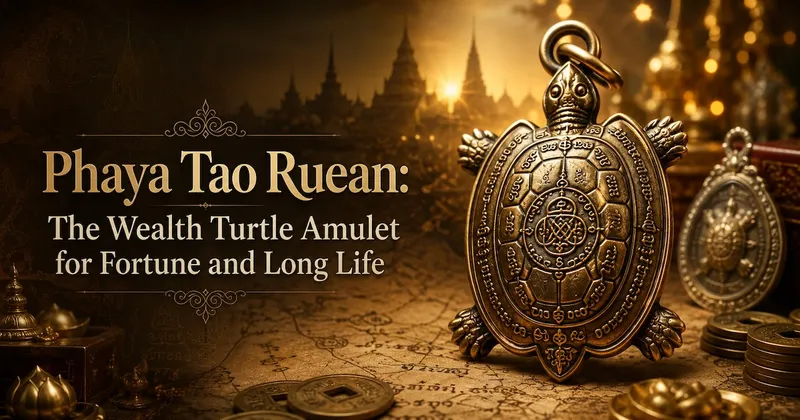
Phaya Tao Ruean amulets typically depict a turtle in medal (rian) or cast form, often with a sacred yantra on the shell and inscriptions invoking wealth and merit. The symbolism is layered:
- Accumulating wealth — the turtle gathers fortune slowly and holds it; money "stays" rather than leaking away
- Longevity and health — the turtle's long life is transferred as a blessing to the wearer and their elders
- Stability and shelter — carrying its home, the turtle represents a secure foundation and a protected household
- Steady progress — slow but unstoppable, the turtle never turns back
This is why the wealth turtle is a favorite gift for parents and elders: it combines the wish for prosperity with the wish for a long, healthy life.
The Great Turtle Lineages
The most famous name in wealth-turtle amulets is Luang Phor Liew of Wat Rai Tang Thong in Nakhon Pathom, whose turtle medals became the archetype that later masters followed. But the turtle is now made across many temples, and several forest-tradition masters have issued highly regarded editions of their own. What matters, as always, is the master's standing, the ceremony, and the documentation — not the motif alone.
The Piece in Our Collection
The Luang Pu Je Phaya Tao Ruean, "Jao Sua Maha Setthi" Edition, B.E. 2563 ($126) is a beautiful example of the tradition. It comes from Wat Pa Wiwek Tham, a forest monastery in Kalasin province, and was consecrated by Luang Pu Je (1940–2025). The edition name — Jao Sua Maha Setthi, "the great tycoon millionaire" — states its purpose plainly: to build and hold serious wealth.
Two details give this piece particular weight. First, it was the first turtle amulet Luang Pu Je personally presided over during his lifetime. Second, the master passed away in 2025, which means every amulet he personally consecrated is now a fixed, non-increasing supply. It is cast in copper, fitted with a gold-tone waterproof case and hanging loop, and includes an authenticity card. One of a kind in our inventory.
Who Should Wear a Wealth Turtle?
- Business owners and the self-employed who want steady, compounding income rather than one-off luck
- Savers and long-term investors whose goal is accumulation and preservation
- Anyone buying a blessing for parents or elders — the longevity meaning makes it a deeply respectful gift
- People who feel money "leaks away" — the turtle's holding energy is traditionally used to plug the leaks
How to Wear and Care for It
A cased turtle amulet like this one can be worn daily on a chain or kept on a home altar. Many owners of wealth pieces also place them near a cash drawer, safe, or business register when not worn. As with all sacred objects, keep it above waist level, treat it with respect, and set a clear intention — in this case, patient and secure accumulation rather than gambling luck. For the meaning of the Buddhist Era date on the card, see our guide on dating Thai amulets.
Frequently Asked Questions
Is the wealth turtle for gambling or lottery luck?
Not primarily. Unlike some windfall-focused amulets, the turtle represents patient accumulation and preservation. It suits people building and protecting wealth over time far better than those chasing a single big win.
Why does it matter that Luang Pu Je has passed away?
In Thai amulet culture, once a master dies the supply of amulets he personally consecrated can never grow. Pieces from a respected late master — especially a "first edition" like this turtle — carry both devotional and collector significance for that reason.
Can I give this as a gift to my parents?
Yes, and it is a traditional and thoughtful choice. The turtle's dual meaning of wealth and longevity makes it one of the most common amulets given to elders as a blessing for a secure, long, and healthy life.
Questions about this piece? Reach out on WhatsApp for more photos and details.