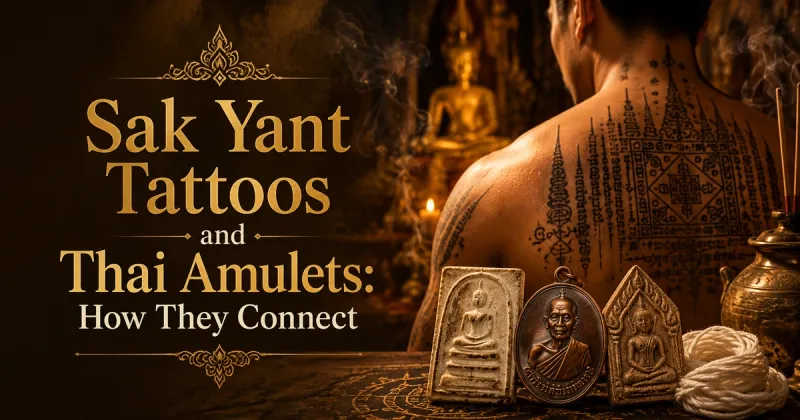
Sak Yant tattoos and Thai amulets are two expressions of the same spiritual tradition — both use sacred scripts (yant), mantras (kata), and monk blessings to channel protection and power. The key difference is permanence: a tattoo is part of your body forever, while an amulet can be removed. Many practitioners use both for layered protection. If you are considering a Sak Yant, understanding its connection to amulet culture gives you a deeper appreciation of both.
Shared roots: the yant tradition
Both Sak Yant tattoos and Thai amulets draw their power from yant — sacred geometric designs that incorporate Khom script (ancient Khmer writing), Pali phrases, and symbolic imagery. These designs are not decorative; each line, shape, and character is a compressed prayer or mantra believed to invoke specific spiritual forces.
The yant tradition blends Theravada Buddhism with older animist and Brahmanist practices that predate Buddhism in Southeast Asia. It originated with warriors who sought spiritual protection in battle — the same need that drives much of amulet culture today.
When a monk inscribes a yant onto an amulet or into skin, the process is essentially the same: sacred formulas are applied to a physical medium and activated through chanting and meditation.
How Sak Yant works
A Sak Yant tattoo is administered by a master practitioner — either a Buddhist monk (phra) or a lay master (ajarn). The master uses a long metal rod (mai sak) or bamboo needle to hand-poke the design into the skin while chanting the corresponding kata. The combination of the physical inscription and the spoken blessing is what activates the tattoo's power.
This is fundamentally different from getting a tattoo at a commercial studio. Even if the design looks identical, a Sak Yant without the master's blessing is considered spiritually inert — just ink on skin.
Popular Sak Yant designs and their powers
- Hah Taew (Five Lines): Five horizontal lines of Pali script offering protection, good fortune, charisma, and karma removal. The most popular design for first-timers. Made globally famous by Angelina Jolie.
- Gao Yord (Nine Spires): Nine peaks representing the nine peaks of Mount Meru (the center of the Buddhist universe). Offers universal protection and spiritual power. Often placed at the base of the neck.
- Suea (Twin Tigers): Two tigers facing each other, representing power, authority, and fearlessness. Popular among business leaders, military personnel, and Muay Thai fighters.
- Paed Tidt (Eight Directions): A geometric design with mantras pointing in eight compass directions. Provides protection from all angles — wherever you travel.
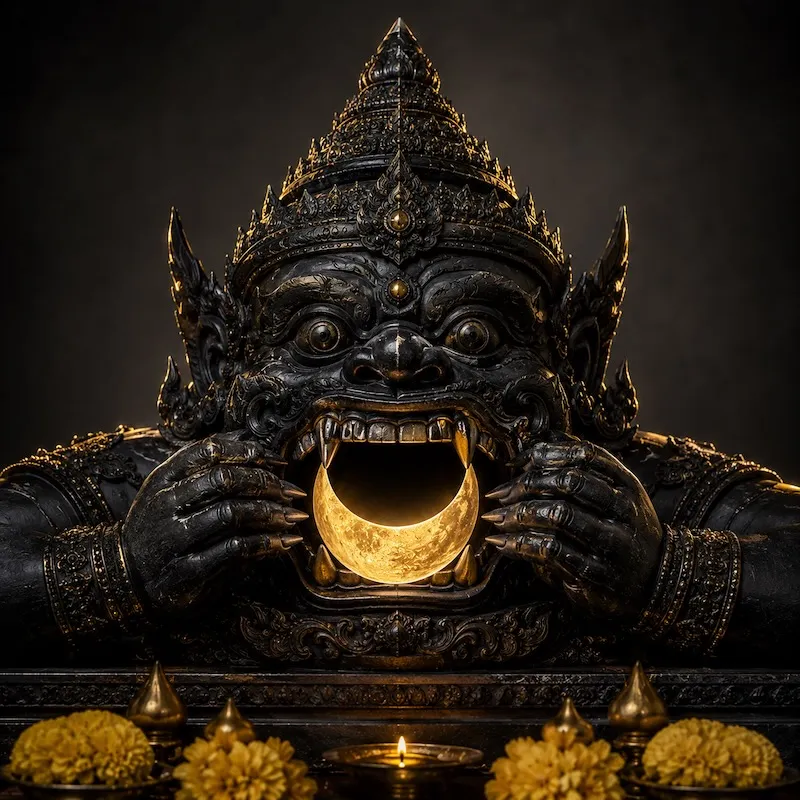
- Yant Phra Rahu: Depicts the deity Rahu swallowing the moon. Believed to "swallow" bad luck and transform misfortune into favor.
Sak Yant vs. Thai amulets: key differences
| Aspect | Sak Yant | Thai amulet |
|---|---|---|
| Permanence | Permanent — part of your body | Removable — can take off anytime |
| Activation | Tattooed + chanted by master | Consecrated at ceremony (Puttapisek) |
| Flexibility | Cannot change once done | Can switch, add, or replace |
| Rules | 5 strict precepts (see below) | Basic wearing etiquette |
| Cost | Donation to master (varies widely) | Donation or purchase price |
| Visibility | Visible on body (unless clothed) | Can be hidden under clothing |
The 5 rules of Sak Yant
Every Sak Yant bearer is expected to follow five precepts. These are the same as the basic Buddhist Five Precepts, and following them is believed to keep the tattoo's spiritual power "charged":
- Do not kill: Do not intentionally kill or cause death to living beings
- Do not steal: Do not take what is not given
- Do not lie: Do not deceive others to cause harm
- Do not commit adultery: Do not engage in sexual misconduct
- Do not get intoxicated: Avoid alcohol and drugs to the point of losing self-control
Breaking these rules does not "destroy" the tattoo, but it is believed to weaken its spiritual effectiveness. The power of a Sak Yant is directly connected to the quality of the bearer's conduct.
Using Sak Yant and amulets together
Many practitioners use both — and they complement each other well:
- Layered protection: A Sak Yant provides permanent baseline protection, while amulets add specific, targeted blessings that can be swapped as needs change
- Different strengths: Sak Yant excels at protection and invulnerability. Amulets are more versatile — wealth, love, career, and other specific purposes can be addressed by choosing the right amulet type
- Mutual reinforcement: The yant in the tattoo and the consecrated energy in the amulet are believed to amplify each other
Getting a Sak Yant as a foreigner
- Choose a real master: Go to a temple or a recognized ajarn (lay master), not a tourist tattoo shop. The blessing is what matters, not just the visual design.
- Respect the tradition: The master will choose your design based on your needs and your spiritual readiness. Requesting a specific design purely for its look is considered disrespectful.
- Placement matters: Sacred tattoos should be placed above the waist. The head is the highest spiritual point; the feet are the lowest. Your master will advise on appropriate placement.
- Expect discomfort: Hand-poked tattooing is more painful than machine tattooing. Sessions can last 30 minutes to several hours depending on the design.
- Cost: Temple tattoos are by donation (often 100-1000 baht). Lay masters may charge more, especially for foreigners. Do not haggle — it is a spiritual service.
FAQ
Q: Do I need a Sak Yant if I already wear Thai amulets?
A: No. Amulets alone provide complete spiritual support. Sak Yant is an additional layer for those who want permanent, body-integrated protection. Many people wear amulets for years or decades without ever getting a Sak Yant.
Q: Can a commercial tattoo studio do a Sak Yant?
A: They can replicate the visual design, but without a qualified master's blessing, it is not a true Sak Yant — it is simply a tattoo that looks like one. If you want the spiritual element, seek a monk or recognized ajarn.
Q: Is it cultural appropriation for a foreigner to get a Sak Yant?
A: Thai masters generally welcome sincere foreigners. The Sak Yant tradition is about spiritual protection, not ethnic identity. As with wearing Thai amulets, sincerity and respect are what matter.
Q: What is the connection between Sak Yant and Muay Thai?
A: Muay Thai fighters have a centuries-old tradition of Sak Yant. Many fighters receive sacred tattoos before important bouts, believing the yant provides invulnerability and fighting spirit. The pre-fight ritual dance (wai kru) also draws on the same spiritual traditions.
Last updated: June 2026 | By the Merit Messenger team, based in Bangkok
Interested in Thai spiritual traditions? Browse our amulet collection or contact us — we can also recommend reputable Sak Yant masters in Bangkok.