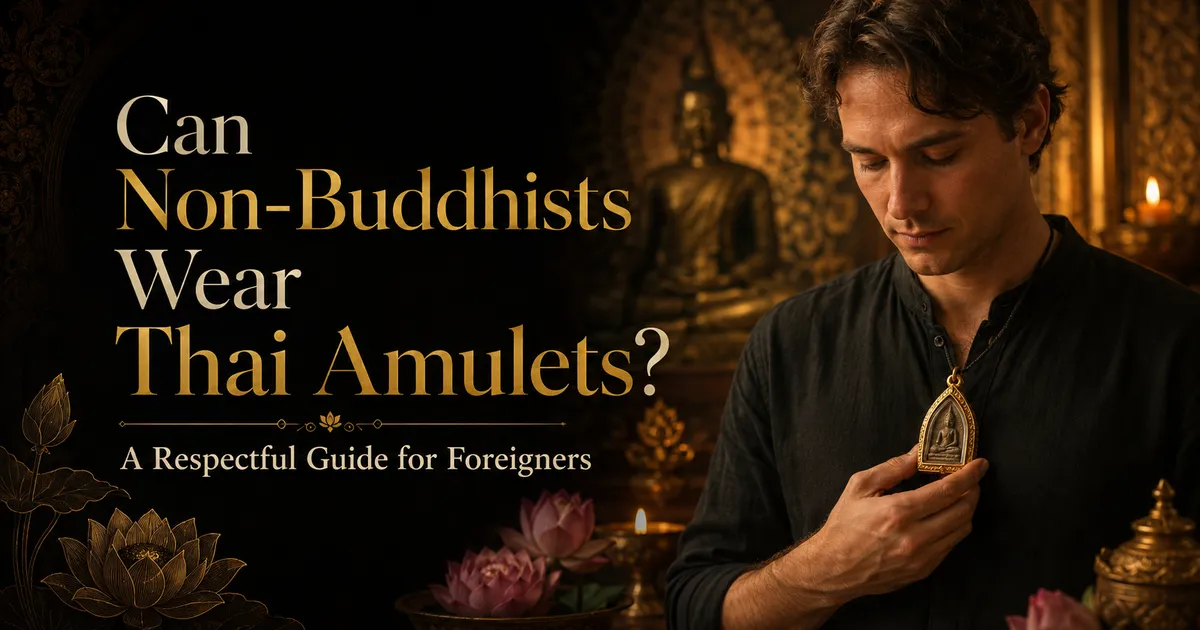
Yes, non-Buddhists can wear Thai amulets. Thai monks and practitioners overwhelmingly welcome respectful participation by people of any background. There is no religious requirement, no conversion needed, and no cultural appropriation concern — as long as you treat the amulet with basic respect. Thai Buddhism is inclusive by nature, and sharing sacred objects with sincere people is considered a form of merit-making.
What Thai monks actually say
This is perhaps the most important section of this article: the people who create and consecrate Thai amulets — the monks themselves — are almost universally welcoming to non-Buddhist wearers.
In Thai Theravada Buddhism, sharing the Dhamma (teachings) and extending blessings to all beings is a core principle. When a monk consecrates an amulet, the prayers are directed toward all sentient beings, not exclusively toward Buddhists. The intention behind the blessing is universal compassion and protection.
Many Thai temples actively distribute amulets to foreign visitors. Some temples near tourist areas even have English-language explanations of their amulets. This is not commercial opportunism — it is genuine spiritual generosity. In Buddhist belief, giving a sacred object to someone who will treat it with respect generates merit (bun) for both the giver and the receiver.
The cultural appropriation question
Western visitors sometimes worry that wearing a Thai amulet constitutes cultural appropriation. This concern, while well-intentioned, reflects a Western framework that does not map neatly onto Thai Buddhist culture.
Key differences to understand:
- Buddhism actively encourages sharing: Unlike cultural practices that are considered exclusive to a particular ethnic group, Buddhist teachings and sacred objects are meant to be shared with anyone who approaches them sincerely.
- Thai people are generally pleased when foreigners show genuine interest in their spiritual traditions. Wearing an amulet respectfully is seen as a compliment, not an offense.
- The line is disrespect, not participation: What offends Thai practitioners is not a foreigner wearing an amulet — it is someone treating a sacred object as a fashion accessory, party costume, or ironic statement. Sincere wearing is always welcomed.
How to wear a Thai amulet respectfully as a non-Buddhist
Do
- Learn the basics: Understand what your amulet represents and who created it. You do not need to become a scholar — just know the essentials.
- Follow the core wearing rules: Wear it above the waist, remove during intimacy and bathing, store it in a clean place. These rules apply to everyone. See our complete rules guide.
- Treat it as sacred: Even if you do not share the beliefs behind it, treat the amulet with the same respect you would show any religious object — a cross, a Torah scroll, a prayer rug. Handle it gently, do not throw it around, and do not place it on the floor.
- Be open to the experience: Many non-Buddhist wearers report a genuine sense of calm, confidence, or protection. Whether this comes from the amulet's spiritual power or from the psychological comfort of carrying a meaningful object — or both — is up to you to decide.
Do not
- Wear it as a fashion statement: If your primary motivation is aesthetic rather than spiritual, consider buying a non-consecrated decorative piece instead.
- Mock or trivialize it: Using an amulet as a joke, party prop, or conversation-piece curiosity is disrespectful to the tradition.
- Claim expertise you do not have: Wearing an amulet does not make you an authority on Thai Buddhism. Stay humble about what you know and do not know.
- Haggle aggressively at temples: When temples offer amulets for a suggested donation, do not bargain down. The "price" is a donation to the temple, not a retail transaction.
Common situations for non-Buddhist wearers
At work in Western countries
Thai amulets are discreet enough to wear under a shirt without anyone noticing. If colleagues see it and ask, a simple "it is a Thai Buddhist amulet for protection" is sufficient. Most people find it interesting rather than strange.
Visiting Thailand as a tourist
Wearing an amulet while visiting Thai temples is completely appropriate. In fact, monks may notice your amulet and engage you in conversation — this is a positive interaction. They are pleased that a foreigner values Thai sacred traditions.
If you follow another religion
Many Christians, Muslims, Hindus, and people of other faiths wear Thai amulets alongside their own religious symbols. Thai Buddhism is non-exclusive — it does not require you to abandon other beliefs. Whether wearing both a cross and an amulet feels right to you is a personal decision that depends on your own religious tradition's stance on other sacred objects.
If you are agnostic or atheist
You do not need to believe in the supernatural aspects to wear an amulet respectfully. Many secular wearers appreciate the amulet as a connection to Thai culture, a reminder of meaningful travel experiences, or a psychological anchor for confidence and calm. The amulet does not require belief to be worn — only respect.
How to get your first amulet as a foreigner
- Best option: Visit a Thai temple (in Thailand or in your home country — many cities have Thai temples) and receive an amulet through a small donation. The monks can explain the amulet's meaning and even offer a brief blessing.
- Online: Purchase from a reputable specialist dealer who provides provenance information. See our safe buying guide.
- As a gift: If a Thai friend or colleague gives you an amulet, this is a meaningful gesture. Accept it graciously and ask them to explain any rules or traditions you should follow.
FAQ
Q: Do I need to be blessed or initiated before wearing an amulet?
A: No formal initiation is required. If you have the opportunity to have a monk bless your amulet (and bless you), that is a wonderful experience but not a prerequisite. Simply putting on the amulet with respectful intention is enough.
Q: Will the amulet "work" for a non-Buddhist?
A: Thai practitioners generally believe that amulets respond to sincerity and good conduct rather than religious identity. A respectful, kind-hearted non-Buddhist is considered a more worthy amulet bearer than a Buddhist who behaves badly. The amulet cares about your actions, not your label.
Q: Can I bring a Thai amulet into a church or mosque?
A: From the Thai Buddhist perspective, there is no problem. Whether your own religious community is comfortable with it depends on that community's views. Many are perfectly fine with it; some may have concerns. Use your judgment.
Q: I received an amulet as a souvenir. Is that disrespectful?
A: Not at all, as long as you treat it respectfully now that you have it. Many people receive amulets as souvenirs and later develop a genuine appreciation for them. The amulet does not judge how it came to you — only how you treat it going forward.
Q: What if I lose my amulet?
A: In Thai belief, a lost amulet may have "left" because it served its purpose or because it was meant for someone else who found it. Do not feel guilty. You can always obtain a new one when you are ready.
Last updated: June 2026 | By the Merit Messenger team, based in Bangkok
Interested in starting your Thai amulet journey? Browse our collection — we ship worldwide and include care instructions with every amulet. Reach out if you have any questions about wearing amulets as a non-Buddhist.