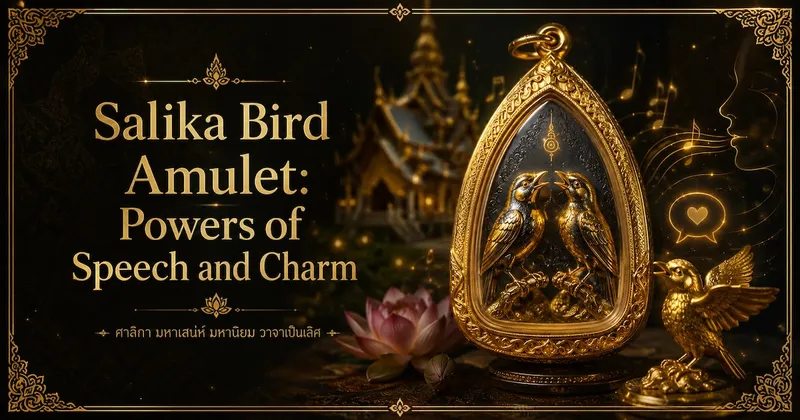
The Salika Lin Thong (Thai: สาลิกาลิ้นทอง, "golden-tongued Salika") is Thailand's definitive amulet for the power of speech. In legend the Salika is a divine myna-like bird of the mythical Himmaphan forest, a messenger between the heavens and the human world whose song makes listeners glad to agree. Wear the bird, the tradition goes, and your words take on that quality — melodious, convincing, impossible to dislike. For people who earn their living by speaking, Thai masters recommend the Salika before anything else.
The legend
Southeast Asian folklore casts the Salika as a talking bird renowned for mimicking human speech — but sweeter. It carries messages between realms, and whoever it favors speaks with its voice: not forcing others to listen, but making them want to. That distinction defines the entire tradition. The Salika does not dominate a room; it charms it.
The "golden tongue" name comes from a real blessing ritual still performed in some lineages: the master inscribes a sacred yant on the disciple's tongue, then blows gold leaf over it — a golden tongue, literally. The amulet is the wearable form of that same blessing.
Powers of the Salika amulet
- Eloquence and persuasion: the signature power — negotiations, presentations, courtrooms, livestreams; your words land softer and stick harder.
- Likability: the Salika belongs to the Metta Maha Niyom (loving-kindness and popularity) family; first impressions warm up.
- Opportunity luck: interviews, pitches, client relationships — devotee accounts cluster around performing unusually well at decisive moments.
- Indirect wealth: for professions where talk closes deals, the golden tongue is a revenue instrument.
Common forms
- Single bird pendant or statuette — the standard form.
- Paired Salika birds — two birds facing each other, adding harmony in love and marriage to the charm portfolio.
- Takrut Salika — a small inscribed scroll tube, discreet and easy to wear alongside other amulets.
- The kata — the Salika Lin Thong chant, recited quietly before important conversations to activate the blessing.
Who should wear one?
- Salespeople, agents, and consultants who close by talking
- Performers, streamers, and teachers who live on audience rapport
- Lawyers, publicists, and negotiators
- Job seekers heading into interviews
- Naturally shy speakers who want their words received more warmly
If your goal leans romantic, compare the Khun Paen and the wider Metta and Maha Saneh love traditions; for raw magnetism, the Nine-Tailed Fox. The Salika's edge is specialization: it does one thing — speech — supremely well.
Etiquette and taboos
- A sacred-bird amulet, not a Buddha image: wear it below Buddha amulets (see how to wear a Thai amulet).
- Standard rules apply — above the waist, removed in unclean settings.
- The speech precept: the tradition is emphatic that the golden tongue is for honest charm, not deception. Use it to lie or stir discord and, as Thai devotees put it, the bird flies away.
- Offerings are simple: clean water and flowers; some devotees add birdseed as a local custom, not a requirement.
Choosing a genuine piece
Salika amulets come from masters and temples specializing in Metta traditions. Verify the lineage, temple, and edition year, and ask for consecration records. Tourist-market bird pendants without provenance are jewelry, not consecrated amulets — our guide to buying Thai amulets online covers the checks that matter.
FAQ
Q: Salika or Nine-Tailed Fox?
A: Both are charm amulets, differently aimed. The Salika specializes in speech and workplace persuasion; the fox in overall magnetism and romantic attraction. Speakers choose the bird; charmers choose the fox.
Q: Does the Salika help with love?
A: Indirectly — communication is half of any relationship, and the paired-bird form is explicitly about harmony. For courtship itself, Khun Paen traditions are more on target.
Q: Will it work for a shy person?
A: Devotee accounts often come precisely from introverts: the bird does not change your personality; it makes your words land better when you do speak.
Q: Do I need to chant the kata?
A: Optional. Reciting the Salika Lin Thong kata before key conversations is common practice, but sincerity outweighs ritual.
Last updated: July 2026 | By the Merit Messenger team, based in Bangkok
Looking for a Salika or other charm amulet with documented provenance? Browse our collection or contact us.