Why Casing Matters
A Thai amulet's casing serves three essential functions: protecting the amulet from physical damage, providing a secure attachment point for the chain or cord, and presenting the amulet in a way that reflects its sacred status. The right casing preserves both the physical integrity and the spiritual dignity of the piece. The wrong casing — or no casing at all — risks damage to irreplaceable sacred objects.
This guide covers the main casing materials, their advantages and disadvantages, and how to match the right case to your amulet type and lifestyle.
Casing Materials Compared
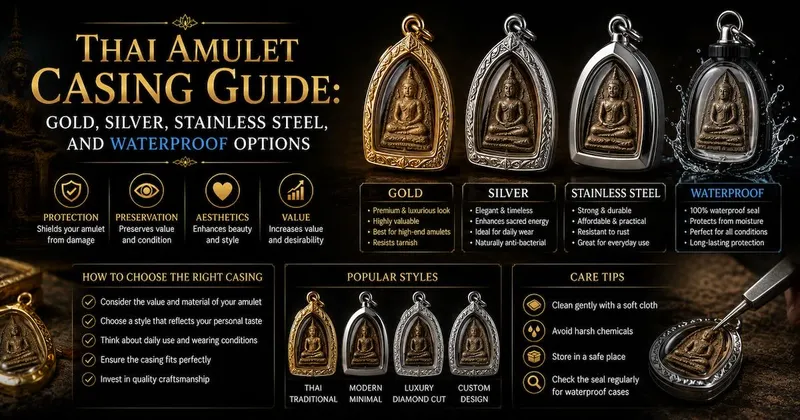
Gold (Thong Kham)
Gold casing is the premium choice, traditionally reserved for the most valued amulets in a practitioner's collection.
- Advantages — Does not tarnish or corrode. Beautiful, enduring presentation. Adds monetary value to the overall piece. Spiritually, gold is considered an auspicious material in Thai tradition, complementing the amulet's energy.
- Disadvantages — Expensive (the case can cost more than the amulet for affordable pieces). Heavier than alternatives. Attracts attention, which may be undesirable for discreet wearers. Can be a theft target in some environments.
- Best for — Premium amulets, collector pieces, and amulets you intend to wear for many years or pass down as heirlooms.
- Common purities — 90% gold (popular in Thailand for durability), 75% (18K for international buyers), and gold-plated options for a gold appearance at lower cost.
Silver (Ngern)
Silver casing offers a middle ground between gold's prestige and stainless steel's affordability.
- Advantages — More affordable than gold while still carrying a premium feel. Lighter weight than gold. Silver has its own spiritual associations in Thai tradition — connected to Metta energy and the moon's calming influence.
- Disadvantages — Tarnishes over time, requiring periodic cleaning. Softer than stainless steel, so more susceptible to scratches and dents. Less durable for heavy daily wear.
- Best for — Mid-range amulets, practitioners who prefer a more understated look than gold, and amulets associated with Metta or charm energy.
Stainless Steel
Stainless steel is the most popular casing choice for everyday-wear amulets in Thailand.
- Advantages — Affordable, durable, corrosion-resistant, and low-maintenance. Stands up to daily wear without significant degradation. Clean, modern appearance.
- Disadvantages — Less prestigious than gold or silver. Heavier than it looks. Limited decorative options compared to precious metals.
- Best for — Daily-wear amulets, budget-conscious buyers, active lifestyles, and travelers who want durability without worry.
Waterproof Acrylic / Plastic
Waterproof cases made from transparent acrylic or high-quality plastic are increasingly popular, especially for sacred powder amulets.
- Advantages — Fully waterproof, protecting fragile powder amulets from humidity and accidental water exposure. Transparent, allowing the amulet to be fully visible. Lightweight. Affordable.
- Disadvantages — Less durable than metal — can crack if dropped. Scratches more easily. May yellow over time with UV exposure. Less prestige than metal casing.
- Best for — Sacred powder amulets that need moisture protection, humid climates, practitioners who want to see the full amulet surface, and budget-conscious buyers.
Matching Case to Amulet Type
| Amulet Type | Recommended Case | Why |
|---|---|---|
| Sacred powder (Somdej, etc.) | Waterproof acrylic or sealed metal | Protects fragile material from moisture |
| Metal amulet (Nawaloha, etc.) | Stainless steel or silver frame | Durable metal supports durable amulet |
| Premium collector piece | Gold | Presentation matches the amulet's value |
| Daily wear / active lifestyle | Stainless steel | Toughest option for everyday conditions |
| Takrut scrolls | Metal tube or attached to chain directly | Cylindrical shape needs minimal casing |
Chain Options
The chain or cord that holds your amulet is a personal choice with practical implications:
- Gold chains — Match gold cases. Available in various weights and link styles. Consider a chain strong enough to support the amulet's weight with a secure clasp.
- Stainless steel chains — Durable, affordable, and low-maintenance. The practical choice for daily wear.
- Leather or cord — A traditional and affordable option. Replace periodically as leather degrades with sweat and wear.
- Multi-hook chains — Special chains with multiple attachment points for wearing several amulets simultaneously. Popular among practitioners who wear 3-5 pieces daily.
Care Tips for Cases
- Check the bail (attachment loop) regularly — A worn or loose bail can cause you to lose the amulet. Have a jeweler reinforce it if needed.
- Clean metal cases with a soft cloth — Avoid chemical cleaners that might seep into the case and contact the amulet.
- Inspect waterproof seals — If your case is supposed to be waterproof, test the seal periodically. Seals degrade over time.
- Upgrade when appropriate — As your connection with an amulet deepens or if it appreciates in value, upgrading from a basic case to a quality one is a worthwhile investment.
Browse Cases and Amulets
Our collection includes amulets with quality protective casing. For wearing guidance, see our wearing guide and storage guide.