What do Thai amulet colors mean? Clearing up a myth
A Thai amulet's color is determined mainly by its material and craft, not by any "grade" or "level of power." Black usually means iron or holy ash; gold-copper means nawaloha; off-white or grey means sacred powder; colorful means lacquer or inset gems. The very same amulet by the same monk can appear in different colors simply because of different material versions. So when a color looks different, think "different material or batch" first — not "fake" or "less powerful."
Common colors and their materials
- Black / dark grey: iron (lek), holy ash, aged material — common in protective amulets.
- Gold-copper: nawaloha and copper alloys — dignified and durable.
- White / cream-grey: pressed sacred powder (pong), containing many holy ingredients.
- Colorful / gem-set: lacquer, enamel, or inset stones — decorative craft, not a measure of blessing.
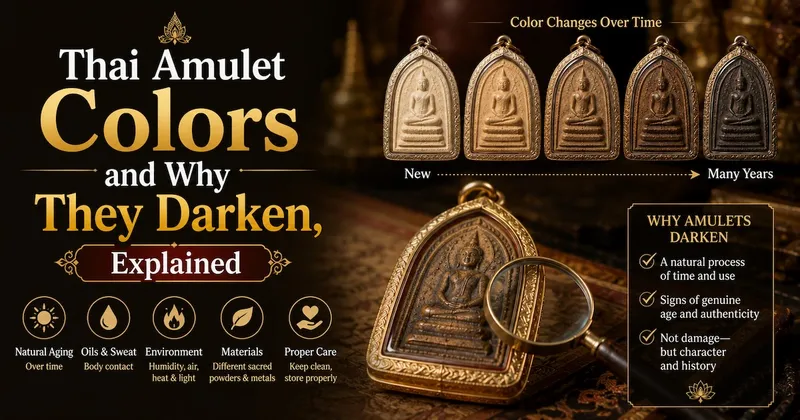
Why do amulets darken, tarnish, or change color?
An amulet that darkens or yellows with wear is almost always undergoing normal oxidation and patina: metal reacts with sweat and air, and powder amulets deepen as they absorb oils from the skin. This is not decay, and it is not a loss of power — on an old amulet, a natural patina is actually a sign of age and value.
Should you do anything about it?
- Wipe it with a clean, soft cloth to keep it dry.
- Never force-polish or use chemical cleaners — that strips the original surface and patina and reduces value.
- If oxidation bothers you, a waterproof case reduces sweat contact.
Frequently asked questions
Is it good or bad when an amulet changes color?
It is usually normal oxidation and patina — not a bad sign. On an old amulet, natural patina reflects age and value.
Should I clean a yellowed amulet?
Gentle wiping is enough; never force-polish or use chemicals, which can damage the surface.
My amulet's color differs from someone else's — is it fake?
Not necessarily. The same design often comes in different material versions with different colors. Judge authenticity by provenance and certificate, not color alone.