What Is a Phutthaphisek Ceremony?
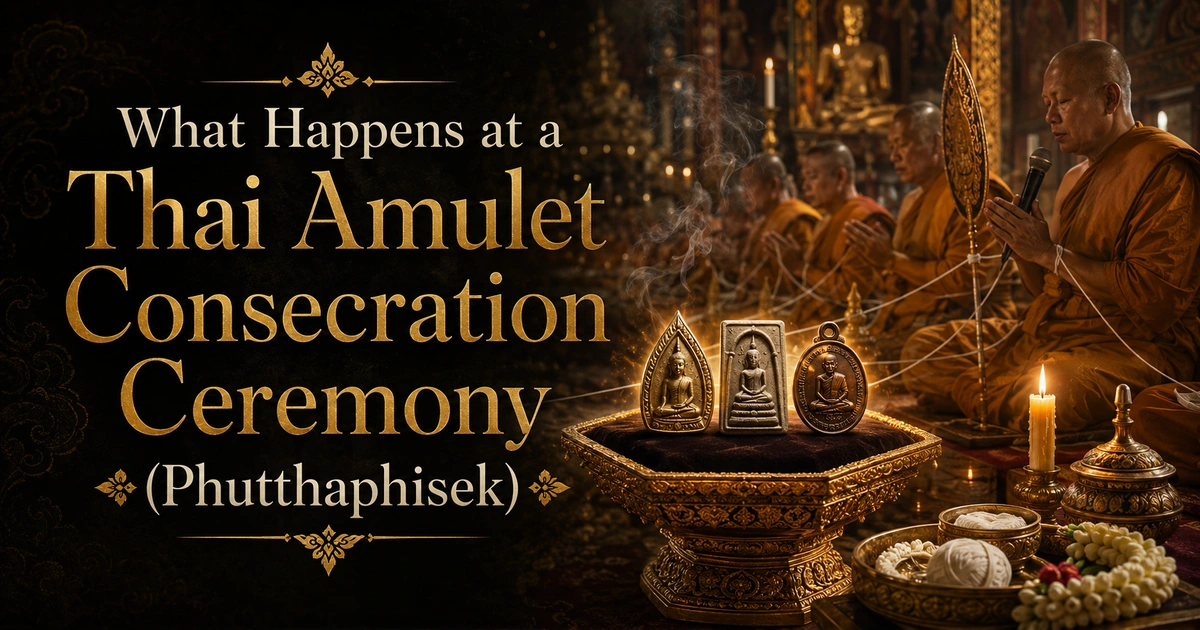
A phutthaphisek (พุทธาภิเษก) is a Buddhist consecration ceremony — the ritual process through which a monk (or assembly of monks) transfers spiritual power into an object, transforming it from a physical artifact into a sacred amulet. The word combines phuttha (Buddha) and aphisek (anointing/coronation ceremony), reflecting the ceremony's roots in both Buddhist and ancient Brahminic traditions.
Understanding what happens during this ceremony helps you appreciate why an amulet's ceremony details — the year, the monks involved, the location — matter so much to its spiritual value.
The Preparation Phase: Months Before the Ceremony
A major phutthaphisek doesn't happen overnight. Preparations often begin months in advance:
Gathering Materials
The temple committee and sponsoring monks collect the materials that will compose the amulets. For powder amulets, this can mean sourcing over 100 ingredients — sacred herbs, temple relics, mineral compounds, consecrated earth from revered sites. Each ingredient carries its own spiritual significance and is collected through a combination of traditional knowledge and, often, pilgrimage to other sacred sites.
Making the Molds
The amulet's physical form is determined by the ceremony's spiritual intent. A seated Buddha in meditation posture carries different energy than one in an earth-touching posture; a monk portrait carries the specific lineage energy of that master. The molds are typically made by skilled artisans with deep familiarity with the iconographic conventions.
Pressing and Casting
Powder amulets are pressed in traditional molds under significant pressure — sometimes by hand by senior monks themselves as an additional act of spiritual charging, more often by mechanical presses for large production runs. Metal pieces are cast using traditional smelting methods for Nawaloha or bronze compositions.
The Ceremony Itself: What Happens on the Day
A major phutthaphisek typically runs through the night — beginning at an auspicious time determined by astrological calculation and ending at dawn.
The Assembly of Monks
The power of a phutthaphisek ceremony is amplified by the number and caliber of monks present. Major ceremonies may involve 9, 27, or even 108 senior monks meditating simultaneously — creating a concentrated field of spiritual energy. The most revered monks serve as the central channels; their accumulated meditative power is the primary source of the amulet's spiritual charge.
Chanting and Meditation
The ceremony involves hours of continuous Pali chanting — sacred Buddhist texts that have been used in consecration rites for over 2,000 years. Simultaneously, the most senior monks enter deep meditative states (samadhi) and direct their concentrated mental energy toward the assembled amulets. This combination of sound vibration and directed meditative power is the core of the consecration process.
Lighting of Sacred Candles
Large sacred candles are kept burning throughout the ceremony. In traditional understanding, these represent the unbroken continuity of the Buddha's teaching lineage and serve to mark the sacred space. Some ceremonies use candles that have been burning continuously for days beforehand.
Ritual Water and Sacred Thread
Sacred water (nam mon) is blessed and sprinkled over the assembled amulets. Sacred white thread (sai sin) is sometimes run through the ceremony space and around the amulets, creating a physical link between the monks' meditation and the objects being consecrated.
What Makes One Ceremony More Powerful Than Another?
Not all phutthaphisek ceremonies are equal. The factors that determine a ceremony's spiritual potency:
- The seniority and lineage of the lead monk: A master with 50+ years of meditation practice carries far more accumulated merit than a younger monk. LP Tim's ceremonies, LP Sodh's lineage, Kruba BoonChum's cross-border gatherings — these attract collector interest precisely because of the monks' exceptional spiritual depth.
- The number and quality of attending monks: A ceremony with 108 senior monks creates a qualitatively different energetic event than one with 9.
- The astrological timing: Thai Buddhist ceremonies are scheduled according to precise astrological calculations. The "right" celestial alignment is considered essential for certain types of consecration.
- Royal or historical significance: The Rama Nine Medicine Buddha 2511 ($500) was consecrated with the direct participation of King Rama IX — a royal connection that amplifies the ceremony's significance considerably in Thai spiritual understanding.
After the Ceremony: Distribution and Authentication
Following the phutthaphisek, amulets are distributed to devotees — sometimes at the temple directly, sometimes through authorized dealers. Major ceremonies often produce documentation: ceremony programs, temple stamps, authentication letters from abbots, and (for significant pieces) Samakom Phra certification.
This documentation is what allows buyers decades later to trace a piece's provenance back to a specific ceremony — confirming which monks were present, when it was consecrated, and what its documented properties are.
Frequently Asked Questions
Can I attend a phutthaphisek ceremony?
Yes. Major temples open their consecration ceremonies to the public. In Thailand, attending these ceremonies as a lay devotee is considered meritorious. If you have the opportunity to visit a major ceremony, bring small items (sometimes even jewelry or personal items) that can be placed near the amulets during the ceremony to receive a secondary blessing.
Does the number of times an amulet has been consecrated matter?
Yes, significantly. Some pieces undergo multiple consecutive phutthaphisek ceremonies — each one adding another layer of spiritual power. Amulets described as "multiple blessing" or that list participation in several major ceremonies are valued higher for this reason.
How do I know which ceremony my amulet came from?
The amulet's listing or accompanying documentation should specify the ceremony year (Buddhist Era), the lead monk, and the temple. For premium pieces, this information is part of the Samakom Phra certificate. This is the information that allows comparison shopping between different consecrations of the same amulet type.
All Merit Messenger listings include ceremony year, monk, and temple details. Browse our collection or contact us with questions about specific pieces.