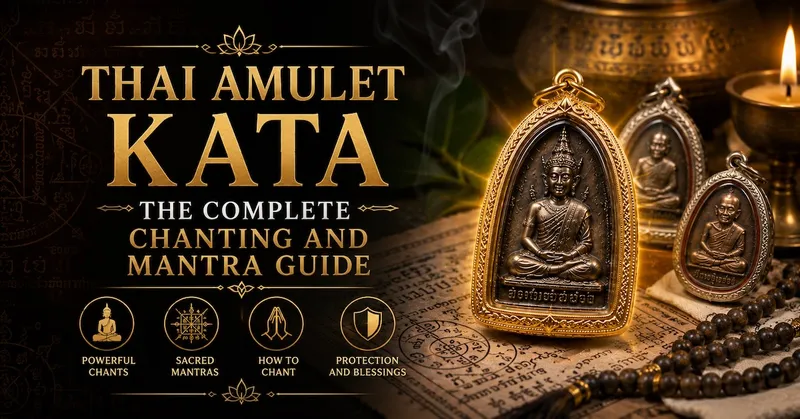
What a kata is, and why it matters
A kata is a short sacred chant, usually in Pali, that a wearer recites to pay respect to an amulet and to focus the mind before carrying it into the day. Many new collectors buy a beautiful, powerful amulet and then never learn this step, which is a little like owning an instrument you never tune. In Thai practice the chant is not magic words that force a result; it is an act of respect, remembrance, and mental focus that connects you to the monk, the Buddha, and the intention behind the piece. This guide explains how katas work and how to build a simple, correct daily practice.
The foundation: the homage to the Triple Gem
Almost every Thai chant begins with the same three-line homage to the Buddha, recited three times. In romanized Pali it is:
- Namo tassa bhagavato arahato samma-sambuddhassa
- Namo tassa bhagavato arahato samma-sambuddhassa
- Namo tassa bhagavato arahato samma-sambuddhassa
This means, in essence, homage to the Blessed One, the Worthy One, the Perfectly Self-Enlightened One. It is the doorway to every other chant. If you learn only one thing, learn this. Reciting it three times with a settled mind is, by itself, a complete and respectful daily practice for any Buddhist amulet.
The structure of a full recitation
A traditional session follows a simple order that you can apply to any amulet:
- Prepare — wash your hands, sit or stand calmly, and hold or face the amulet.
- Homage — recite Namo tassa three times as above.
- The specific kata — recite the individual chant for that amulet or deity, if you have it, the number of times traditionally advised.
- Dedication — quietly state your good intention and dedicate the merit, wishing well to yourself and others.
Even without the specific kata in step three, the homage and a sincere dedication form a valid practice. Do not let a missing chant stop you from paying respect.
Getting the correct kata for your amulet
Each monk, Buddha image, and deity has its own traditional kata, and there are also katas tied to specific purposes such as wealth, protection, or metta. Because the exact wording and repetition count vary by lineage and edition, the reliable sources are:
| Source | Why trust it |
|---|---|
| The temple that made the amulet | The authoritative wording for that batch |
| The card or booklet issued with the amulet | Often prints the intended kata |
| A knowledgeable, reputable seller | Can point you to the correct chant for the piece |
Be cautious with random chants copied online. When in doubt, the universal homage above is always safe and always appropriate.
How often, and how many times
- Daily is the ideal, most often in the morning before leaving home, and again briefly before sleep.
- Three or nine times are the most common repetition counts in Thai practice; three is perfectly acceptable for a daily routine.
- Before key moments, a meeting, an exam, a court date, a flight, a short recitation refocuses the mind when it matters most.
- Consistency beats quantity. A calm daily three is worth more than a rushed hundred.
Etiquette while chanting
- Keep your body and clothes reasonably clean, and choose a quiet, respectful spot.
- Do not chant in the bathroom or while lying down carelessly; sit or stand.
- Focus on the meaning and the feeling of respect, not on rushing through syllables.
- Support the chant with conduct. Thai tradition holds that a kata is strengthened by the merit of the person reciting it.
A simple starting routine
If this is all new, begin here. Each morning, hold your amulet, recite Namo tassa three times, silently set a good intention for the day, and dedicate the merit. That is a complete, correct practice you can do in one minute. Add the specific kata once you have obtained the right wording from the temple or seller. Kept up daily, this small ritual is what turns an amulet from an object you own into a practice you live.