A quiet, hopeful corner of Thai belief
Couples who long for a child and have waited, hoped, and worried often look for comfort wherever meaning can be found. In Thai Buddhist and folk tradition, that search has a gentle, centuries-old expression: making offerings and keeping certain sacred objects while you try for a baby. This is not a medical claim and it is not a promise. It is a spiritual and emotional practice that many Thai families find steadying, and it deserves to be explained honestly rather than sensationalized.
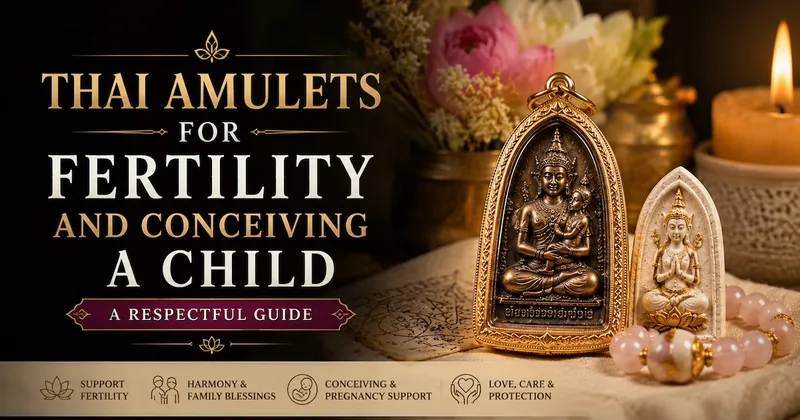
This guide covers the amulets and sacred figures traditionally connected with seeking children in Thailand, and the respectful, realistic way to approach them.
Phra Phrom: asking for a blessing
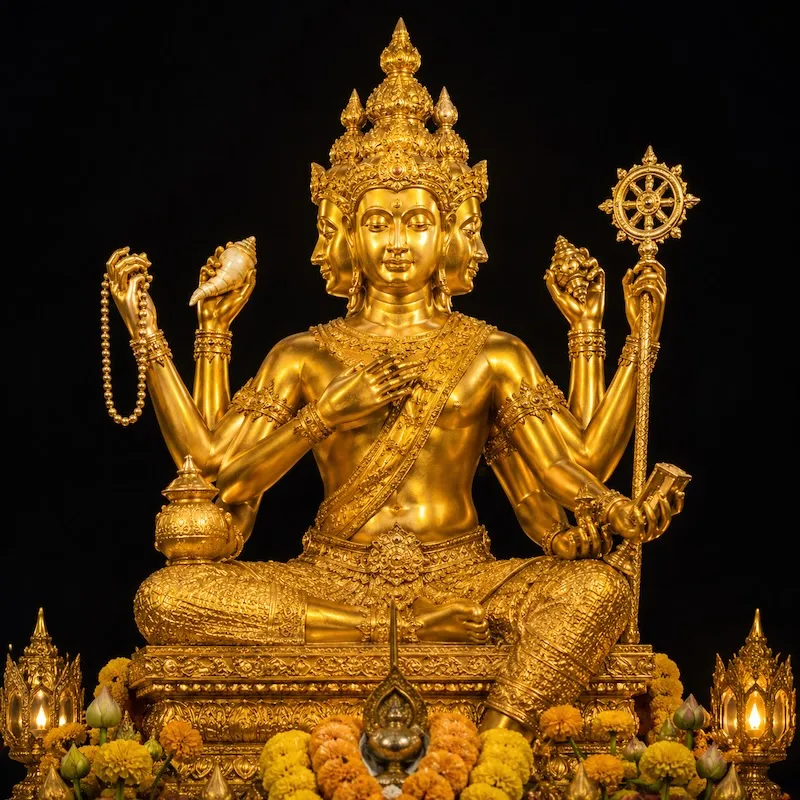
Phra Phrom, the four-faced Brahma, is the traditional recipient of heartfelt wishes across every area of life, including the wish for a child. Thai couples visit famous Phra Phrom shrines to make offerings and voice their hope, and many keep a Phra Phrom at home as the focus of that ongoing prayer. The four faces represent kindness, mercy, sympathy, and impartiality, the qualities a family hopes to receive and, in time, to give. Of all the figures in this guide, Phra Phrom is the most straightforward and least fraught choice for a couple who simply want to direct their hope somewhere sacred.
Kumanthong: understood correctly
Kumanthong, the revered golden-child figure, is deeply woven into Thai belief about children and family. It is important to understand it accurately. In modern Thai practice, a consecrated Kumanthong from a reputable temple is treated as a spirit under the protection of merit, cared for with food, water, and kind attention, in return for guarding the household and bringing good fortune. Some families who long for a child adopt this caretaking relationship as a way of expressing readiness to nurture, and of inviting that energy into the home.
This is a serious commitment, not a casual purchase. A Kumanthong is meant to be looked after daily and with respect. Anyone drawn to it for this reason should learn the proper care, choose a piece consecrated at a legitimate temple, and approach it as a long-term spiritual responsibility rather than a fertility device.
How families traditionally approach it
| Intention | Traditional focus | Figure |
|---|---|---|
| Directing hope and prayer | Blessings across life | Phra Phrom |
| Expressing readiness to nurture | Daily caretaking, household fortune | Kumanthong (from a reputable temple) |
| Emotional steadiness while trying | Ritual, focus, calm | Either, with regular offerings |
Doing it with the right heart
- Approach with sincerity and patience, not desperation. The tradition values a calm, generous heart, and calm is also good for a couple under strain.
- Make regular, simple offerings and recite the homage to the Buddha. Consistency matters more than expense.
- If you choose a Kumanthong, commit to caring for it properly and indefinitely, whatever the outcome. It is a relationship, not a transaction.
- Build merit as a couple, give, help others, keep a kind household. Thai belief holds that such merit is the true soil in which blessings grow.
An honest and caring word
Difficulty conceiving is common, deeply personal, and often medically treatable. Please see a doctor and a fertility specialist; modern medicine helps a great many couples who once thought they had no options. A Thai amulet or sacred figure is a source of comfort, focus, and shared hope during that journey, a way to hold onto meaning while you do everything practical. Kept in that spirit, alongside good medical care, it offers exactly what generations of Thai families have sought in it: a place to put their love while they wait.