What Are Thai Deity Amulets?
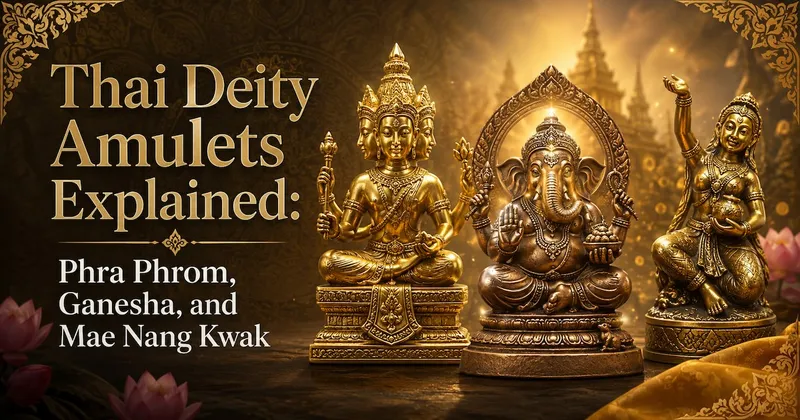
Thai deity amulets depict divine figures from the Hindu-Buddhist tradition that has been woven into Thai culture for over a thousand years. Unlike monk amulets that carry the spiritual energy of a specific Buddhist master, deity amulets channel the cosmic powers attributed to gods and divine beings. The three most popular are Phra Phrom (Four-Faced Brahma), Ganesha, and Mae Nang Kwak — each serving distinct purposes and drawing devotion from different groups.
Thailand's spiritual landscape blends Theravada Buddhism with Hindu elements, animist traditions, and Brahmanical rituals. Deity amulets sit at this intersection, offering practitioners access to powers that complement the meditative, merit-based energy of Buddhist monk amulets.
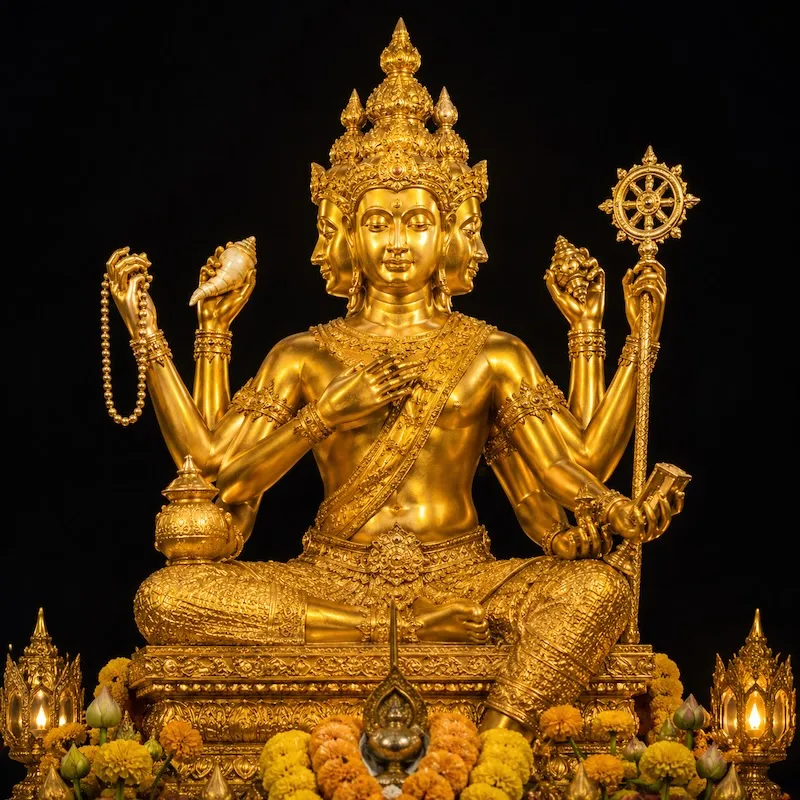
Phra Phrom: The Four-Faced Brahma
Phra Phrom is the Thai representation of Brahma, the Hindu creator deity, depicted with four faces looking in four directions. He is most famously associated with the Erawan Shrine at the Ratchaprasong intersection in Bangkok — one of the most visited spiritual sites in all of Southeast Asia, drawing millions of devotees and tourists annually.
The Four Blessings
Each of Phra Phrom's four faces is believed to bestow a specific blessing:
- Career and success — Professional advancement, passing examinations, gaining promotions and recognition
- Wealth and prosperity — Financial abundance, profitable ventures, business growth
- Love and relationships — Harmonious partnerships, attracting suitable romantic partners, family happiness
- Health and longevity — Physical wellbeing, recovery from illness, long life
This comprehensive coverage across all four life domains makes Phra Phrom amulets popular among business owners and professionals who want balanced blessings rather than specializing in a single area.
Who Wears Phra Phrom?
Business owners in Bangkok and across Thailand frequently wear Phra Phrom amulets or display Phra Phrom statues at their premises. The combination of career, wealth, relationship, and health blessings maps directly onto what any business operator needs. Hotel owners, restaurant operators, and retail shop owners are particularly drawn to Phra Phrom.
Ganesha: The Obstacle Remover
Ganesha (known in Thai as Phra Pikanet) is the elephant-headed deity revered across both Hindu and Buddhist traditions as the remover of obstacles and the patron of arts, sciences, and new beginnings. In Thailand, Ganesha occupies a special place as the symbol of the Department of Fine Arts and is deeply associated with creative professions.
Powers and Benefits
- Removing obstacles — The core power. When you face a seemingly immovable barrier — a stalled project, a bureaucratic bottleneck, a personal situation that refuses to resolve — Ganesha is the deity traditionally invoked to clear the path.
- New ventures — Starting a business, launching a project, entering a new market, or beginning any significant undertaking benefits from Ganesha's blessing. In Thai tradition, many entrepreneurs make offerings to Ganesha before a new venture.
- Creativity and arts — Musicians, artists, writers, and performers in Thailand frequently wear Ganesha amulets. The connection between Ganesha and creative expression runs deep in Southeast Asian culture.
- Wisdom and learning — Students preparing for exams and professionals seeking to master new skills invoke Ganesha for intellectual clarity and the ability to absorb knowledge.
Who Wears Ganesha?
Entrepreneurs launching new businesses, creative professionals, students, and anyone facing specific obstacles that need clearing. Ganesha amulets are also popular among technology workers and startup founders — a more recent trend driven by the Thai tech community's embrace of traditional spiritual practices.
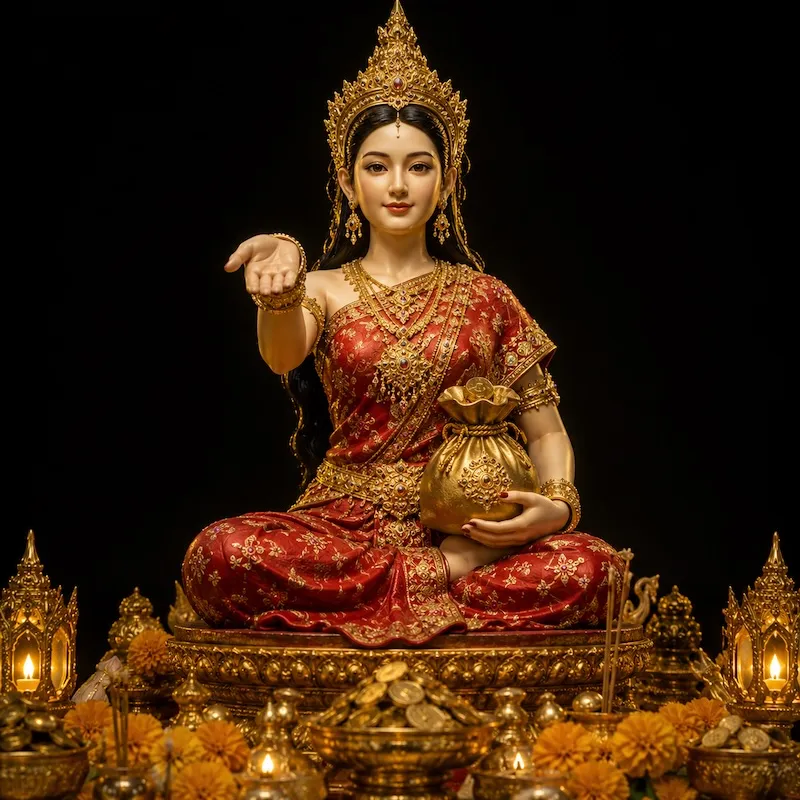
Mae Nang Kwak: The Beckoning Lady
Mae Nang Kwak is depicted as a woman in traditional Thai dress, seated with one hand raised in a beckoning gesture — calling customers, wealth, and good fortune toward the wearer. She is Thailand's patron deity of commerce and retail business, and her image is found in virtually every market stall, shop, and restaurant across the country.
Powers and Benefits
- Attracting customers — The primary function. Mae Nang Kwak's beckoning hand literally represents the act of drawing buyers to your business. Shop owners place her statue facing the door for this reason.
- Sales and transactions — Beyond attracting foot traffic, Mae Nang Kwak is believed to increase the likelihood that browsing customers actually make purchases.
- Wealth flow — A steady stream of income rather than dramatic windfalls. Mae Nang Kwak's wealth energy is about consistent commercial activity, not lottery-style luck.
- Charm in business dealings — Mae Nang Kwak also carries Metta energy, making the wearer or business operator more likeable and trustworthy in the eyes of customers.
Who Wears Mae Nang Kwak?
Anyone in retail, sales, hospitality, or client-facing business. Market vendors, restaurant owners, real estate agents, and freelancers who need to attract and retain clients all benefit from Mae Nang Kwak. Online business owners increasingly wear Mae Nang Kwak amulets as well, adapting the traditional beckoning gesture to the digital marketplace.
How Deity Amulets Differ from Monk Amulets
The spiritual mechanics differ between the two categories:
- Source of power — Monk amulets derive their energy from the personal spiritual attainment and consecration of a specific Buddhist master. Deity amulets channel the cosmic powers attributed to the deity figure, activated through specific rituals and mantras during consecration.
- Scope of blessing — Monk amulets often carry the specific spiritual specialization of their creator (protection, wealth, charm). Deity amulets tend to serve the deity's traditional domain of power regardless of who consecrated them.
- Cultural layer — Monk amulets are purely Buddhist. Deity amulets incorporate Hindu-Brahmanical elements that have been integrated into Thai Buddhism over centuries.
Many practitioners wear both types — a monk amulet for its specific consecrated energy and a deity amulet for the broader cosmic blessing. This layered approach is common and culturally accepted.
Choosing Your Deity Amulet
| Deity | Best For | Primary Power |
|---|---|---|
| Phra Phrom | Business owners, professionals seeking balanced blessings | Career + Wealth + Love + Health |
| Ganesha | Entrepreneurs, creatives, students, anyone facing obstacles | Obstacle removal + New beginnings |
| Mae Nang Kwak | Retail, sales, hospitality, client-facing businesses | Customer attraction + Commerce |
Explore our full collection for deity amulets sourced from Thai temples, or read more about purpose-specific amulets in our guides to wealth amulets and career amulets.