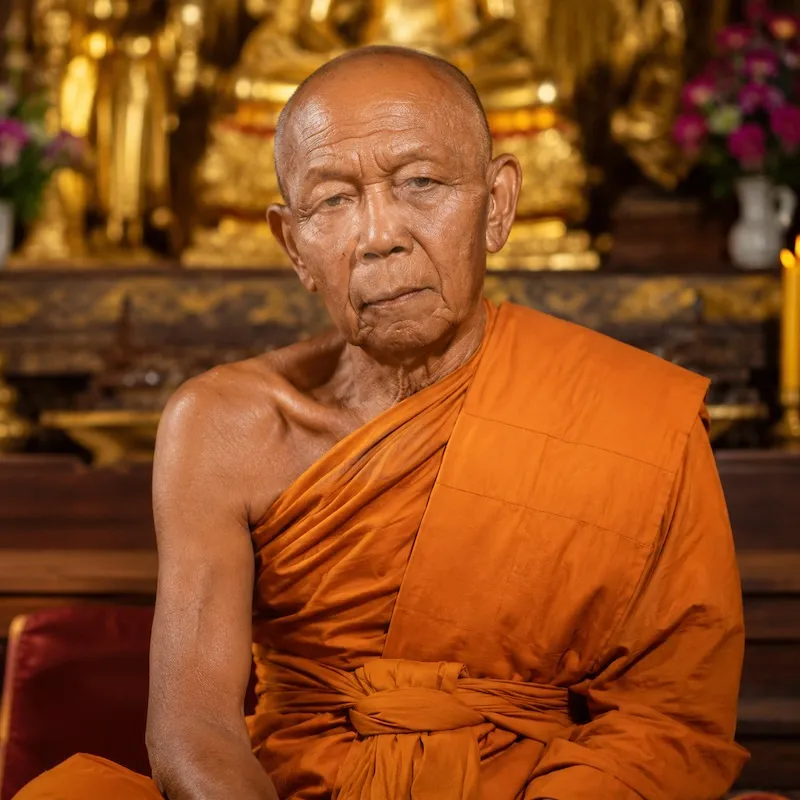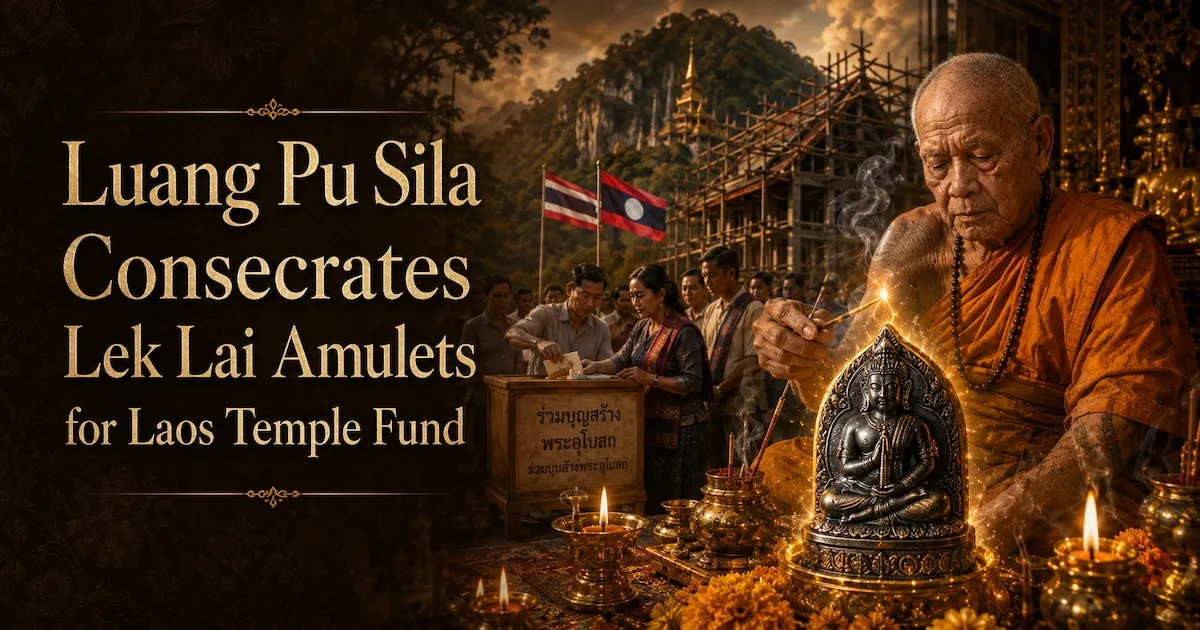
On August 29, 2026, Wat Suan Tham Piti in Thailand's northeastern Kalasin province held the second and final consecration ceremony for a batch of roughly 15,000 "Phra Pidta Sae Lek Lai Phu Khao Khwai" amulets, led by the well-known regional monk Luang Pu Sila Sirijantho (full ecclesiastical title Phra Thep Vachara Thammasophon). The ceremony closed out a two-part blessing that began on August 22 across the border in Laos, at Wat Pa Photisomphan in Pak Ngum district near Vientiane. Proceeds from the amulets, after production costs, will go toward building a multipurpose hall and raising the ornamental roof finial ("chofa") on the main hall of the Lao temple — a cross-border fundraising effort Thai outlets have dubbed a "bridge of merit" between Thai and Lao devotees.
Two Ceremonies, One Cross-Border Cause
According to Thai outlet 4Force News, the first blessing took place in Laos with monks and devotees from both countries in attendance; the second was held at Wat Suan Tham Piti itself — a temple only formally elevated from a forest hermitage to full "wat" status on June 30, 2025. Holding the second ceremony there both raises the newly consecrated temple's profile and continues the fundraising campaign for its sister temple across the Mekong. The arrangement reflects a long-standing pattern along the Thai-Lao border, where temple restoration in Laos is frequently funded through Thai devotees purchasing amulets from consecration ceremonies.
What Is "Lek Lai from Phu Khao Khwai"?
The amulets' namesake material, lek lai (literally "flowing metal" in Thai), is a mysterious mineral substance in Thai-Lao folk belief said to be capable of self-growth, and is a common component in Phra Pidta ("closed-eyes Buddha") amulets valued for warding off harm. This batch is said to use lek lai sourced from Phu Khao Khwai, or "Buffalo Horn Mountain," a range northeast of the Vientiane plain long associated in local lore with lek lai deposits. Its mineralogical nature has never been scientifically confirmed, and its value rests almost entirely on belief and scarcity rather than verified geology — collectors should treat claims about it "growing" or warding off evil as devotional lore rather than fact. Readers wanting a fuller rundown of lek lai and other core amulet materials can see our guide, Lek Lai: Thailand's Most Mysterious Sacred Substance.
Who Is Luang Pu Sila?
Born Sila Nilchan on October 14, 1945, Luang Pu Sila ordained as a novice at 15 and took full ordination in 1966 at Wat Burapha Phiram in Roi Et province. He went on to pass the advanced Nak Tham Ek dharma exam and the sixth level of Pali studies, receiving a ceremonial fan of honor from King Rama IX in 1972. He now serves as abbot of Wat Phra That Muen Hin in Kalasin's Khao Wong district and concurrently as acting abbot of Wat Suan Tham Piti, the temple hosting this ceremony. Beyond his reputation for protective amulets in Thailand's northeast, Luang Pu Sila is known for a philanthropic record exceeding 100 million baht in donations toward hospitals, schools and temples — a track record that helps explain why he can repeatedly mobilize cross-border fundraising drives like this one.
What It Means for Collectors
For overseas buyers, ceremony-driven amulets like this one from a regional master lack the historical pedigree of a Phra Somdej or a Luang Phor Tim piece, but they offer something else: verifiable transparency. The production run, stated purpose, consecration dates and officiating monk are all a matter of public record, making this a comparatively well-documented example of a mass-ceremony amulet — a category worth understanding before buying into any large consecration batch, as explained in our guide to What Happens at a Thai Amulet Consecration Ceremony (Phutthaphisek). Since the core piece here is a Phra Pidta, readers new to the type may also want our primer on Phra Pidta: The Closed-Eyes Buddha for Wealth and Warding Off Trouble. This is a story for collectors tracking the living, present-day amulet economy of Thailand's northeast and its ties to Laos — not one for those chasing resale value alone.
Source: 4Force News, Naewna