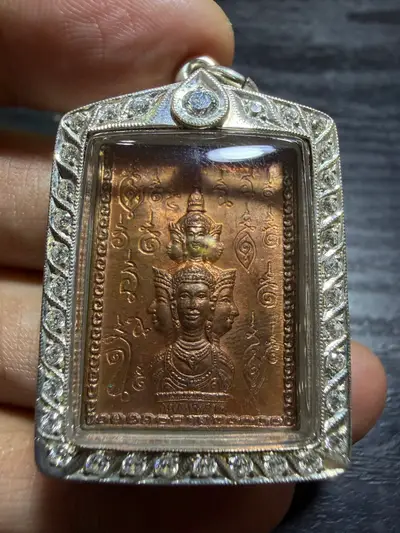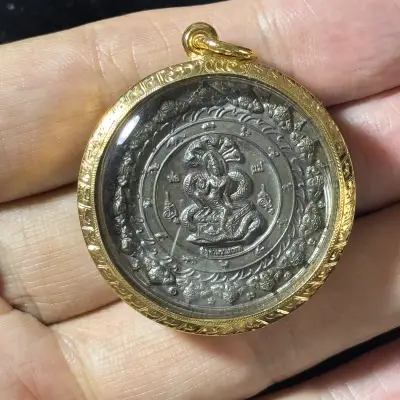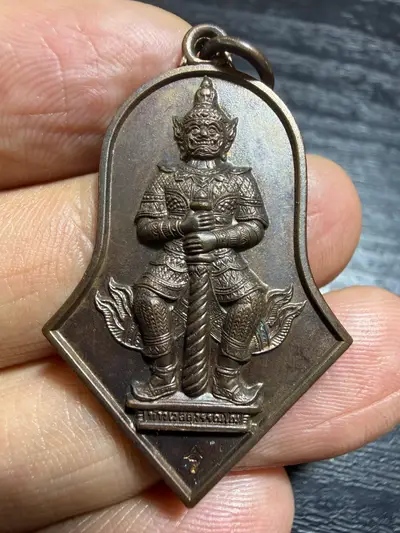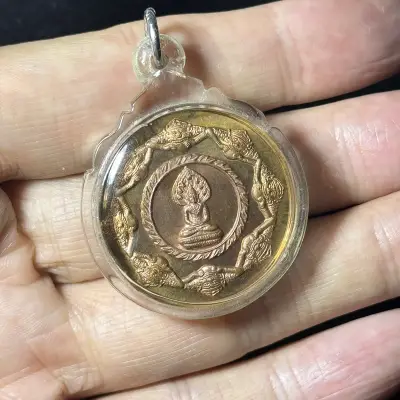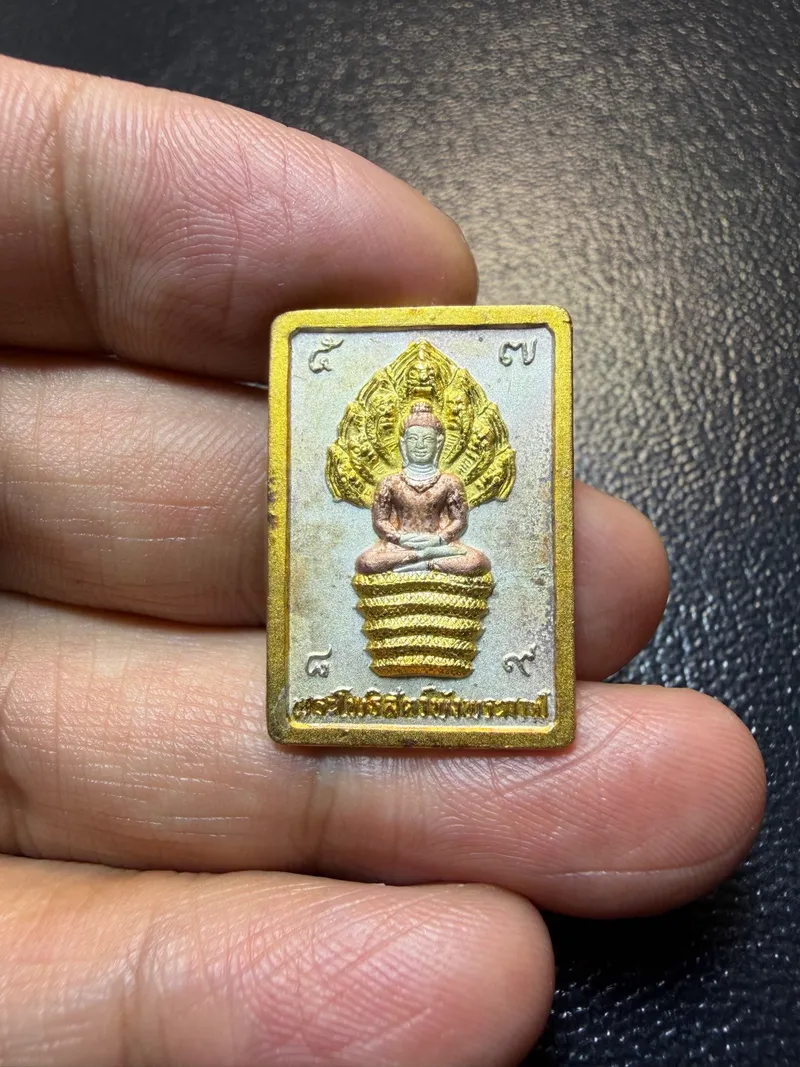
A Jatukam Ramathep "Run Duang Di" (good fortune, good destiny) plaque from Nakhon Si Thammarat, B.E. 2532 (1989), in the copper three-tone (3K) finish: a gold-tone seven-headed naga shelters a copper Buddha on the front, and on the back a naga coils around a copper horoscope disc. Many people take it for a Phra Nak Prok, but it is the early seven-naga image of Jatukam, and it appears in the Jatukam reference books (the fourth photo shows the catalogue page). According to the supplier this is the first batch, issued in gold, silver, gold-plated and copper, with only 200 copper 3K pieces, from the so-called "gold mold". Judged genuine by the Thai Buddha Image Admiration Association, No. 09083; the photo shows the authentication receipt (yellow card) and the formal certificate is included. One piece only; it is held by a partner supplier, so please submit a request and we confirm availability by email within 24 hours.
What is the Jatukam Ramathep Run Duang Di plaque (จตุคามรามเทพ)?
Jatukam Ramathep (จตุคามรามเทพ) is the guardian deity of Nakhon Si Thammarat (นครศรีธรรมราช) in southern Thailand, closely tied to the city pillar shrine (ศาลหลักเมือง) there and known for protection, wealth and changing one's luck. Jatukam amulets began to appear around B.E. 2530 and peaked in B.E. 2549 to 2550, when temples all over Thailand were making them.
"Run Duang Di" is the supplier's name for this batch and means good fortune, good destiny. The front shows a Buddha sheltered by a seven-headed naga, which is often mistaken for a Phra Nak Prok, but it is one of the early images of Jatukam.
Key facts
- Type: Jatukam Ramathep (จตุคามรามเทพ) rectangular plaque, seven-naga image
- Batch: first batch, "gold mold", according to the supplier
- Material: copper with three-tone (3K) finish: gold-tone naga, copper Buddha, silver-white field (as labelled by the supplier)
- Origin: Nakhon Si Thammarat Province; listed in the Jatukam reference books
- Year: B.E. 2532 (1989)
- Quantity: 200 copper 3K pieces, according to the supplier
- Certification: judged genuine (แท้) by the Thai Buddha Image Admiration Association, No. 09083, barcode GJ09-5EFA0, dated 6 October B.E. 2569 (2026); the photo shows the authentication receipt (yellow card) and the formal certificate is included
- Case: uncased; a case can be fitted on request
- Stock: one piece only, held by a partner supplier
Where Jatukam comes from
Jatukam belief comes from Nakhon Si Thammarat. Around B.E. 2530, Jatukam amulets were made there to fund the city pillar shrine, and their reputation grew year by year until they swept the country in B.E. 2549 to 2550. Many Thai devotees call Jatukam "father", trusting that he is always there when help is needed. This piece belongs to the early period of the B.E. 2530s, and far fewer survive than from the mass issues of the boom years.
Blessings
- Protection: Jatukam's best-known strength
- Wealth: on the back the naga guards the horoscope disc like a money bag, a sign of keeping and gathering wealth
- Changing luck: the batch name itself means good fortune
- Career and helpful people: for work and business
Note: an amulet is a support for faith and practice and does not guarantee any outcome. Wearers are encouraged to keep the Five Precepts.
Craftsmanship
A small rectangular plaque with a gold-tone border. On the front the Buddha sits on the coiled naga, with seven naga heads spread behind him like an umbrella; the naga is gold-tone, the Buddha copper and the field silver-white, with Thai numerals in the corners and a line of Thai script below. On the back the naga coils into a ring around a copper horoscope disc engraved with yantra, with more script around it. The three tones are crisp, with natural wear on the border and back.
FAQ
Q: What is the yellow card?
A: It is the Thai Buddha Image Admiration Association's authentication receipt, issued on the spot once a piece is judged genuine; the formal certificate is collected a week later on a Thursday. This receipt is No. 09083, names the piece "จตุคามรามเทพ" (Jatukam Ramathep), has "แท้" (genuine) ticked and "มีซ่อม" (repaired) unticked, and is dated 6 October B.E. 2569 (2026). The buyer receives the formal certificate.
Q: The front shows a naga Buddha, so why is it a Jatukam?
A: Early Jatukam pieces were not all cast as the deity figure seen later; this batch uses the seven-naga image, and the association registered it as "จตุคามรามเทพ".
Q: What does "3K" mean?
A: It refers to a three-tone finish, with gold, copper and silver tones on one piece. The base metal here is copper.
Q: Who is it suited to?
A: Business owners and anyone looking for wealth luck, people hoping to change their fortune, and collectors of early Jatukam.
Q: Why do I request first and pay later?
A: This piece is held by a partner supplier rather than in our Bangkok stock. So that nobody pays for a piece that has already gone, we confirm with the supplier first and reply by email within 24 hours. If it is available, the email includes a payment link valid for 24 hours. Submitting a request costs nothing.
About this piece
- Includes: the amulet (uncased) and the Thai Buddha Image Admiration Association formal certificate (No. 09083)
- Price: ฿120,000
- Stock: one piece only
- How to buy: submit a request on this page; pay through the emailed link once availability is confirmed
Last updated: 2026-10-29 | Merit Messenger team (Bangkok-based)