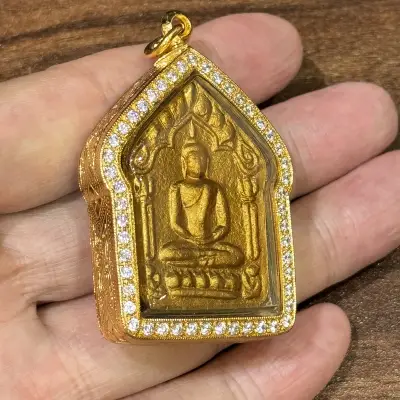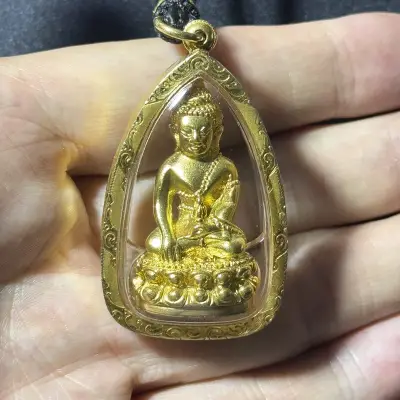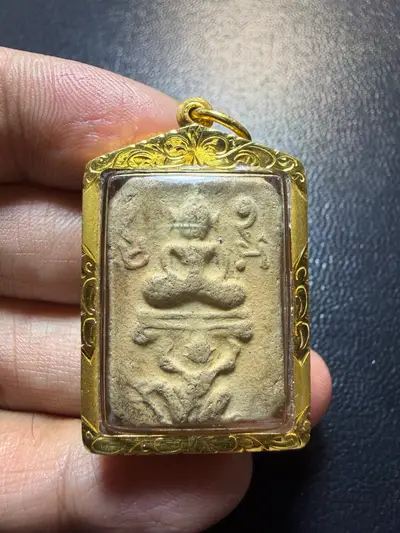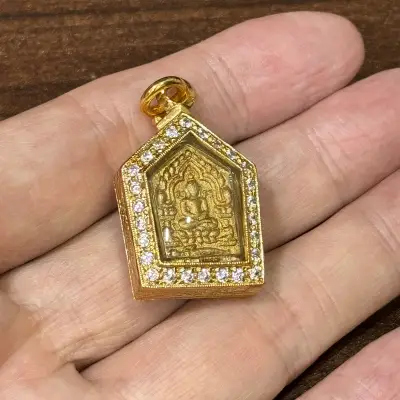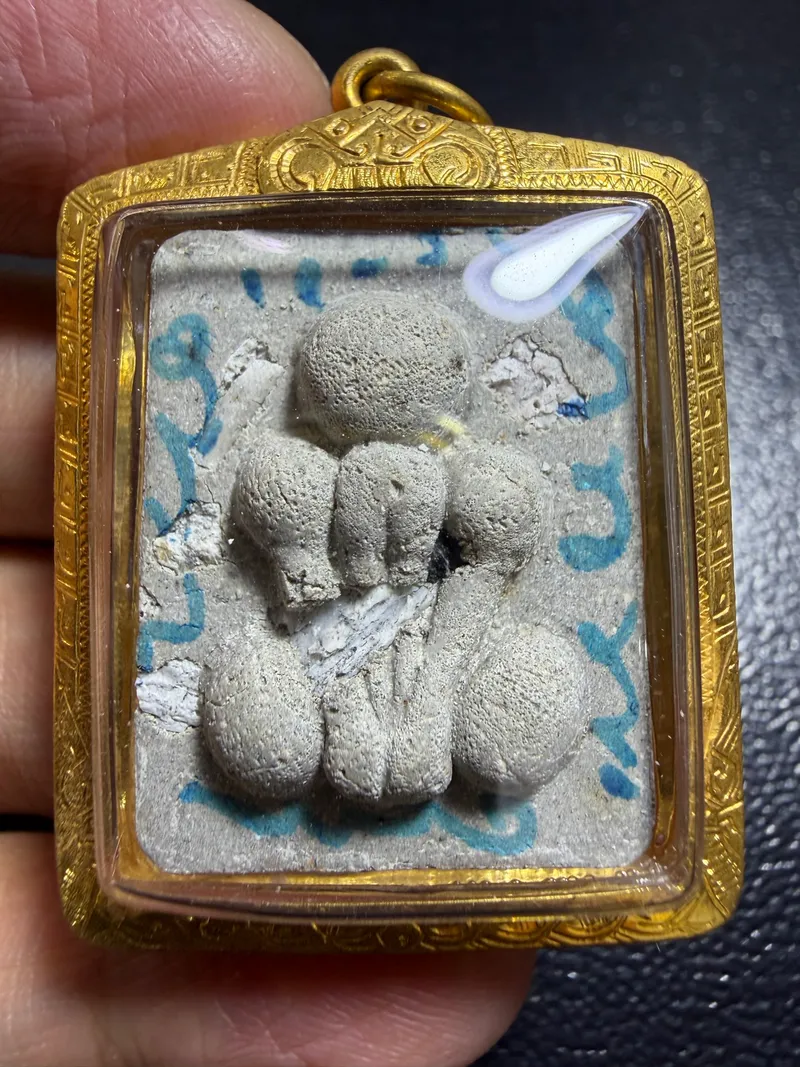
Luang Pho Chamnan ghost-bone Pidta (พระปิดตากระดูกผี), B.E. 2568 (2025), double-sided: the Thai Buddha Image Admiration Association formal card records the material outright as "เนื้อผงกระดูกผี" (ghost-bone powder). Both faces show the Pidta figure covering its face, white fragments are clearly set into the powder body, and blue hand-written Thai script runs around the edges, so no two sides look alike. The supplier lists it as the first batch in the double-sided version, with only 80 pieces said to have been made. Formal certificate No. PM08294 with a QR code. Mounted in a gold-tone case, ready to wear. One piece only; it is held by a partner supplier, so please submit a request and we confirm availability by email within 24 hours.
What is the Luang Pho Chamnan ghost-bone Pidta (Phra Pidta Kraduk Phi Luang Pho Chamnan)?
Phra Pidta (พระปิดตา) is a figure covering its face with its hands, eyes closed and turned inward. It symbolises closing the senses and holding on to what you have, and in Thailand it is worn for protection and for keeping wealth. "กระดูกผี" (Kraduk Phi) translates as "ghost bone" and refers to Pidta made with ashes or bone fragments mixed into the powder. Amulets that combine the Dhamma with spirit guardianship have a long history in Thailand; a well-known example is Luang Pho Tim's (หลวงพ่อทิม) Khun Paen made with Prai Kuman powder.
This piece was made by Luang Pho Chamnan (หลวงพ่อชำนาญ) in B.E. 2568. The association's formal card names it "พระปิดตากระดูกผีหลวงพ่อชำนาญ" with the material "เนื้อผงกระดูกผี". The supplier lists it as the first batch in the double-sided version, with about 80 pieces said to have been made; we cannot verify the number independently.
Key facts
- Type: Phra Pidta (พระปิดตา), double-sided
- Material: ghost-bone powder (เนื้อผงกระดูกผี / Nuea Phong Kraduk Phi); per the supplier, it includes ash-type sacred material
- Batch: first batch (as listed by the supplier)
- Quantity: about 80 pieces (as stated by the supplier)
- Temple (as registered on the certificate): Wat Chinwararam Worawihan (วัดชินวรารามวรวิหาร), Pathum Thani Province
- Master: Luang Pho Chamnan (หลวงพ่อชำนาญ)
- Year: B.E. 2568 (2025)
- Certification: Thai Buddha Image Admiration Association formal certificate (บัตรรับรองพระแท้), No. PM08294, barcode GJ08-A008D, issued 25 August B.E. 2569 (2026), with QR code
- Case: gold-tone case with ring
- Stock: one piece only, held by a partner supplier
Who is Luang Pho Chamnan?
Luang Pho Chamnan (หลวงพ่อชำนาญ) is a monk of Pathum Thani in central Thailand. Earlier pieces of his that we have handled were registered by the association under Wat Bang Kudi Thong (วัดบางกุฎีทอง) in the same province; this piece's certificate registers Wat Chinwararam Worawihan (วัดชินวรารามวรวิหาร). According to the supplier, he is strict in discipline, versed in old Mon yantra lore and known for his Brahma amulets.
Blessings
- Protection: Pidta are traditionally worn for protection and avoiding danger
- Keeping wealth: the covered face symbolises holding on to what you have
- Spirit guardianship: according to the supplier, the ghost-bone material stands for a guardian that stays at your side, and wearers may make wishes to it
- Popularity and career: support in dealings with people and at work
Please note: an amulet supports your own efforts and intentions; it does not guarantee any outcome. Keeping the Five Precepts is traditionally encouraged.
Craftsmanship
A rectangular powder plaque with a Pidta figure on both sides: one side shows a round-headed seated figure covering its face with its hands, the other a figure whose long arms reach up over the face. The grey-white powder shows grain and small pores, with white fragments set into it in several places and a small piece of black sacred material on one side. Blue hand-written Thai script runs around the edges of each face. Mounted in a gold-tone case with a clear front and a ring.
FAQ
Q: "Ghost bone" sounds frightening. What does it mean?
A: It is a traditional category of Thai amulet in which ashes or bone fragments are mixed into the powder, standing for a guardian spirit that stays with the wearer. It is not meant to frighten anyone. On this piece the material line of the association's certificate reads "เนื้อผงกระดูกผี". If you prefer to avoid this kind of material, we suggest choosing another piece.
Q: What does "double-sided Pidta" mean?
A: Most Pidta have the figure on one side only, with a yantra or plain back. Here both sides carry a Pidta figure, so you can wear either face outward.
Q: How can I verify this piece?
A: The association's formal certificate No. PM08294 names it "พระปิดตากระดูกผีหลวงพ่อชำนาญ เนื้อผงกระดูกผี พ.ศ. 2568", temple "วัดชินวรารามวรวิหาร", province "ปทุมธานี", issued 25 August B.E. 2569 (2026), and carries a QR code you can scan.
Q: Can I wear a powder amulet every day?
A: Yes, it is cased. Powder dislikes long soaking, so take it off for bathing or swimming.
Q: Who is it suited to?
A: Frequent travellers and people in higher-risk work, anyone in business or trying to hold on to their savings, and collectors of contemporary Pathum Thani amulets.
Q: Why do I request first and pay later?
A: This piece is held by a partner supplier rather than in our Bangkok stock. So that nobody pays for a piece that has already gone, we confirm with the supplier first and reply by email within 24 hours. If it is available, the email includes a payment link valid for 24 hours. Submitting a request costs nothing.
About this piece
- Includes: the amulet in its gold-tone case and the Thai Buddha Image Admiration Association formal certificate (No. PM08294)
- Price: ฿20,000
- Stock: one piece only
- How to buy: submit a request on this page; pay through the emailed link once availability is confirmed
Last updated: 2026-10-29 | Merit Messenger team (Bangkok-based)