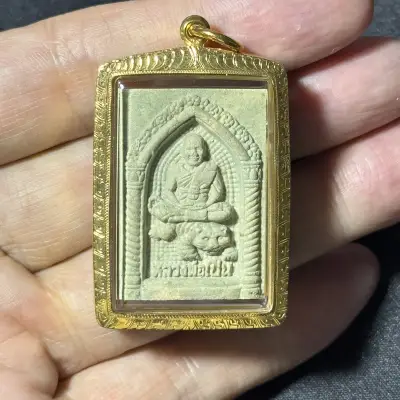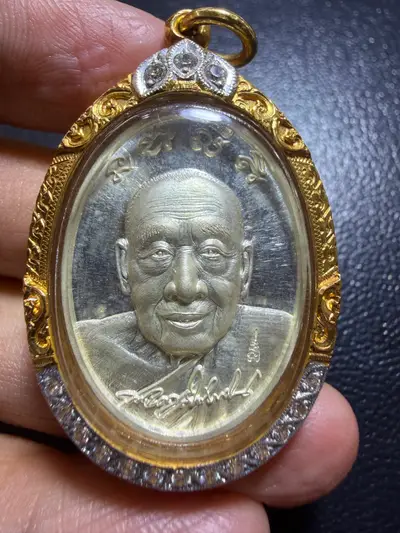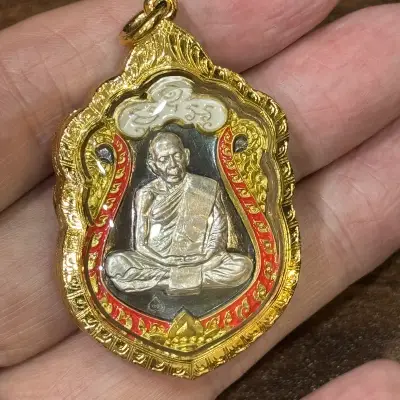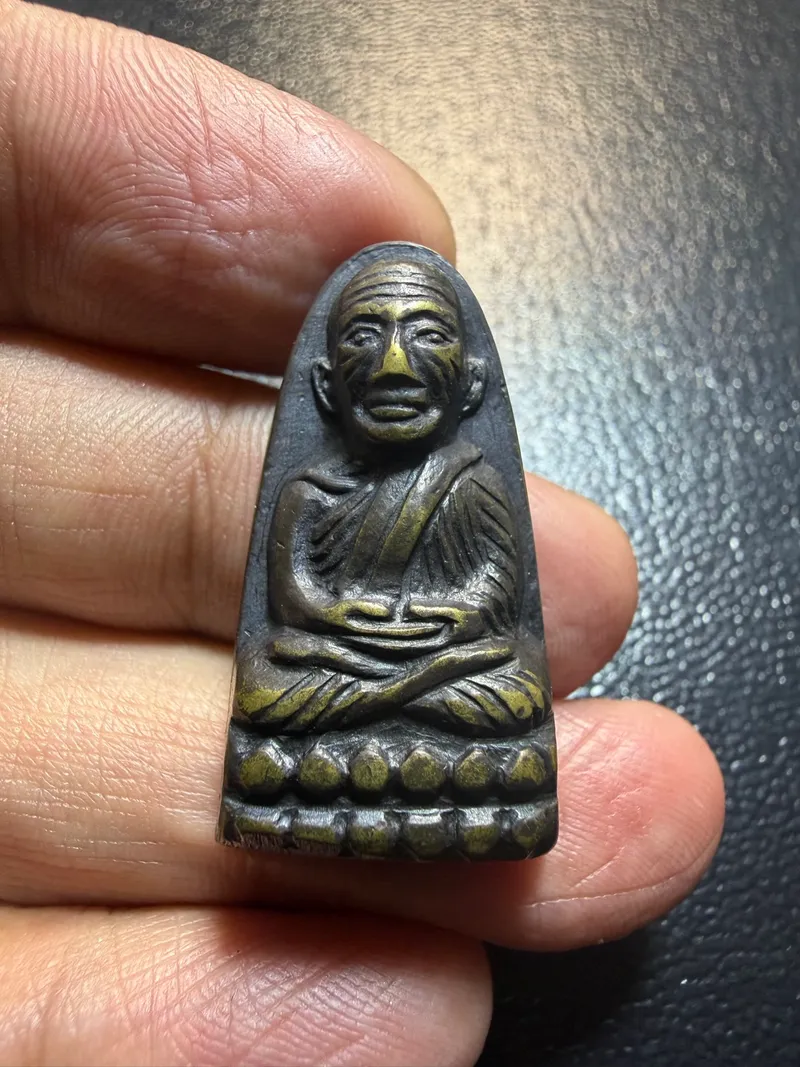
Luang Phor Thuad (หลวงปู่ทวด), the master Thais turn to first for protection from danger: a flat-iron shaped portrait amulet with a text back (Tao Reed Lang Nang Sue / เตารีดหลังหนังสือ) made at Wat Chang Hai, Pattani, in B.E. 2505 (1962), with its sixty-year-old original surface never cleaned. The front shows the master seated in meditation on a lotus base, face and robe folds clearly defined, with the high points naturally worn to a brassy tone. The back carries an old Khmer-script mantra (คาถา) and "หลวงพ่อทวด วัดช้างให้" in full, and the edges show the file marks left after casting. Judged genuine by the Thai Buddha Image Admiration Association, No. 04623, barcode GJ09-40C3D; the formal certificate is included. One piece only; it is held by a partner supplier, so please submit a request and we confirm availability by email within 24 hours.
What is the Luang Phor Thuad B.E. 2505 Tao Reed Lang Nang Sue (หลวงปู่ทวด เตารีดหลังหนังสือ ๒๕๐๕)?
Luang Phor Thuad (หลวงปู่ทวด) is the legendary Ayutthaya-era monk of southern Thailand, remembered in the story of turning seawater fresh, and the master Thais think of first when they want protection from danger. The most authoritative Luang Phor Thuad amulets are those made at Wat Chang Hai (วัดช้างให้) in Pattani.
"เตารีด" (Tao Reed) means flat iron, describing the rounded top and flat base that resemble an old-fashioned iron. "หลังหนังสือ" (Lang Nang Sue) means "text back": the back carries a mantra in script rather than a yantra drawing. The B.E. 2505 batch was the next major issue at Wat Chang Hai after the famous B.E. 2497 first batch in powder, and was made under the temple's then abbot, Phra Ajarn Tim (พระอาจารย์ทิม ธมฺมธโร).
Key facts
- Type: Luang Phor Thuad image amulet (พระหลวงปู่ทวด)
- Shape: flat-iron (เตารีด / Tao Reed) with text back (หลังหนังสือ / Lang Nang Sue)
- Material: cast metal (the yellow card does not state the material)
- Condition: original surface, never cleaned
- Temple: Wat Chang Hai (วัดช้างให้), Pattani Province
- Image: Luang Phor Thuad (หลวงปู่ทวด); made under Phra Ajarn Tim (พระอาจารย์ทิม)
- Year: B.E. 2505 (1962)
- Certification: judged genuine (แท้) by the Thai Buddha Image Admiration Association, No. 04623, barcode GJ09-40C3D, dated 15 September B.E. 2569 (2026); formal certificate included
- Case: none
- Stock: one piece only, held by a partner supplier
Luang Phor Thuad and Phra Ajarn Tim
Luang Phor Thuad lived in the Ayutthaya period; his dates survive only in tradition (said to be about 1582 to 1682), and southern Thais call him "หลวงปู่ทวด". He never blessed portrait amulets of himself. The first master to make amulets in his image was Phra Ajarn Tim, abbot of Wat Chang Hai, whose B.E. 2497 powder first batch made the temple famous; he followed it with this metal batch in B.E. 2505. Ajarn Tim's Luang Phor Thuad amulets are widely regarded as the benchmark for protective amulets.
Blessings
- Protection from danger: the quality Luang Phor Thuad is best known for
- Safe travel: a standard companion for drivers, business travellers and long journeys
- Personal protection: shielding from troublemakers and disputes
- Safety: for the home and family
Note: an amulet supports practice and intention; it does not guarantee any outcome. Keeping the Five Precepts is traditionally recommended.
Craftsmanship
A cast metal amulet in the flat-iron shape, rounded at the top and flat at the base. Luang Phor Thuad sits in meditation with hands in the meditation mudra, robe folds well defined, above a two-tier lotus base. The original surface is a deep brown close to black, and high points such as the nose, robe edge and lotus petals have naturally worn to a brassy tone. The back has a single Khmer character at the top, three lines of Khmer-script mantra, and two lines of Thai at the bottom: "หลวงพ่อทวด" and "วัดช้างให้". Fine file marks from finishing after casting are visible on the sides, typical of old cast pieces of this kind. Supplied without a case.
FAQ
Q: How do I know it is the B.E. 2505 batch?
A: The association's receipt names the piece "ปู่ทวด 05"; "05" is the association's shorthand for B.E. 2505. The "หลวงพ่อทวด วัดช้างให้" text back matches the layout of this batch.
Q: What is the yellow card in the photos, and which card do I receive?
A: The yellow card is the association's authentication receipt, issued on the spot when a piece is judged genuine; the formal certificate is collected the Thursday of the following week. This receipt is No. 04623 with "แท้" (genuine) ticked and "มีซ่อม" (repaired) not ticked, dated 15 September B.E. 2569 (2026). You receive the association's formal certificate with the amulet.
Q: What does "original surface" mean?
A: The surface still carries the natural oxidation built up since the piece left the temple; it has not been cleaned, polished or recoloured. On old amulets the original skin is key evidence of age and authenticity, and collectors value it highly. Never clean it with polish or detergent.
Q: Why is Luang Phor Thuad so popular with people who travel?
A: In Thailand Luang Phor Thuad is the very image of protection from danger. Many drivers and frequent travellers wear one or keep his image in the car for a safe journey.
Q: Who is it suited to?
A: Drivers and frequent travellers, people in risky jobs, anyone wanting protection for their family, and collectors of old Wat Chang Hai amulets.
Q: Why do I request first and pay later?
A: This piece is held by a partner supplier rather than in our Bangkok stock. So that nobody pays for a piece that has already gone, we confirm with the supplier first and reply by email within 24 hours. If it is available, the email includes a payment link valid for 24 hours. Submitting a request costs nothing.
About this piece
- Includes: the Luang Phor Thuad metal amulet (no case) and the Thai Buddha Image Admiration Association formal certificate (No. 04623)
- Price: ฿44,000
- Stock: one piece only
- How to buy: submit a request on this page; pay through the emailed link once availability is confirmed
Last updated: 2026-10-29 | Merit Messenger team (Bangkok-based)