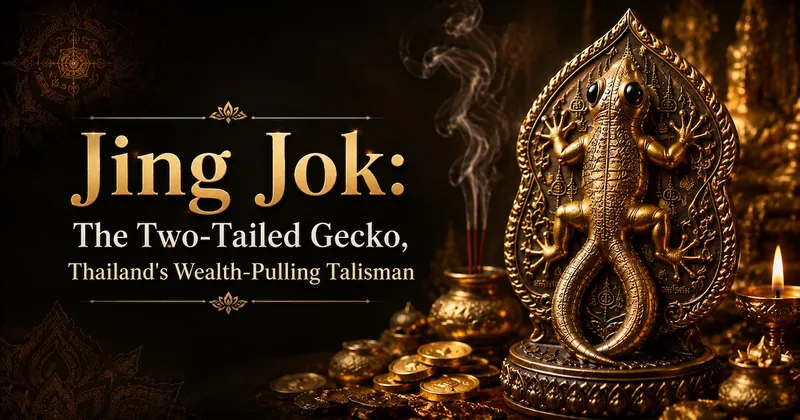
The Jing Jok Song Hang (Thai: จิ้งจกสองหาง), the two-tailed gecko, is a Thai talisman for wealth and charm. Since the animist era, Thais have regarded the gecko as a spiritually potent creature able to sense danger and foretell events — and the rare "two-tailed" form is seen as a spiritual tool to "pull in" wealth and opportunity. It is known for wealth, popularity, charm, business luck, and premonitory protection.
Why the "two-tailed" gecko?
In Thai tradition the gecko (Jing Jok) is a magical creature predating Buddhism, rooted in animism, believed to be attuned to the unseen and able to sense danger. The exceedingly rare two-tailed gecko is taken as an auspicious omen — two tails symbolizing "double the pull" of wealth and opportunity. Monks and practitioners craft talismans in its image, drawing on that symbolism and consecrating them with a wealth-drawing kata (chant).
Powers: wealth, charm, and premonition
- Wealth and windfall: its core power — symbolically "pulling" wealth and opportunity toward the keeper, especially prized by business people and those seeking windfall or gambling luck.
- Popularity and charm (Metta Mahaniyom / Maha Sanaeh): a long-loved Thai charm for goodwill and attraction.
- Business and sales: symbolizing smooth deals and flowing custom, kept by traders and salespeople.
- Premonition and protection: from the gecko's "sensing" symbolism, believed to warn of danger and deflect black magic.
Materials and form
Two-tailed gecko talismans are commonly cast or carved in copper, silver, buffalo horn, or ivory, sometimes with a takrut added for strength. It is a folk wealth talisman built on animal symbolism and chant — distinct from yin (spirit) amulets: it channels the auspicious energy of a magical creature, not a departed soul.
Keeping a Jing Jok
- Keep a good heart and chant its kata: it calls for sincere veneration and regular recitation of its wealth-drawing chant.
- Wear it or place it at the till: carry it, or keep it at a shop's cash point or wealth spot to draw custom and fortune.
- Check origin and consecration: choose one made by a legitimate monk or practitioner with clear provenance.
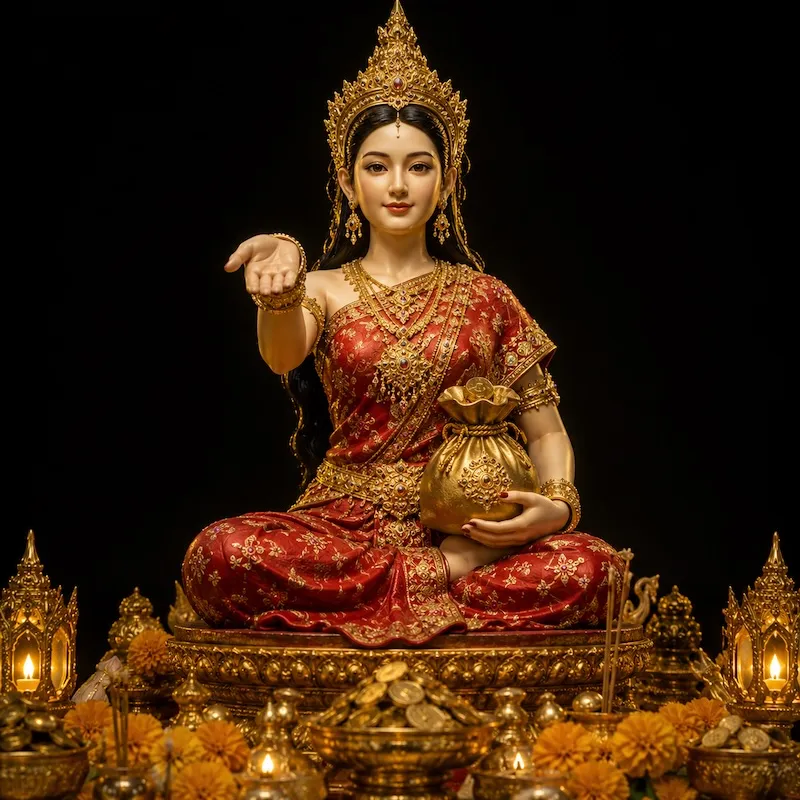
In the "wealth and charm" family, the Jing Jok is often kept alongside See Phueng balm and deity amulets such as Nang Kwak.
FAQ
Is the Jing Jok a yin amulet?
No. It is a folk wealth talisman built on the auspicious symbolism of a magical creature and consecrated with chant, channeling the gecko's energy rather than a departed spirit — so its care is relatively simple, unlike Kumanthong and other yin amulets.
What does the Jing Jok mainly bring?
Wealth and windfall above all, along with popularity, charm, business luck, and premonitory protection. Especially suited to business people and those seeking fortune and good relations.
Why must it be "two-tailed"?
The gecko is already seen as a magical, sensing creature, and two tails are an extremely rare auspicious omen symbolizing "double the pull" of wealth and opportunity — making the two-tailed gecko the enhanced version.
How do I keep one?
Venerate it with a sincere heart and chant its wealth kata; wear it or place it at your shop's wealth spot. Choose one with clear provenance, consecrated by a legitimate monk or practitioner.
Last updated: July 2026 | Author: The Merit Messenger Team (based in Bangkok)
Looking for a wealth-and-charm piece? Browse our pieces or contact us. For terminology, see the Thai amulet glossary.