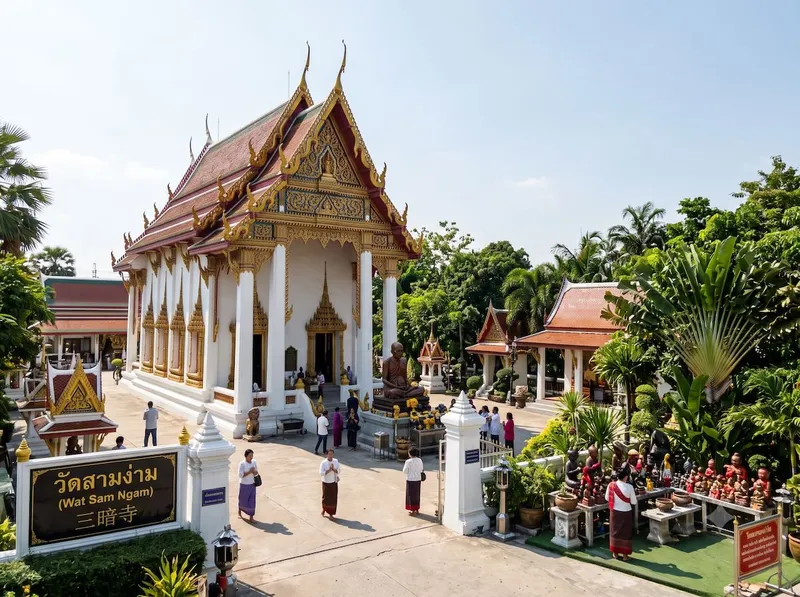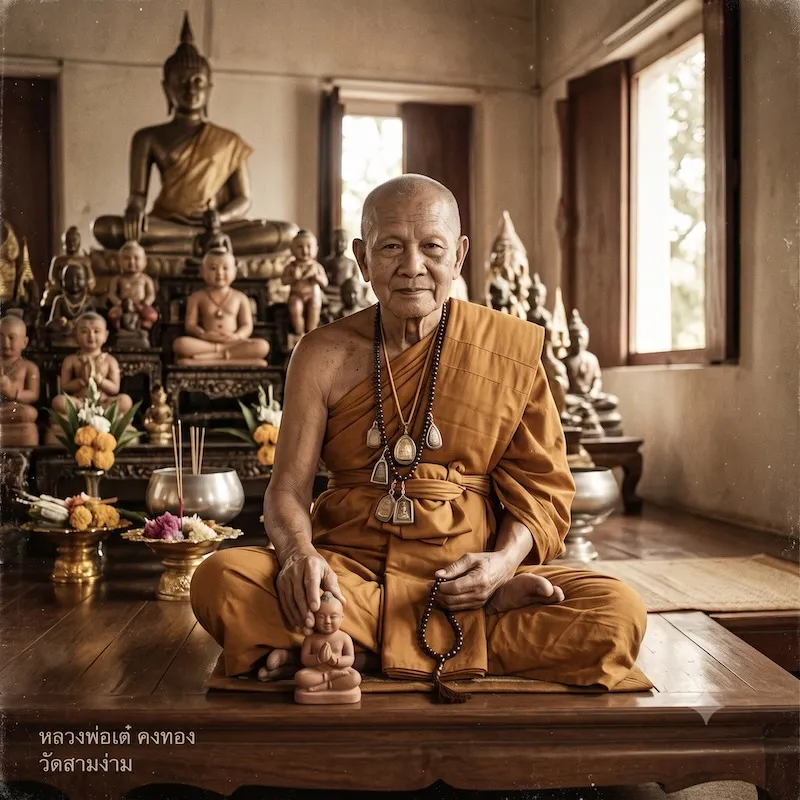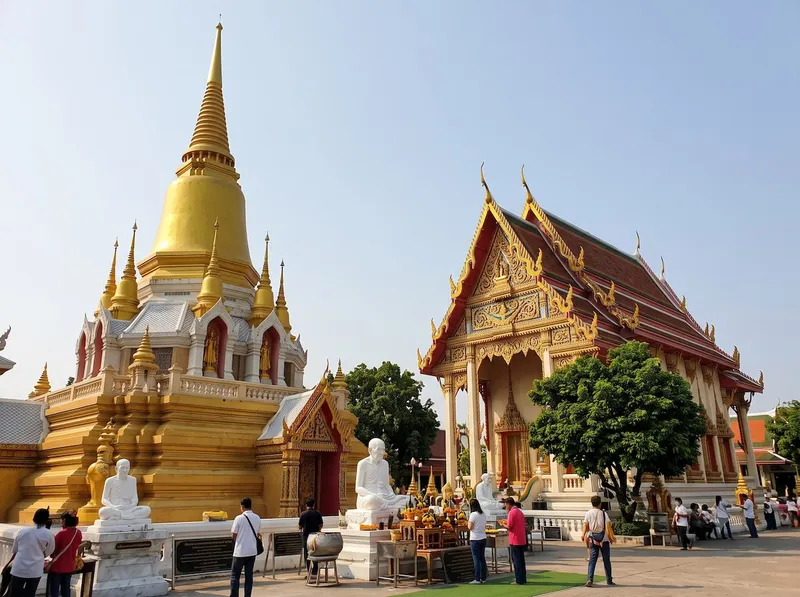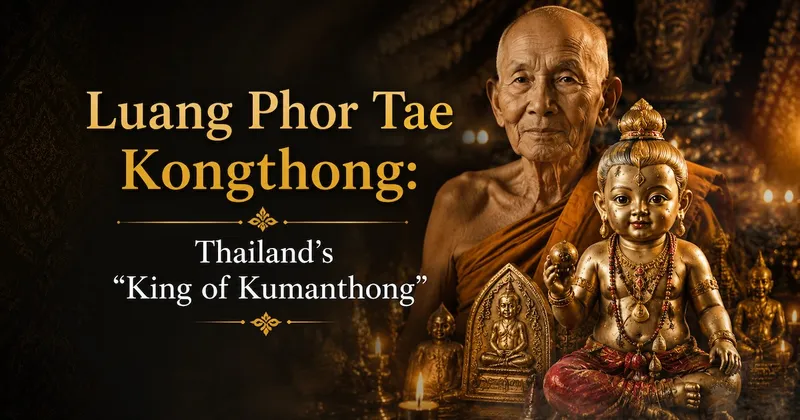
Luang Phor Tae Kongthong (Thai: หลวงพ่อเต๋ คงทอง, 1891–1981) was the abbot of Wat Sam Ngam in Nakhon Pathom, revered throughout the Thai amulet world as the "King of Kumanthong." Famous for making Kumanthong through White Magic, he made Wat Sam Ngam one of the earliest and most orthodox sources of Kumanthong in all of Thailand.
Life: from Wat Sam Ngam novice to grand master
Luang Phor Tae was born in 1891 in the village of Sam Ngam, Don Tum District, Nakhon Pathom. At the age of seven he was taken in by his uncle Luang Phor Dang, a respected monk of Wat Kalong, where he studied for over three years; at twenty-one he was ordained a bhikkhu with the title "Kong Thong." He became a close disciple of Luang Phor Dar of Wat Paniangtak, who passed on his complete sacred knowledge. In 1932, around the age of forty, he became abbot of Wat Sam Ngam, and went on to become famous far and wide for his mastery and compassion. He served fifty-nine years in the monkhood and passed away on 25 December 1981 at the age of ninety.
Founding role: King of Kumanthong and the White-Magic lineage
What secured Luang Phor Tae's place in amulet history is his pioneering Kumanthong lineage. Wat Sam Ngam and Wat Takong were among the first temples in Thailand to make Kumanthong through orthodox rites, and Luang Phor Tae is honored as the one who perfected it. He was famous for White Magic: it is said he could perceive the wandering souls of departed children and, out of compassion, guide them into a child-form statue — giving those spirits a chance to be cared for, earn merit, and eventually be reborn, while protecting their keeper. This is the fundamental line between orthodox Kumanthong and "black magic" pieces. The ancient text he used to make Kumanthong is preserved by the temple as a precious heritage.
Signature amulets: not only Kumanthong
- Kumanthong: his most famous sacred object, White-Magic made, for wealth, protection, and household luck.
- Takrut Nang Suea (tiger-hide takrut): a takrut charged with tiger imagery, celebrated for protection, dominance, and invincibility — a famous piece for safety and commanding presence.
- Other protective amulets, centered on the themes of warding danger and authority.
Lineage: the Tae-to-Yeam line
After Luang Phor Tae passed, the Wat Sam Ngam Kumanthong tradition was carried on by his disciples, with Luang Pu Yeam recognized as the one who truly inherited his Kumanthong craft — continuing this orthodox White-Magic line. To buy a Wat Sam Ngam Kumanthong today is to verify exactly this "Tae — Yeam — present abbot" lineage.
FAQ
Why is Luang Phor Tae called the "King of Kumanthong"?
Wat Sam Ngam was among the first temples in Thailand to make Kumanthong through orthodox rites, and Luang Phor Tae perfected and transmitted the craft through White Magic; his lineage and consecration texts became the benchmark, earning him the title.
Besides Kumanthong, what is he famous for?
His tiger-hide Takrut Nang Suea and other protective amulets, celebrated for protection, dominance, and warding danger — the two themes of "wealth and protection" plus "authority and safety."
Can I still get a Kumanthong from his lineage?
Yes. Wat Sam Ngam has continued making them; the right path is a piece with the clear "Tae — Yeam — present abbot" lineage, clear origin and year, and consecration records.
Is his Kumanthong a yin amulet?
Yes, but from an orthodox White-Magic line. It needs regular offerings and respect, but is rooted in compassion and merit, not harm — the essence that separates it from "black magic" pieces.
Last updated: July 2026 | Author: The Merit Messenger Team (based in Bangkok)
Looking for a genuine Wat Sam Ngam Kumanthong? Browse our pieces or contact us. For terminology, see the Thai amulet glossary.