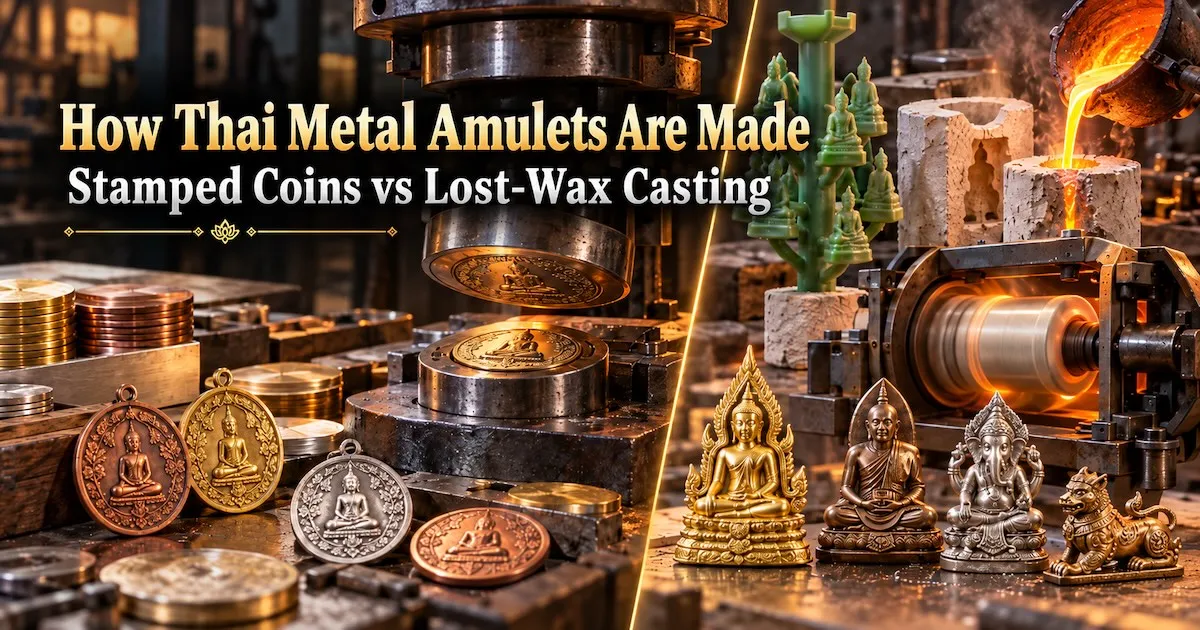
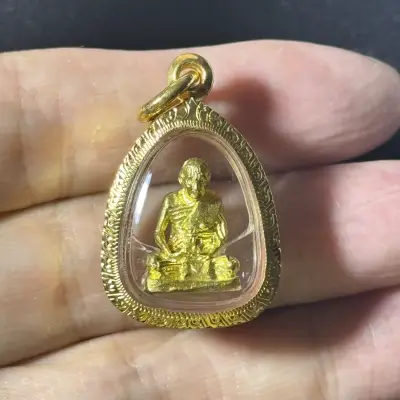
Thai metal amulets are either stamped in a steel die or cast by centrifugal lost-wax casting. A step-by-step look at both methods, the marks each one leaves, and what that means when you buy.
TL;DR: Thai metal amulets are made in one of two ways. Coins and medals (rian) are stamped: a steel die strikes a metal blank in a press. Statuettes, Phra Kring and many figurative pieces are cast: molten metal fills a mold made from a wax model, today usually by centrifugal lost-wax casting (lor wiang). Knowing which method made a piece tells you what marks it should carry, and why a copy made the other way looks wrong.
Stamped vs Cast: The Short Version
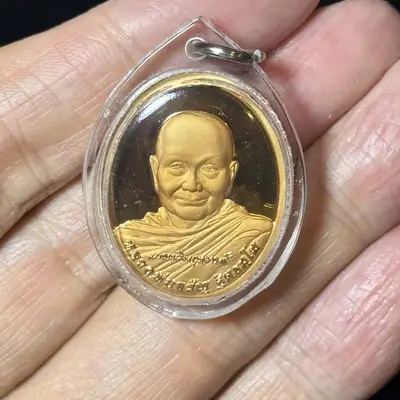
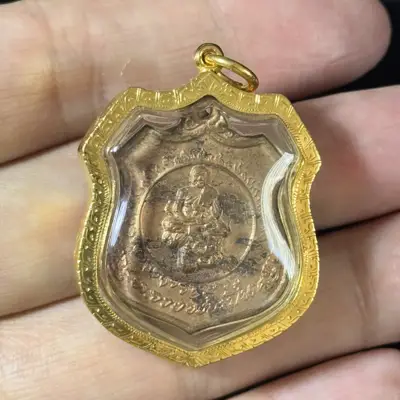
- Stamped (pam, ปั๊ม): flat coins and medals, sema shapes, oval and round rian. Sharp, taut surfaces and crisp lettering, because the metal is forced into the die under pressure.
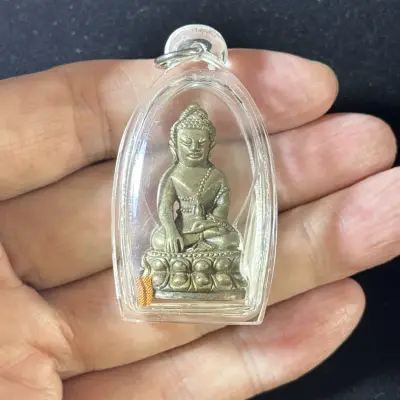
- Cast (lor, หล่อ): three-dimensional pieces such as Phra Kring, Phra Chaiwat, rup lor (miniature monk statues) and cast medals. Softer edges, a visible trace where the metal entered the mold, and detail on every side.
- Both are legitimate temple methods. Neither one is more sacred. What makes an amulet is the batch: who commissioned it, which monk blessed it, and when.
How a Stamped Coin Amulet Is Made
Thai collectors usually date the first stamped amulet coin to 1897 (B.E. 2440), in the reign of King Rama V. The process has changed in its tools, but not in its logic.
- Engraving the dies. A front die and a back die are cut in hardened steel. Before roughly B.E. 2500 this was done by hand, which produces shallow, softly modelled relief. Modern dies are made from photographic film and machine engraving, which gives higher, sharper relief.
- Preparing the blanks. Copper, brass, silver, nawa loha or gold is rolled to thickness and cut into blanks.
- Striking. The blank is struck between the two dies in a press. Old coins were often struck on a large sheet and then sawn out by hand, leaving saw marks on the rim. Later methods cut the blank first, or punched the outline in the same stroke.
- The loop. Early coins had the loop soldered on afterwards (hu chuam). From around the 1940s most coins were struck with the loop as part of the die (hu nai tua).
- Finishing. Trimming, polishing, then any surface treatment: gold plating (kalai thong), enamel colour (long ya), or blackening (rom dam).
Because one set of dies strikes the whole run, every coin from that die shares the same tiny engraving quirks. Collectors call a die variety a block (บล็อก), and identifying the block is a core part of checking an older coin. Dies also wear and can crack during a long run, so early and late strikes of the same batch can differ slightly.
How a Cast Amulet Is Made: Centrifugal Lost-Wax Casting
Most modern cast amulets are made by lor wiang (หล่อเหวี่ยง), centrifugal casting. It is a refinement of the ancient lost-wax method, the same family of techniques used for Thai bronze Buddha images.
- Master model and rubber mold. A sculptor makes the master. A rubber mold is taken from it so the shape can be repeated.
- Wax models (hun khi phueng). Molten wax is injected into the rubber mold, producing one wax copy of the amulet at a time.
- Building the tree (khao cho). Each wax model is attached by a short wax stem to a central wax trunk. The finished cluster looks like a small tree and becomes the channel system the metal will flow through.
- Investing the mold (te bao). The tree is placed in a steel flask and liquid investment plaster is poured around it, then left to set.
- Burning out the wax. The flask goes into a kiln. The wax melts and burns away, leaving an exact hollow of every amulet. This is the "lost wax".
- Spinning the metal in. The metal is melted and the flask is mounted on a centrifugal machine. As it spins, the molten metal is driven into every cavity, including fine detail that gravity alone would not fill.
- Breaking the mold (thup bao). After cooling, the plaster is broken away and washed off, revealing a metal tree of amulets.
- Cutting and finishing. Each piece is cut from its stem, the stub is filed down, and the surface is cleaned, then plated or patinated as required.
The older method, lor boran (traditional casting), pours metal into a clay mold by gravity. It fills less evenly, so traditional cast pieces tend to have a rougher, more porous surface and more variation from piece to piece. Many collectors value that character on older batches.
What Phra Kring Adds: The Rattle Inside
A Phra Kring is a cast Medicine Buddha that makes a faint rattling sound when shaken. The piece is cast with a cavity, a small metal bead is placed inside, and the opening at the base is sealed with a plug. Collectors look at that sealed base closely, because the way it was closed is specific to each batch. You can read more in our Phra Kring guide.
Why This Matters When You Buy
You do not need to become a specialist, but knowing the method helps you ask better questions and spot obvious problems.
- A stamped coin should look struck. Real stamped coins have a firm, tight surface and crisp edges. A common way to copy a coin is to cast it from a genuine one. Casting cannot reproduce the effect of a press, so copies tend to look slightly soft or "swollen", with rounded details.
- A cast piece should show where the metal went in. A filed sprue mark, usually on the base or edge, is normal on genuine cast pieces. Its absence on a piece described as cast is worth a question.
- Patina should match the age. Natural oxidation is uneven, heavier in recesses and lighter on high points that rub against skin or cloth. An even, painted-looking colour across the whole surface is a warning sign.
- Method does not decide value. A stamped copper coin from a famous monk's first batch can be worth far more than a large cast statue from an unremarkable batch.
These are principles, not a checklist that replaces expert verification. For pieces where value matters, rely on a seller who stands behind authenticity and on recognised certificates. See our guides on spotting fake Thai amulets and commercial vs temple-made amulets, and for metals specifically, Nawaloha, sacred powder and Lek Lai explained.
Where Blessing Fits In
Manufacturing and blessing are separate stages. Temples usually commission a mint or foundry to produce a batch, and the finished amulets are then consecrated in a ceremony (pluk sek) led by the monk or monks named for that batch. For large Buddha images, the pouring itself is also a ritual occasion (phithi thet thong), with chanting and offerings before the metal is poured. The method of manufacture tells you how a piece was made. The batch and the ceremony tell you what it is.
Frequently Asked Questions
Q: Is a cast amulet better than a stamped one?
A: No. They are different techniques suited to different shapes. Flat coins are stamped; three-dimensional figures are cast. Value and spiritual standing come from the batch, the monk and the condition, not the method.
Q: Does centrifugal casting mean the amulet is mass-produced or commercial?
A: No. Centrifugal casting is the standard modern method for genuine temple batches. "Commercial" refers to who made and blessed the piece, not to the machinery used.
Q: Why does my Phra Kring rattle?
A: A small bead is sealed inside a cavity during finishing. The sound is intended, and is part of how a Phra Kring is identified.
Q: Can I tell stamped from cast just by looking?
A: Usually yes. Stamped coins are flat with crisp edges and identical detail across the run. Cast pieces are three-dimensional and carry a filed mark where they were cut from the casting tree.
Q: Old coins have saw marks on the rim. Is that damage?
A: No. On many coins from before the 1950s, the blanks were sawn out by hand, and those marks are expected. Their style is one of the things collectors use to check age.
Last updated: October 2026 | Author: Merit Messenger Team (based in Bangkok)
See both methods in real pieces: our Luang Phor Jaran Phra Kring in nawaloha is cast, and the Luang Phor Jaran copper coin is stamped. Browse all amulets or contact us with questions about any piece.