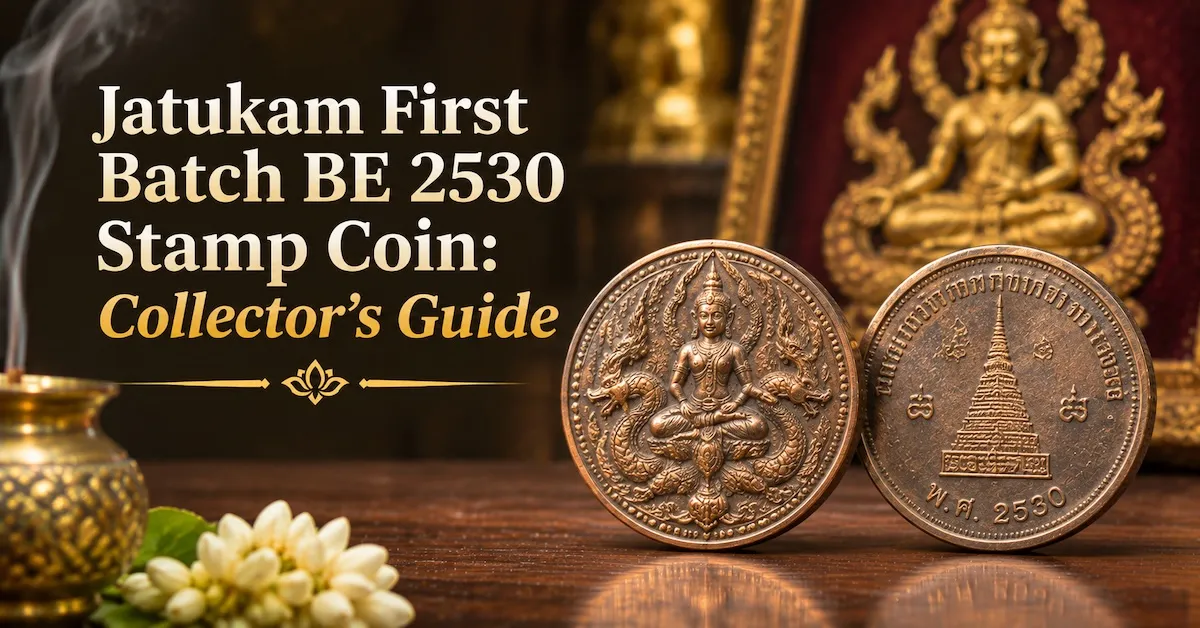
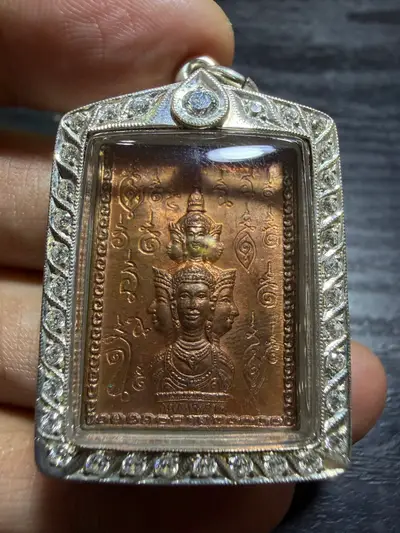
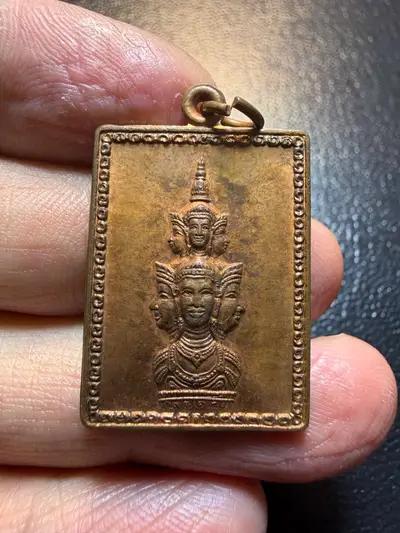
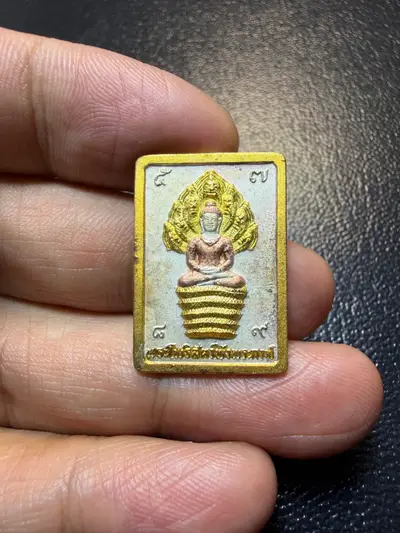
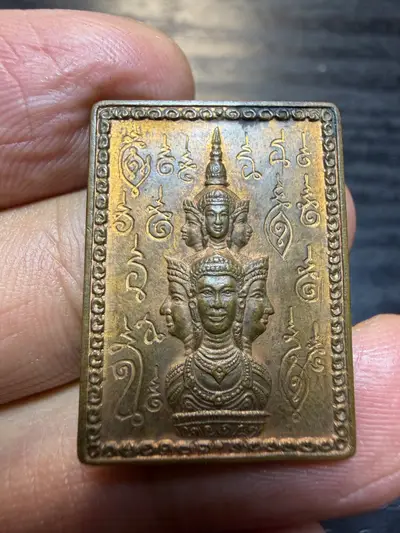
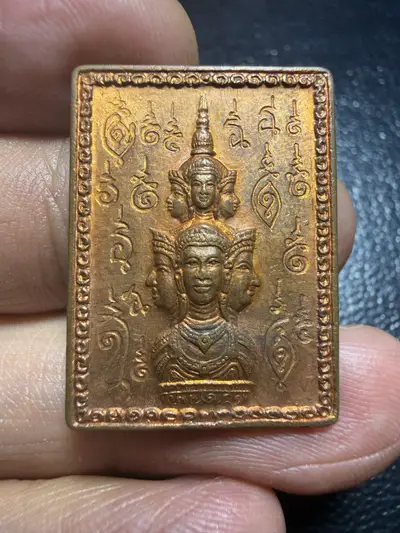
The first Jatukam Ramathep batch of BE 2530 (1987) is where the whole Jatukam story starts: a set of small "stamp" coins (เหรียญแสตมป์) issued by the City Pillar Shrine of Nakhon Si Thammarat, two decades before the 2007 craze. Collectors call them "stamp coins of the city pillar head" because the front reproduces the top of the city pillar; the back carries Rahu swallowing the moon, the twelve zodiac animals and the eight directions. There are two main moulds, one with a hanging loop and one with side yantra, mostly in copper. This guide explains how to tell them apart, what a certificate should say, and why they cost more than later Jatukam.
Where the BE 2530 batch came from
Jatukam Ramathep are guardian deities of Nakhon Si Thammarat in southern Thailand. In BE 2530 the province built a new City Pillar Shrine, and the committee led by Police Major General Khun Phantharak Ratchadet ("Khun Phan") issued commemorative amulets to fund it. According to collectors' material, the stamp coins were made for the day the city pillar's finial was anointed, Monday 3 August BE 2530. The same sources say the metal was taken out to sea for a blessing on 16 July 1987 and blessed again at the shrine, and that the moulds were buried under the shrine so the coin could not be restruck. We have not found an independent record of these claims, so treat them as dealer lore.
For years the coins drew little interest. Their value took off after Khun Phan's death in September 2006 and the national craze of 2007, which is covered in our story of the Jatukam frenzy and our Jatukham history and collecting guide.
Key facts
- Thai name on certificates: เหรียญแสตมป์เศียรหลักเมือง รุ่นแรก ("city pillar head stamp coin, first batch")
- Year: BE 2530 (1987)
- Issuer recorded on certificates: ศาลหลักเมือง (City Pillar Shrine), Nakhon Si Thammarat
- Front: the city pillar's finial, finely engraved
- Back: Rahu swallowing the moon, twelve zodiac signs, eight directions, a horoscope at the centre
- Main moulds: with loop (พิมพ์มีหู) and side yantra (พิมพ์ยันต์ข้าง)
Telling the moulds apart
| Mould | Thai | How to recognise it |
|---|
| With loop | พิมพ์มีหู | A cast hanging loop at the top, no yantra script on the rim |
| Side yantra | พิมพ์ยันต์ข้าง | Yantra script around the edge, no loop |
Dealers also describe sub-blocks (such as a "crescent block", บล็อกวงเดือน) and surface types such as fire-skin copper or a three-tone surface; these are trade terms rather than certificate categories. Copper is by far the most common metal; a boxed nawaloha version is also mentioned in dealer listings. For metals in general see our guide to amulet materials.
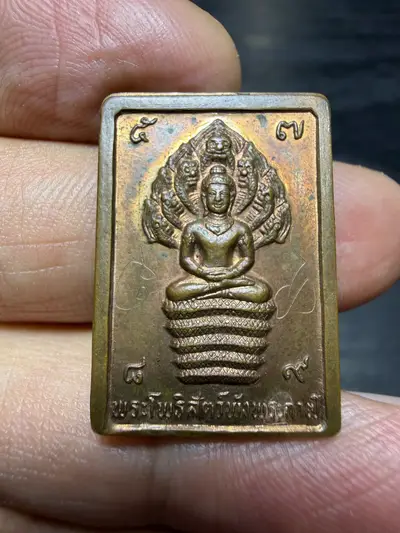
Our current pieces, all with Samakom Phra certification:
What the certificate should say
A Samakom Phra card for this batch reads เหรียญแสตมป์เศียรหลักเมือง รุ่นแรก, followed by the mould (พิมพ์มีหู or พิมพ์ยันต์ข้าง), the metal (for example เนื้อทองแดง, copper), the year พ.ศ. 2530 and the issuer ศาลหลักเมือง (นครศรีธรรมราช). Check that all four match the coin in your hand. A yellow receipt card issued on the day of authentication may only say จตุคามรามเทพ; the formal card issued later carries the full batch name. How to verify a card online is in our Samakom Phra certificate guide.
Why the first batch costs more
- It is the origin. Every later Jatukam traces back to the city pillar project of BE 2530.
- Made before the boom. It was issued for the shrine, not for speculation, and in far smaller numbers than the hundreds of 2007 editions.
- Heavily faked. High demand means many copies; a certified genuine piece carries a premium for that reason alone.
- Condition and mould matter. Original surface, a clear strike and the more popular mould move the price a long way. We do not quote market prices because they swing widely.
The BE 2532 follow-ups: Run Duang Di and Phang Phakan
Two years later the committee issued further pieces. According to collectors' material, the BE 2530 coins were reconsecrated in BE 2532 alongside a Phra Pidta Phang Phakan. Collectors often pair these with the stamp coins:
FAQ
Q: Is the stamp coin the very first Jatukam amulet?
A: It belongs to the first batch of BE 2530. According to collectors' material, that batch also included other items, such as a larger Rahu medallion; the stamp coin is the most commonly traded way into it.
Q: Loop or side yantra: which is better?
A: Both are genuine first-batch moulds. Collectors' preference varies; condition and certification matter more than the mould.
Q: Is a coin from Wat Phra Mahathat the same batch?
A: Not necessarily. Wat Phra Mahathat has issued its own Jatukam editions; the first-batch stamp coin is recorded on certificates under the City Pillar Shrine.
Q: Can I wear it daily?
A: Yes. Copper takes wear well; a waterproof case protects the surface, which matters for value.
Last updated: 2026-10-31 | By the Merit Messenger team, based in Bangkok
Want help choosing between the moulds? Contact us or browse the collection.