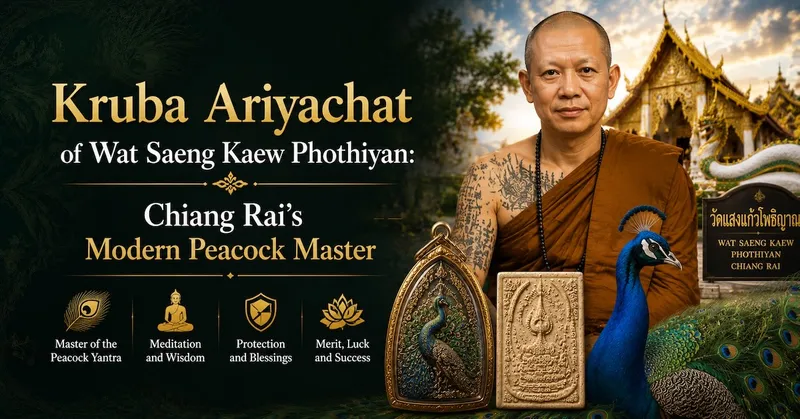
Kruba Ariyachat Ariyachitto (born 1981) is the abbot of Wat Saeng Kaew Phothiyan in Chiang Rai and one of the most popular living "Kruba" masters of northern Thailand ("Kruba" being the northern honorific for a revered monk). Known for his youth, austerity, and potent amulets, he is best recognized for his peacock-yant pieces.
Life: fame through a thirteen-day austerity
Kruba Ariyachat was born in B.E. 2524 (1981), ordained as a novice in childhood, and received full ordination at the age of twenty. He rose to fame through a remarkable feat of austerity — it is said he meditated for thirteen days without eating, drinking, sleeping, or lying down — which quickly won him the devotion of the faithful.
Lineage: trained under many northern masters
Kruba Ariyachat studied sacred arts and Dhamma under a number of renowned northern monks, including Kruba Boonchum, Kruba Jantip of Wat Chaichana, and Kruba Thueng. This deep lineage gives his amulets a clear grounding in the northern Kruba tradition — a tradition also carried by contemporaries such as the legacy of Kruba Srivichai.
Temple and signature amulets
He founded Wat Saeng Kaew Phothiyan in Chiang Rai in B.E. 2549 (2006); the temple is famous for its ornate splendor and is today a well-known pilgrimage and tourist site. His signature amulets include:
- Peacock-yant series: amulets and lockets marked by the peacock (peafowl) yantra — his most recognizable line, for charm, wealth, and noble presence.
- Pidta and Phra Kring: classic forms known for protection and wealth.
- Lockets: large photo-amulets set with sacred materials and yantra, for both collecting and veneration.
How to view a living Kruba's amulets
Kruba Ariyachat is a living master, so his amulets have clear provenance and batch years — representative of contemporary northern Kruba devotion. Judge a piece by its temple origin, batch, and consecration records. For the wider tradition, see the Nine Great Monks of Thailand.
FAQ
What does "Kruba" mean?
"Kruba" is the northern Thai honorific for a highly respected monk, similar to "Luang Phor" in central Thailand. Kruba Ariyachat is the abbot of Wat Saeng Kaew Phothiyan in Chiang Rai.
What is his most famous amulet?
The peacock-yant series — amulets and lockets marked by the peafowl yantra — his most recognizable line, for charm, wealth, and noble presence. His Pidta and Phra Kring are also popular.
Is he still alive, and are his amulets reliable?
He is a living master, so his amulets have clear provenance and batch years, making them relatively reliable. Judge by temple origin (Wat Saeng Kaew Phothiyan), batch, and consecration records.
Who were his teachers?
He trained under several renowned northern monks, including Kruba Boonchum, Kruba Jantip, and Kruba Thueng — a deep and clear lineage.
Last updated: July 2026 | Author: The Merit Messenger Team (based in Bangkok)
Want to learn more about Thailand's guru monks and their amulets? Read the Nine Great Monks of Thailand, or contact us. For terminology, see the Thai amulet glossary.