Merit Messenger
Search amulets...
Kruba Srivichai
Back to Masters

Kruba Srivichai

ครูบาศรีวิชัย

Kruba

Born: 佛历 2421 年(1878)Passed: 佛历 2482 年(1939)Building temples and roads, upholding Buddhism, austere forbearance

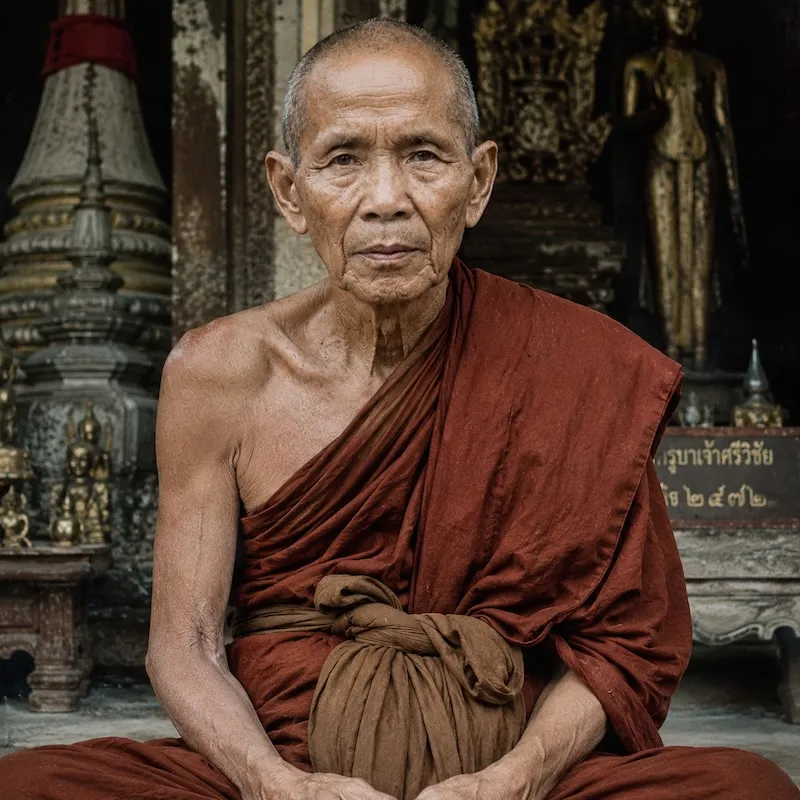
Kruba Srivichai (Thai: ครูบาศรีวิชัย) is the most revered saint of the Lanna region of northern Thailand, honoured as the "Patron Saint of Lanna" and, for the countless temples, roads and bridges he built and restored over his lifetime, as the "engineer monk". His virtue and resolve are remembered by the people of the north to this day.

Origins and Ordination

Kruba Srivichai was born in 1878 (B.E. 2421) in Ban Pang village, Li District, Lamphun Province. Legend holds that a great thunderstorm raged on the day of his birth, and so he was given the childhood name "In Fuen", meaning "quake". Born into a poor family, he was ordained as a monk in 1899, later becoming abbot of Wat Ban Pang, and in 1904 oversaw the building of a new temple — the beginning of a lifetime devoted to the Dhamma and to the building and restoration of temples.

The Engineer Monk

Over the decades Kruba Srivichai initiated and directed the restoration and construction of more than a hundred temple, road and bridge projects across northern Thailand. Through his lofty virtue he moved countless devotees to volunteer their labour; the most legendary of these works is the mountain road to Wat Phra That Doi Suthep in Chiang Mai — some eleven and a half kilometres long, begun in 1934 and completed by volunteers in only about six months, without a single baht of government funds, an enduring legend in the religious history of Lanna.

Forbearance and Renown

Kruba Srivichai kept the precepts strictly and bore his austerities with fortitude; even amid misunderstanding and setbacks he never wavered from his resolve to uphold Buddhism and benefit his homeland, winning the love of monks and laity alike across the north. In 1939 (B.E. 2482) he passed away peacefully at his home temple of Wat Ban Pang at about the age of sixty-one. A memorial shrine now stands at the foot of Doi Suthep in Chiang Mai, where devotees pay homage throughout the year.

Sacred Objects and Meaning

The sacred objects of Kruba Srivichai signify forbearance, the upholding of the faith and the accomplishment of great vows, symbolising the achievement of extraordinary works through steadfastness and good intention, and are treasured by devotees of the north and by amulet collectors. They are honoured with a righteous heart, in emulation of his resolve and through the diligent doing of good.
Related Reading

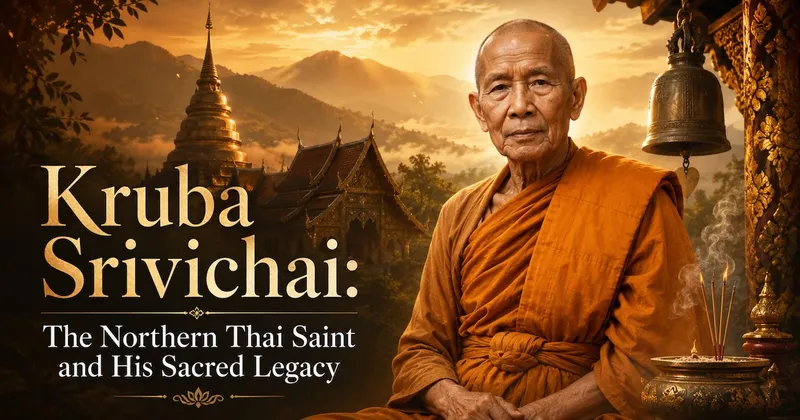
Kruba Srivichai: The Northern Thai Saint and His Sacred Legacy

Kruba Srivichai: The Northern Thai Saint and His Sacred Legacy

Kruba Srivichai (1878-1938) is northern Thailand's most revered monk, who built the road to Doi Suthep temple with volunteer labor alone. Learn about his life, spiritual legacy, and enduring amulet tradition.

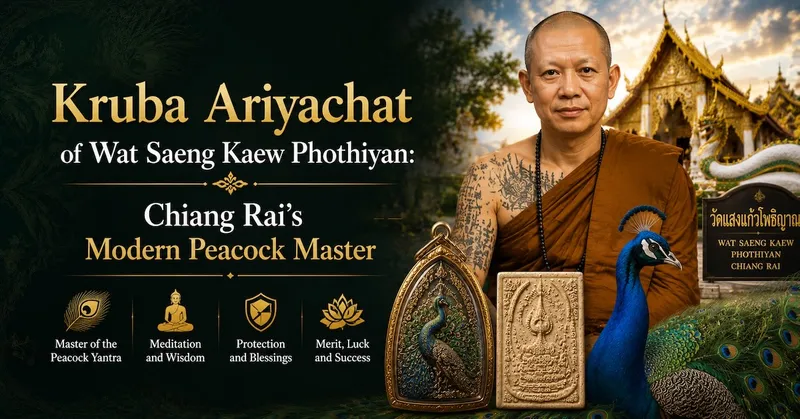
Kruba Ariyachat of Wat Saeng Kaew Phothiyan: Chiang Rai's Modern Peacock Master

Kruba Ariyachat of Wat Saeng Kaew Phothiyan: Chiang Rai's Modern Peacock Master

Kruba Ariyachat Ariyachitto (born 1981) is the abbot of Wat Saeng Kaew Phothiyan in Chiang Rai and one of the most popular living "Kruba" masters of northern Thailand. He rose to fame after meditating for thirteen days without eating, drinking, or lying down, studied under masters including Kruba Boonchum, and is famous for his peacock-yant amulets, Pidta, Phra Kring, and lockets. This guide covers his life, lineage, temple, and signature amulets.

Ajahn Mun and the Thai Forest Tradition

Ajahn Mun and the Thai Forest Tradition

Ajahn Mun Bhuridatta (1870-1949) founded the Thai Forest Tradition — and made almost no amulets, which is precisely why everything connected to him is so revered. This guide covers his wandering life, why devotees report his relics crystallized, what collectors actually acquire (posthumous medallions and disciples' pieces), and how a lineage built on renunciation became one of Thailand's most trusted.

The Nine Great Monks of Thailand: Amulet Lineage Masters Explained

The Nine Great Monks of Thailand: Amulet Lineage Masters Explained

Thai amulet collectors speak of the Nine Great Monks — the lineage founders behind nearly every major amulet tradition: Luang Phor Thuad, Ajahn Mun, Somdej Toh, Luang Pu Toh, Luang Phor Ngern, Luang Phor Derm, Luang Phor Parn, Luang Phor Sodh, and Luang Pu Suk. This guide profiles each master, his temple, and his signature amulets.

The 5 Most Famous Thai Monks and Their Legendary Amulets

The 5 Most Famous Thai Monks and Their Legendary Amulets

Behind every great Thai amulet is a great monk. Meet the 5 most celebrated monks in Thai amulet history — their life stories, spiritual powers, signature amulets, and why collectors pay fortunes for their creations.

Weak Wood Element in BaZi: Thai Amulets for Better Relationships and Helpful People

Weak Wood Element in BaZi: Thai Amulets for Better Relationships and Helpful People

A weak wood element in your BaZi chart often explains relationship difficulties, social isolation, and a lack of mentors or helpful people in your life. Discover how Thai Metta and Khun Paen amulets address wood deficiency at its root.

Sacred Collection

Explore Sacred Master Amulets

Authentic amulets personally consecrated by Thailand's most revered masters

Browse All Amulets