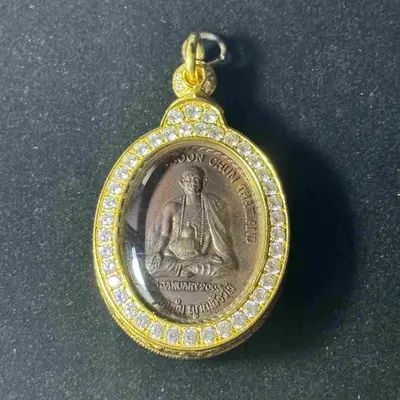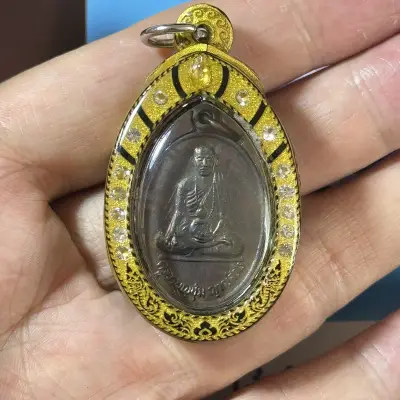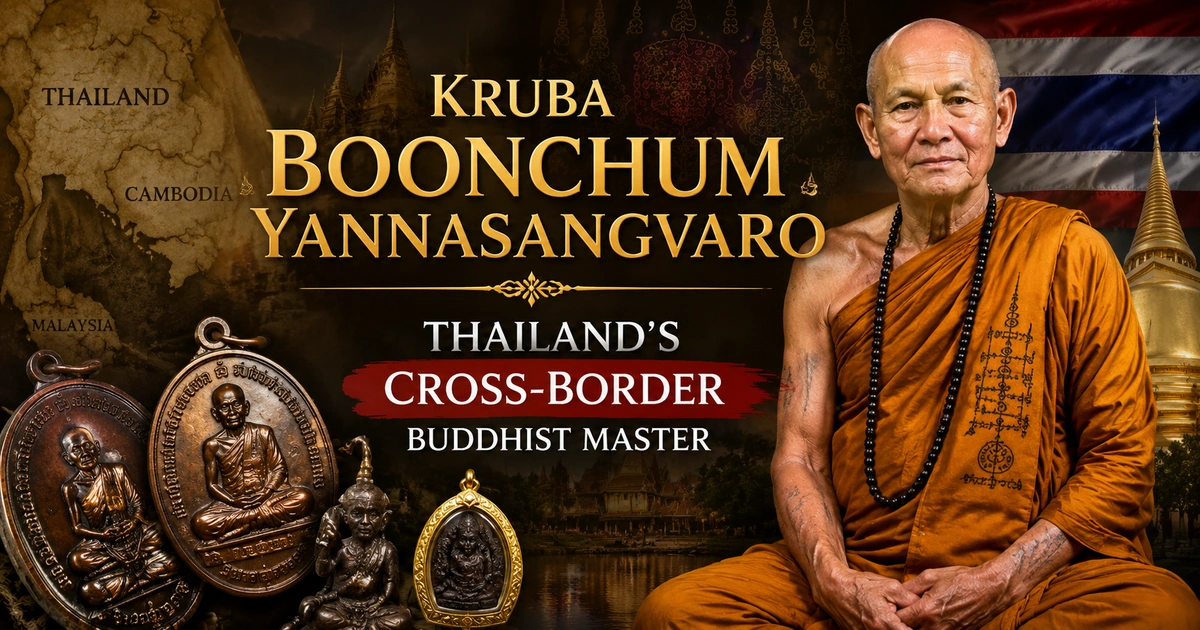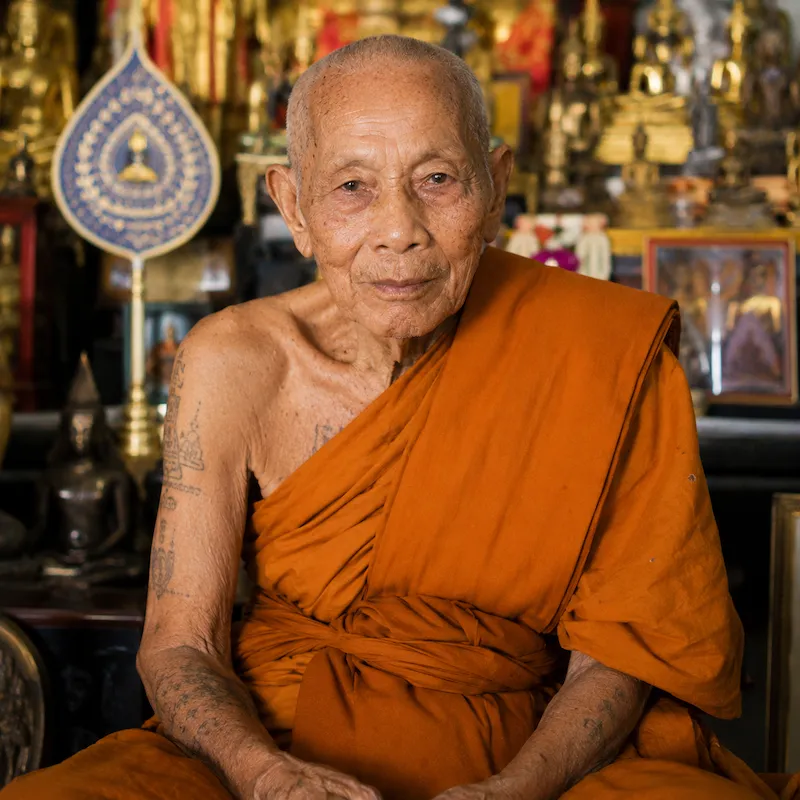
Kruba Boonchum (Thai: ครูบาบุญชุ่ม), whose Pali Dhamma name is Ñāṇasaṁvara — "one who guards his mind with wisdom" — and who is also known in Myanmar's Shan State as the Mine Hpone Sayadaw, is among the most renowned Shan masters of the Northern Thai (Lanna) Forest Tradition of our era. Known for his long solitary retreats deep in mountains and caves, and for teaching across Thailand, Myanmar and Laos, he is reverently called "the monk of the three nations".
Origins and Early Years
Kruba Boonchum was born in 1964 (B.E. 2507) in a Shan village of Chiang Saen District, Chiang Rai Province, near the famed "Golden Triangle", his family tracing its roots to the Kengtung area of Shan State in Myanmar. Legend holds that during her pregnancy his mother dreamt of a radiant golden pagoda, and so named him Boonchum, "the mark of merit". His inclination toward the Dhamma showed early: at the age of twelve he already undertook to restore an ancient pagoda on a hilltop near his home.
Ordination
Kruba Boonchum became a novice at the age of eleven and devoted himself to the study of the Dhamma and meditation. In 1985 he received full ordination as a bhikkhu, taking higher ordination at the seven-hundred-year-old Wat Suan Dok in Chiang Mai. From then on, in keeping with the austere spirit of the Lanna forest tradition, he gave the greater part of his life to seclusion and practice rather than to worldly reputation.
Solitary Retreats in Forests and Caves
Kruba Boonchum is famed for his arduous solitary retreats of "three years, three months, three weeks and three days". From April 2010 he retreated alone for over three years in the Rajagaha Cave in Lampang Province, and when he emerged in July 2013 tens of thousands of devotees gathered outside as if on pilgrimage. In April 2019 he began another such retreat in the Cave of Mong Kyat in Shan State, Myanmar, re-emerging only in August 2022. These years of unbroken austerity have won his meditative attainment and compassionate virtue the shared reverence of devotees in Thailand, Myanmar and Laos.
Teaching Across Three Nations and Building Pagodas
Over the decades Kruba Boonchum's travels have taken him through the forests and caves of the Mekong and Salween river regions, where he has built and restored countless pagodas and monasteries, forming good affinities and upholding the Dhamma along the way. He now serves as abbot of Wat Phra That Don Ruang in Tachileik, Shan State, Myanmar, and through his cross-border renown has become an important spiritual link among the Buddhist faithful of Thailand, Myanmar and Laos.
The Tham Luang Cave Incident and Contemporary Influence
In 2018 the world watched as a boys' football team was trapped in Thailand's Tham Luang cave; Kruba Boonchum was invited to chant and offer blessings at the cave mouth and accurately foretold the day the boys would be found alive, bringing him international renown, and the King of Thailand later offered him monastic robes in recognition. As a living contemporary master, the sacred objects he personally consecrates signify calm, safety and the cultivation of both merit and wisdom, and are treasured by devotees across the Thai north, among the Shan, and among ethnic Chinese Buddhists worldwide.